Shelley Fabares, who topped the Billboard Hot 100 at eighteen with “Johnny Angel” and then spent four decades as one of the most familiar faces on American television, died Saturday in Los Angeles. She was 82. Her family confirmed the death in a statement to the Associated Press, giving no cause. Extra reports that she died following a brief illness.
“To her family and friends, Shelley was a source of love, strength, laughter and comfort,” the statement read. “She had a remarkable ability to make people feel welcomed, valued and cared for.”
She was born Michele Ann Marie Fabares in Santa Monica on January 19, 1944, the niece of the musical-comedy star Nanette Fabray. Accounts of her start differ slightly: the AP and TheWrap both date her first television credit to an appearance on The Loretta Young Show at the age of ten, while Extra says she was acting from the age of three and made her television debut on Letter to Loretta — the show’s original title — in 1954. Either way, she was a working performer before she was a teenager, turning up in The Bad Seed, Jeanne Eagels and Marjorie Morningstar, and appearing alongside Frank Sinatra, Paul Newman and Eva Marie Saint in a televised production of Our Town.
The hit she said she couldn’t sing
The break came in 1958, when she was cast as Mary Stone on The Donna Reed Show. How long she stayed is one of the few things the obituaries genuinely disagree on. The AP has her as a regular from 1958 through 1963. TheWrap describes her as a main cast member across the first five seasons and a guest player through the final three, with more than 190 episodes to her name. CBR puts her departure in 1965, with Mary written off to college and Fabares returning as a guest thereafter. What nobody disputes is the scale of it — she grew up in front of the country, from fourteen to nineteen, in one of the most-watched houses on ABC.
The show also handed her a recording contract, and in April 1962 “Johnny Angel” went to No. 1 on the Billboard Hot 100 and sold more than a million copies. Two Top 40 hits and three albums followed, including Shelley! and The Things We Did Last Summer. It is the part of her career she was least convinced by: Extra reports that she would later say she could not sing at all, and put the whole thing down to studio trickery. Whatever she thought of her own voice, the record has outlived almost everything else she made — it is still the thing that puts her name in a rock and roll history book rather than a television one.
Her chart success made her a teen idol, and the teen idol got the film roles that came with it. Between 1965 and 1967 she played opposite Elvis Presley three times, in Girl Happy, Spinout and Clambake — more leading-lady appearances than any other actress managed with him. She spoke warmly of Presley for the rest of her life.
Christine Armstrong, and a quieter second act
The teen-idol years ended, as they do, and Fabares did what a lot of her contemporaries could not: she kept working. There were runs on The Brian Keith Show and The Practice, a memorable turn as Brian Piccolo’s wife in Brian’s Song, and a stretch on One Day at a Time as Ann Romano’s rival Francine Webster — a role the AP places in the late 1970s, TheWrap describes as a single season in the main cast, and Extra dates from 1978 to 1984. Guest slots followed on The Rockford Files, Mork & Mindy, The Love Boat, Newhart and Murder, She Wrote.
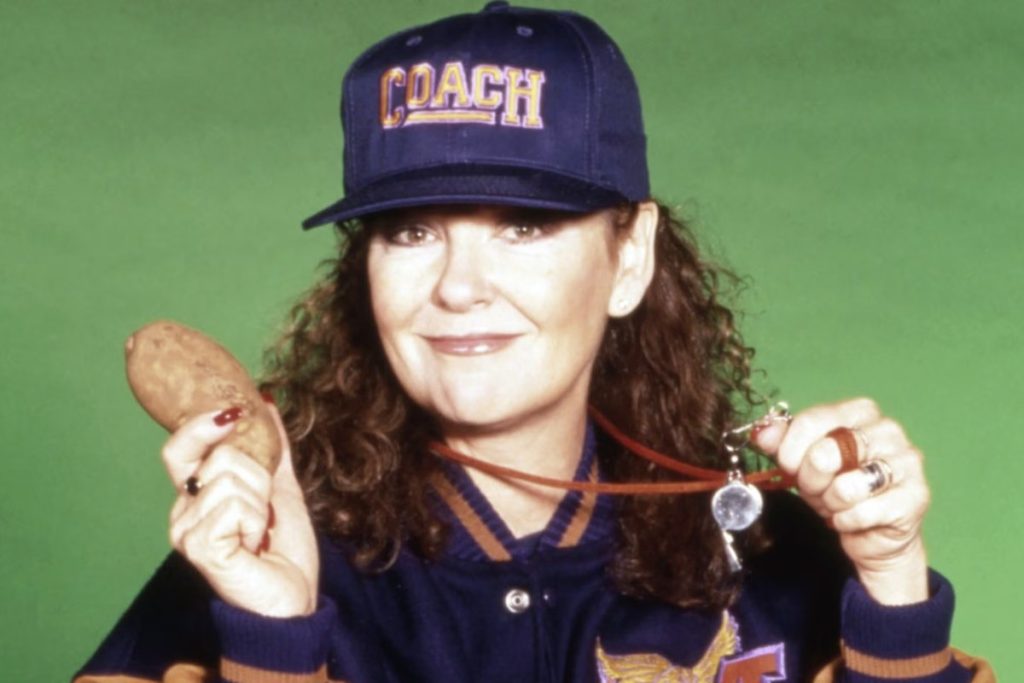
Then, in 1989, came Coach. As Christine Armstrong, the sports anchor who marries Craig T. Nelson’s Hayden Fox, Fabares found the role that would define the back half of her career and earned two Primetime Emmy nominations for it. The show’s exact length is another small point of disagreement — CBR counts 200 episodes across nine seasons to 1997, while Extra logs eight seasons over the same span — but it ran until 1997 and made her, for a second time in a second generation, a face Americans saw every week.
Nelson paid tribute after her death, calling her “a great and grand lady… just a rock” and “a foundational part of my life during the run of Coach.” He described her as “welcoming in the midst of chaos and always someone I could go to for advice and counsel,” and signed off: “I’ll remember you with love, Shelley Fabares.”
Illness, advocacy and a last role
Fabares came close to not seeing any of her later years. A trip to the emergency room in early 1999 for an esophageal bleed revealed progressive liver failure. She spent 22 months on a transplant waiting list before receiving a new liver in October 2000. Speaking to Cedars-Sinai three years afterward, she said she had been “changed by the experience,” and credited her husband, the M\A\S\H* actor Mike Farrell, with being there “every step of the way.” She was also a long-standing advocate for Alzheimer’s awareness, a cause that reached her through her mother.
Her final credited work was a small, neat piece of symmetry. Having voiced Martha Kent through Superman: The Animated Series in the 1990s, she returned to the character one last time for the 2006 direct-to-video film Superman: Brainiac Attacks — with Farrell voicing Jonathan Kent opposite her.
Fabares married the record producer Lou Adler in 1964; they divorced in 1980. She married Farrell in 1984 and they remained together until her death. She is survived by Farrell and her stepchildren, Erin and Michael.