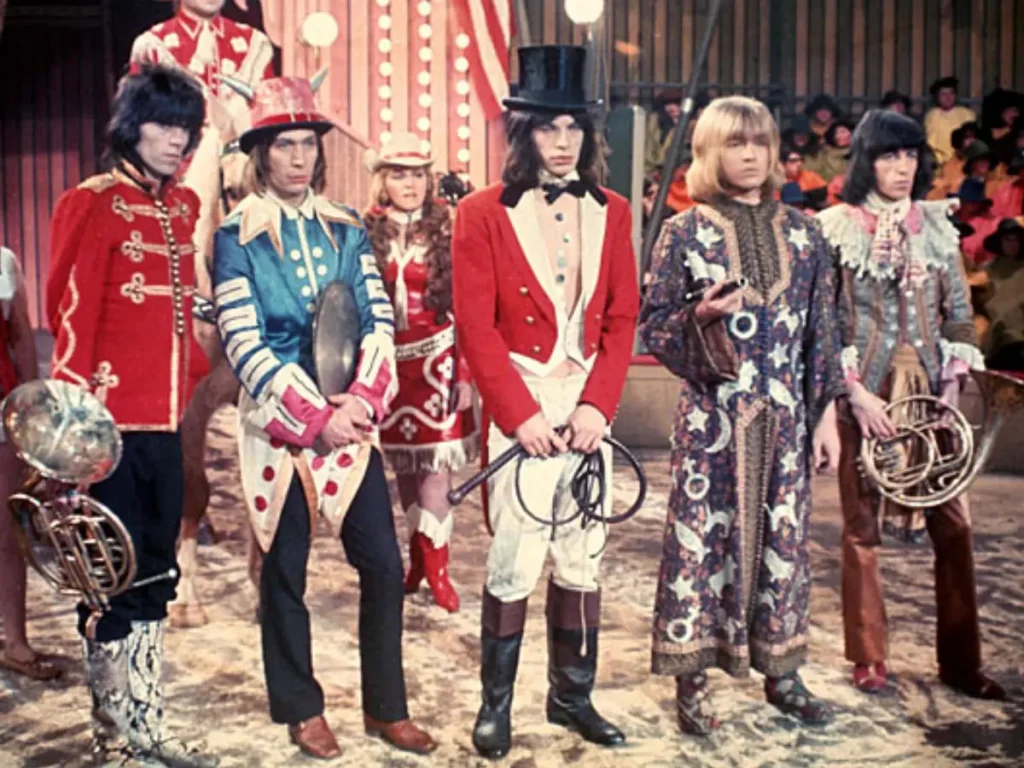
In late 1968, five very different stars walked into a shabby North London big top and accidentally filmed the end of the sixties. Brian Jones, John Lennon, Yoko Ono, Eric Clapton and Roger Daltrey all shared The Rolling Stones’ Rock ‘n’ Roll Circus stage, and the result feels less like a TV special and more like a beautifully awkward wake for an entire era.
On paper it was a victory lap. In reality it played like a nervous breakdown with great guitar tones. The show was buried for nearly three decades, which only fed its cult status and the myths around those performances.
Setting the tent: Stones, blues and a 15 hour shoot
By 1968 the Rolling Stones had gone from blues purists to global troublemakers, dragging Chicago electric blues into the mainstream and taking Muddy Waters and Howlin’ Wolf with them. Brian Jones, who had founded the band, was the most fanatical blues disciple of the lot, but he was now being sidelined inside his own group.
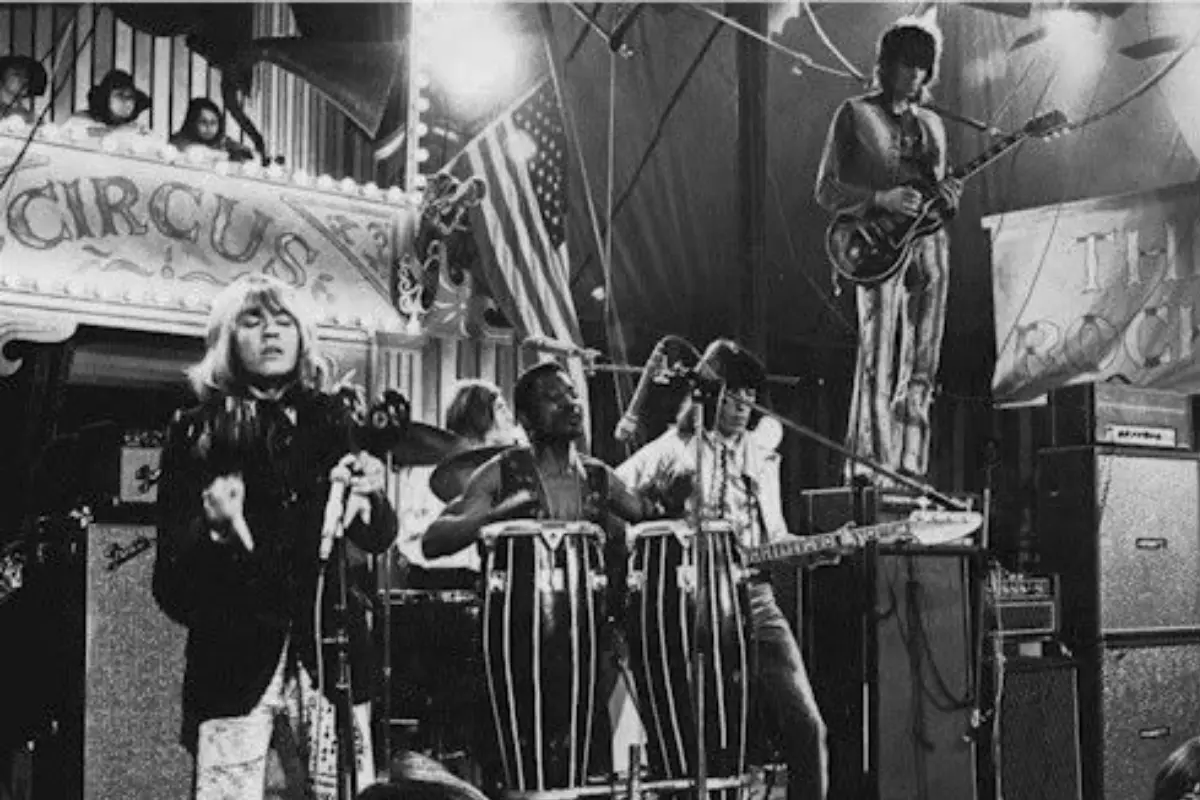
The Rock ‘n’ Roll Circus was Mick Jagger’s answer to ordinary promotion for ‘Beggars Banquet’. The band built a seedy faux circus inside Intertel Studios in Wembley, invited friends like The Who, Jethro Tull, Taj Mahal, Marianne Faithfull and Yoko Ono, and played to a small invited audience under hot lights. It was supposed to air on the BBC; instead, cameras rolled from mid afternoon until nearly dawn, while the drugs and exhaustion did their work.
Crucially, this was the last filmed performance of the original Stones lineup, and the only time John Lennon, Eric Clapton, Keith Richards and Mitch Mitchell would appear together as The Dirty Mac onstage. Somewhere amid the clowns and fire eaters, the circus captured five careers at brutally honest crossroads.
| Artist | Where they were in 1968 | What Circus exposes |
|---|---|---|
| Brian Jones | Fading founder, drowning in drugs and legal trouble | Brilliant but ghostly presence, almost sidelined |
| John Lennon | Beatle in open revolt, fresh from the White Album | First real taste of life outside the band |
| Yoko Ono | Avant garde insider, rock outsider and hate magnet | Turns a blues jam into performance art shock therapy |
| Eric Clapton | Cream just imploded, new guitar gun for hire | Effortless, ice cool authority amid chaos |
| Roger Daltrey | Frontman of a hungry live band at peak power | Helps The Who steal the show from their hosts |
Brian Jones: the haunted founder in his final show
Watch Brian Jones during ‘No Expectations‘ and you are effectively watching his own epitaph. Once the band’s multi instrument stuntman, here he adds a fragile slide guitar part then drifts to the edges, looking older than his 26 years and weirdly removed from the music. Director Michael Lindsay Hogg later said Jones could barely contribute on guitar; others described him as a scapegoat for the sins of swinging London.
Rock history likes its symbolism heavy, and the Circus obliges. Marianne Faithfull remembered an ‘apocalyptic’ atmosphere, as if everyone subconsciously knew the party was ending. Within months Jones was out of the band; within seven months of the taping he was dead at 27.
If you want to understand why Jagger and Richards felt they had to cut him loose, the Circus is brutally clear. The rhythm section is wired tight, Keith is locked in, but Brian looks like a doomed guest at his own show. It is heartbreaking, and it is a big reason some fans see the film as a funeral disguised as a variety special.
Lennon, Yoko, Clapton and The Dirty Mac: blues as controlled detonation
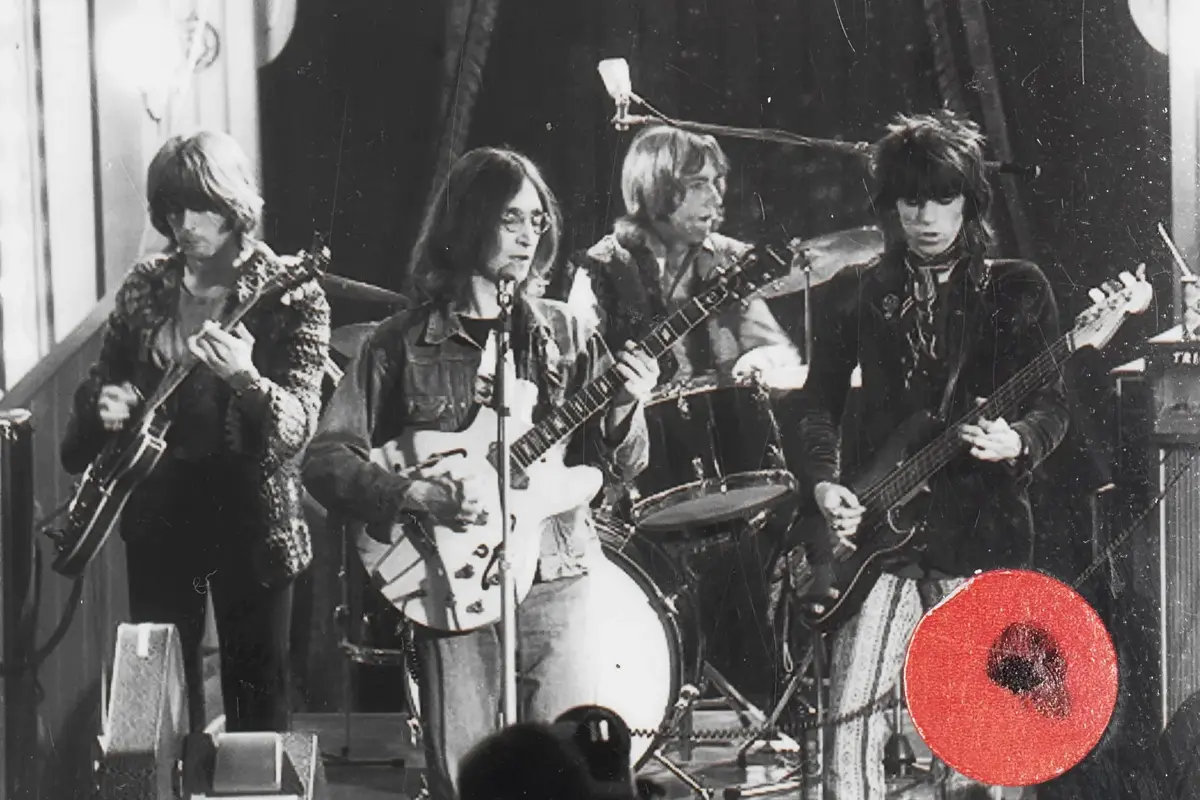
If Brian Jones is the ghost of the early sixties, John Lennon is the guy lighting the fuse on the next decade. For the Circus he formed The Dirty Mac with Eric Clapton on lead guitar, Keith Richards on bass and Mitch Mitchell on drums, then tore into the White Album track ‘Yer Blues’ followed by a free form jam with Yoko Ono and violinist Ivry Gitlis.
Lennon tests life beyond The Beatles
This was the first time since Beatlemania that Lennon performed live without his bandmates, and his first real public outing with Yoko in a rock context. He even jokes to camera as ‘Winston Leg Thigh’, then launches into a vocal that is far nastier and less mannered than the studio cut.
You can almost hear the Plastic Ono Band taking shape in real time. The sound is raw, cramped and aggressive, closer to Toronto ’69 than to anything on ‘Sgt Pepper’. The subtext is not subtle: Lennon is showing he no longer needs the Beatles to get onstage, and he is not interested in being ‘cute’ for television.
Clapton in transition, cool in the eye of the storm
For Eric Clapton, the Circus lands in an odd window. Cream had just imploded, Blind Faith had not yet happened, and yet he plays with total authority, dropping stinging blues lines behind Lennon’s howls. There is no grandstanding, no extended solo spot; the power comes from how easily he locks in with Keith Richards and Mitch Mitchell.
If the Stones look frayed, The Dirty Mac look terrifyingly professional. Clapton in particular seems to float above the chaos. It is a reminder that while guitar magazines debated his ‘god’ status, he was quietly becoming the most reliable hired gun in British rock.
Yoko Ono turns a jam into a dare
Then Yoko Ono crawls out of a black bag at Lennon’s feet and everything gets stranger. Backed by the same heavy blues band plus Ivry Gitlis on violin, she turns ‘Whole Lotta Yoko’ into a sustained scream piece, somewhere between Delta jam and downtown avant garde.
To rock traditionalists it was nails on a chalkboard. To anyone with ears for experimental music it was fearless, confrontational performance art suddenly dropped into a world of Marshall stacks. Even Roger Daltrey and Pete Townshend, hardly avant pushovers, later admitted that Yoko’s presence made the already surreal session feel like an event rather than just another mimed TV slot.
Roger Daltrey and The Who: the night the support act won
If you want to know why the Stones supposedly buried the film, do not look at their own performance, which is ragged but often thrilling. Look at The Who. Fresh off tour, they delivered a ferocious version of their mini opera ‘A Quick One While He’s Away’ and, by many accounts, blew everyone else off the stage.
Roger Daltrey whips the mic, Pete Townshend attacks his guitar like it insulted him in public, and the band turns a nine minute suite into a lesson in controlled chaos. Later retrospectives and even some of the musicians themselves have suggested that being upstaged in their own tent was one reason the Stones let the reels gather dust for decades.
The irony is brutal: the hosts built a circus to showcase their power, and their guests stole the lion tamer’s whip. For Daltrey in particular, the film catches him just before ‘Tommy’ turned The Who into an arena act, still singing like a pub hard man with something to prove.
Why the Circus vanished for 28 years
Officially, the Stones said the show was shelved because their performance felt substandard after a 15 hour shoot and too much chemical ‘refreshment’. Unofficially, everyone knew there were other shadows: Brian Jones’ obvious decline, the sheer strength of The Who and The Dirty Mac, and the sense that the whole thing already looked dated by the time it could have aired.
Whatever the mix of ego, grief and quality control, the film stayed unseen until 1996, when it was finally restored and released on home video. By then the awkwardness had turned into an asset. What once felt like an overlong TV special suddenly played as a time capsule of rock royalty right before the crash.
Legacy: a strange, beautiful train wreck
Today, The Rock ‘n’ Roll Circus works because it is not slick. It is messy and occasionally embarrassing. Brian Jones drifts, Yoko terrifies half the room, Lennon refuses to behave, Clapton looks like he is on another, cooler show, and Roger Daltrey helps the supposed opening act steal the night.
If you want stadium perfection, there are plenty of other films. What this one offers is something rarer: the sound of giants catching themselves in the mirror and not entirely liking what they see. In that sense, the Circus is not just a curiosity. It is the exact moment the sixties stopped pretending to be innocent, captured on tape and stuffed in a vault until the world was finally ready to watch.