
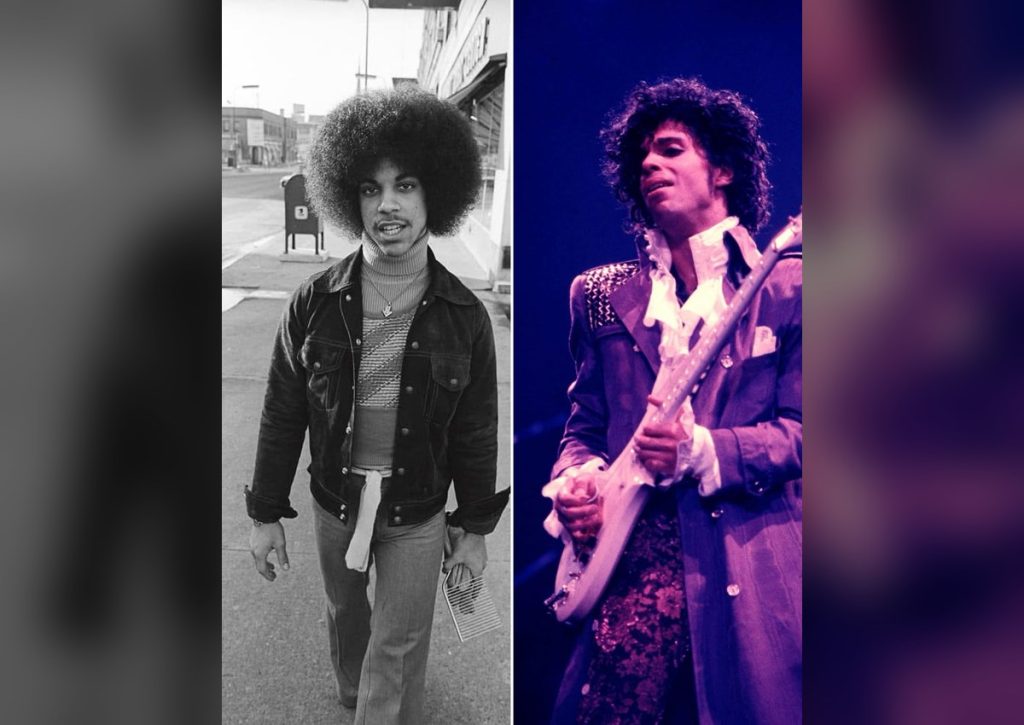
Every debut album is a statement. Prince’s was an ultimatum. When For You arrived in April 1978, the credits carried five words no major label had ever printed for a teenager: produced, arranged, composed and performed by Prince. No producer minding him. No session pros filling gaps. A 19-year-old from Minneapolis, alone in expensive rooms, playing everything — and a corporation letting him.
The negotiation that made history
The music business of 1977 had a fixed model for young talent: sign them, then surround them. Warner Bros. fully intended to assign the teenage prodigy a name producer. Prince’s counter-position was absolute — he would produce himself or walk — and the stories from the signing period have become legend: label executives summoned to watch him move from instrument to instrument, building a track layer by layer in real time, until the case closed itself. Warner blinked, and Prince became the youngest artist in the company’s history to produce his own album.
It’s difficult to overstate how radical the concession was. Stevie Wonder had won creative control after a decade of hits; Prince demanded it before releasing a note. The self-production clause wasn’t vanity — it was the entire artistic thesis, stated at the contract stage: nobody else’s hands on the music, ever.
Twenty-seven instruments (and one caveat)
The album’s liner notes itemise the one-man-band claim in delightful detail: acoustic and electric guitars, basses, every stripe of keyboard and synth, drums, percussion, and stacked lead and background vocals — a famous count of 27 instruments in all. Honesty requires the footnote: the list counts generously, separating out things like individual keyboard models and handclaps, so the true tally of distinct instruments is closer to a dozen or so. The myth-friendly number stuck because the underlying truth needed no inflation: one teenager, every part, release-quality execution on all of them.
And the performances are the point. The a cappella title track stacks Prince into a one-man choir. “Soft and Wet”, the debut single, is fully formed Minneapolis funk — synth bass, needling guitar, falsetto — years before the world had a name for that sound. “So Blue” shows the jazz chords; “I’m Yours” closes the record with rock guitar heroics nobody expected from an R&B signing. It sold modestly. As an audition tape for a career, it has never been equalled.
The perfectionism carried a price tag the legend usually omits. Prince laboured over For You for months at Record Plant in Sausalito, burning through take after take and a startling share of his multi-album advance before the record was done. The label’s accountants saw an overrun; history sees a teenager buying, with someone else’s money, the most valuable asset of his career — total fluency in the studio itself. He never worked slowly again: the follow-up came in quicker and cheaper, and delivered the hits.
The apprenticeship of solitude
The one-man method wasn’t a stunt; it was simply how Prince had learned to exist. The kid who shuttled between homes after his parents’ split had put in thousands of solitary hours in basements and borrowed studios, teaching himself each instrument because waiting for collaborators meant waiting. By the time Warner’s money bought him proper studio time, playing everything wasn’t a flex — it was his native language. The label’s A&R notes from the era famously compared him to the young Stevie Wonder; the comparison undersold the ambition.
For You also fixed the template he never abandoned. The one-man-band discipline powered Prince, Dirty Mind and Controversy; even at the height of the Revolution years he routinely cut entire tracks alone, and his vault runs deep with solo constructions. Every bedroom-producer generation since — from the four-track kids to the laptop era — is working downstream of the precedent this record set: the artist as entire ecosystem.
It’s also worth dispelling the laziest version of the myth: that the one-man-band act meant Prince didn’t need people. The opposite was true, and For You proves it by contrast. Within a year he had assembled a live band and begun the bandleader apprenticeship that produced the Revolution and the New Power Generation — because he understood the difference between authorship and performance. The studio was where no one could be trusted; the stage was where everyone had to be. He held both convictions absolutely, for life, and the split first appears here.
What the debut proves
Prince’s later peaks were so high that For You gets treated as a footnote, and commercially it was. But go back to it knowing the circumstances and it becomes almost eerie. Nineteen years old. The same age Michael Jackson was conquering the world with an army behind him, Prince was alone in a studio at 3 a.m., engineering his own falsetto stacks, refusing every offer of help on principle.
The industry called it arrogance at the time. The next forty years revealed it as something rarer: perfect self-knowledge, arriving early. He wasn’t declining assistance. He was declining interference — and the five words on that first sleeve were less a credit than a manifesto he spent a lifetime honouring: if it says Prince on it, it’s Prince. All of it.


