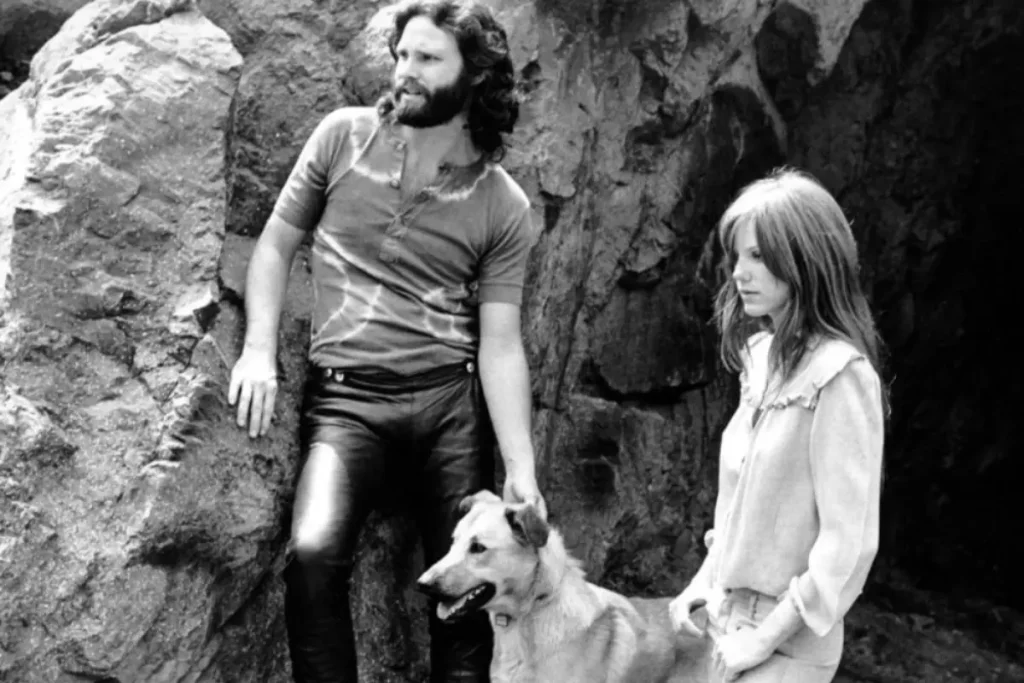
Some rock stories survive because they are documented. Others survive because they feel true. The image of Jim Morrison with girlfriend Pamela Courson and their dog Sage at the Bronson Caves in 1969 lives in that electric overlap: part candid LA moment, part accidental mythology.
Bronson Canyon is a short hike from the Hollywood machine, yet it looks like a place where civilization loses its grip. In 1969, that tension mattered. Morrison was a star who kept trying to behave like a poet, and LA kept trying to turn him into a product. The Bronson Caves sit right on that fault line.
The Bronson Caves: Hollywood’s fake wilderness with real bite
The “Bronson Caves” are manmade tunnels left from early quarrying and later repurposed as a photogenic film backdrop. They are tucked inside Griffith Park, so you can be in the city and still feel like you stepped into a Western set. Griffith Park itself is enormous, and that scale helps explain why artists have used it as a hiding place for decades.
Even if you have never heard the name Bronson Canyon, you have probably seen it. The site is famous for screen history and one of LA’s most recognizable “wilderness” facades, the kind of location that makes everything look like a story.
Why 1969 hits differently in the Doors timeline
By 1969, The Doors were no longer a new phenomenon. They were a full-on cultural problem: beloved by fans, feared by gatekeepers, and constantly litigated by rumor. The band’s official history lays out the rapid rise and the punishing public attention that followed.
That same year, Morrison was fighting the consequences of fame in the most literal way: legal pressure tied to the Miami concert and its aftermath, a case that kept the band in headlines for reasons that had little to do with music in the broader national press.
Against that background, the idea of Morrison walking out to the Bronson Caves with Pam and a dog feels less like a cute day trip and more like a survival tactic. It is the kind of “get out of the room” move anyone recognizes – except Morrison could not fully leave the room, even outdoors.
Jim and Pam: romance, chaos, and the one person who could call his bluff
Pamela Courson was not a footnote in Morrison’s life. She was a constant presence, and the relationship has been described in biographies and documentaries as intense, turbulent, and deeply entwined with his day-to-day reality. The fact that she was named a beneficiary in Morrison’s will adds another layer to how central she was in his private life, regardless of what the public thought.
When people reduce Pam to “girlfriend,” they miss the power dynamic. She was not an accessory to the myth. She was part of the engine that kept it running – and sometimes part of the reason it derailed. If you want to understand Morrison as a person rather than a poster, you have to reckon with Pam.
Why a dog matters in a Morrison story
Rock biographies tend to treat pets as set dressing. But a dog changes the temperature of a scene. A dog demands routine, attention, and the kind of grounded behavior that celebrity life erodes. Even today, Bronson Canyon is a go-to spot for casual hikes and dog walks, which makes the Morrison-Pam-Sage setup feel plausible in a very non-mythic way.
And yes, the dog’s name “Sage” almost feels too perfect – as if someone wrote it into the script. But that is the point. Real life often hands you symbolism you did not ask for, and Morrison collected symbolism like debt.
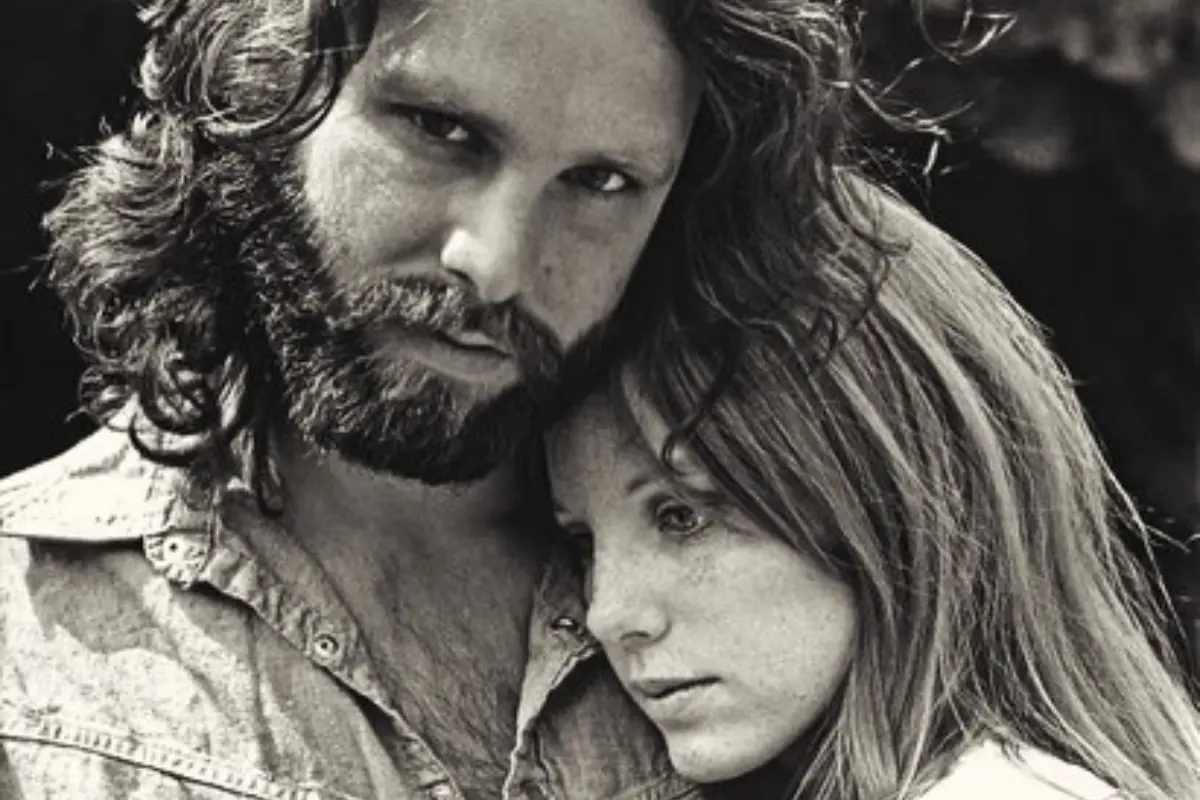
The Bronson Caves photo: what it communicates without saying a word
Photos like this work because they compress a larger era into one frame: Morrison as a public rebel; Pam as the private anchor and storm; Sage as the domestic detail that cuts through the mythology. Bronson Canyon adds another ingredient: a place known for staged realities. That matters, because Morrison’s entire career was a negotiation between authenticity and performance.
“There are things known and things unknown and in between are the doors.” – Jim Morrison
That quote is widely repeated for a reason: it describes Morrison’s preferred habitat. The Bronson Caves are literally “in between” – not quite nature, not quite set, not quite city, not quite desert. The setting fits the philosophy.
Myth vs. evidence: what we can responsibly say
Here is the honest, adult version: many Morrison stories online are stitched together from captions, memories, and vibes. If you are looking for a sworn affidavit that Morrison, Pam, and Sage stood on a specific rock at a specific minute in 1969, you will be disappointed. But if you are looking for a credible framework around the moment – the people, the place, and the pressures – that is available.
We can verify what Bronson Canyon is and why people go there. We can verify that Griffith Park is a major, defining green space in Los Angeles. We can verify the arc of Morrison’s fame and the way legal and cultural backlash intensified in 1969. And we can point to the abundance of period imagery and archival references surrounding Morrison’s life and public persona, including photographs documenting his 1969 look and the way he was photographed in everyday contexts.
The rest – the emotional truth of the day – is interpretation. But interpretation is not the same thing as invention, as long as you keep it tethered to what the era supports.
What that day at Bronson Canyon suggests about Morrison as an artist
Morrison loved the idea of being “outside” society, but he was also obsessed with classic structures: theater, poetry, ritual. The Bronson Caves are a physical metaphor for that contradiction. They are outdoors, but they are engineered. They are “wild,” but they are curated.
If you listen closely to The Doors, you hear this constant tug-of-war: blues roots vs. European symbolism, improvisation vs. carefully staged drama. Morrison’s public image encouraged fans to see him as pure chaos, but a lot of what he did was designed.
Performance energy without the stage
A 1969 hike with Pam and Sage might have been quiet, but Morrison never completely stopped performing. Even candid photos can look like scenes, because he had learned how to inhabit a frame. That is why a location with film history is such an uncanny fit: the caves make everyone look like they are in a movie.

If you visit today: a practical, respectful mini-guide
Bronson Canyon is not a shrine, and treating it like one would miss the point. The location is part of a public park system, and it remains popular because it is simple and accessible.
Do this
- Go early if you want that 1969 “empty LA” feeling instead of a crowded trail.
- Look outward, not just at the caves – the surrounding paths are where the candid moments happen.
- Bring music, but don’t blast it. The best Doors listening is still private and slightly intense.
Don’t do this
- Don’t climb or damage features for a photo recreation. The myth is not worth the impact.
- Don’t treat Pam as a prop in the story. If you bring her into the narrative, bring the complexity too.
- Don’t turn Sage into a meme. The dog detail matters because it is ordinary.
The provocative takeaway: Bronson Canyon is the most honest “set” Morrison could pick
It is tempting to say Morrison went to the Bronson Caves to escape. But “escape” is too clean. A better read is that he went to a place that looked like freedom while still being shaped by the same city that shaped him.
That is not hypocrisy. That is Los Angeles. Even the wilderness has casting calls.
And maybe that is why the Morrison-Pam-Sage moment sticks. It is not just “rock star in nature.” It is rock star in a place where reality and performance are permanently entangled – a perfect snapshot of 1969, and a perfect clue to why The Doors still feel dangerous when you play them loud.
Conclusion
Jim Morrison with Pam Courson and Sage at the Bronson Caves in 1969 endures as an image because it compresses the whole Doors paradox into one scene: intimacy vs. spectacle, nature vs. set, love vs. volatility. The caves do not explain Morrison, but they frame him well. And sometimes a frame is the closest thing to truth rock history is willing to give you.