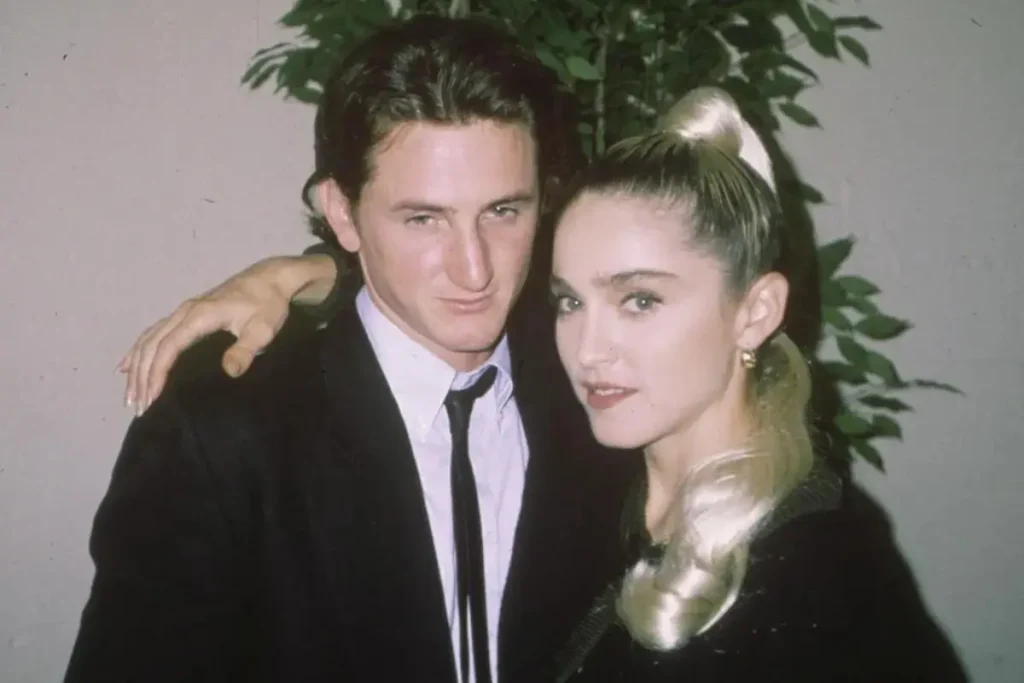
In the summer of 1985, pop’s new queen married Hollywood’s angriest young prince on a Malibu cliff while news helicopters buzzed overhead. Four years later, the fairy tale was in ruins, but the wreckage had already seeped into some of the most fearless pop records of the decade.
Sean Penn and Madonna’s marriage officially ran from August 16, 1985 to a second divorce filing in January 1989, yet its emotional aftershocks still shape how fans hear her music and remember 80s celebrity excess.
The 80s template for a volatile rock romance
Rock fans love a messy love story; this site has already gone deep on Neil Young and Daryl Hannah’s late life romance, proof that we never tire of watching musicians mix art with chaos.
A decade earlier, Madonna and Sean Penn were the blueprint. In early 1985 he visited the set of her ‘Material Girl’ video, just as she was breaking worldwide with ‘Like a Virgin’ and Desperately Seeking Susan, and the two hit it off immediately.
The chemistry came with a built in fault line. Madonna had hustled for years to get the cameras pointed at her and relished the spotlight, while Penn experienced the same media frenzy as a hostile invasion, responding with notorious punch ups against photographers that only threw more gasoline on the fire.
On August 16, 1985, her 27th birthday, they married at a clifftop Malibu estate owned by developer Dan Unger. Security was tight, the guest list hovered around 220 A listers, and so many news helicopters swarmed the ceremony that guests compared the scene to a war movie.
According to the new documentary ‘Becoming Madonna’, producer Sharon Oreck remembers the couple as genuinely besotted, branded in the press as America’s bad boy and bad girl whose attraction was amplified by a public that demanded they become a super couple. Oreck’s account helped cement that image.
Four furious years: the marriage at a glance
If you map their relationship like a tour schedule, the pace is brutal.
| Year | Flashpoint | Why it mattered |
|---|---|---|
| 1985 | Meet on ‘Material Girl’ set, marry in Malibu on August 16 | Pop and Hollywood fuse into a paparazzi magnet |
| 1986 | Co star in box office flop ‘Shanghai Surprise’ | Critical failure fuels narratives of a toxic partnership |
| 1987 | First divorce filing, then sudden reconciliation | The on off pattern becomes part of their legend |
| 1988 | Madonna files and withdraws an assault complaint | Rumors of domestic violence calcify around the couple |
| 1989 | Second divorce filing, marriage formally ends | Out of the wreckage comes ‘Like a Prayer’ |
By December 1987, Madonna had quietly separated from Penn and filed for divorce in Santa Monica, citing irreconcilable differences and listing November 30 as the separation date.
Less than two weeks later she shocked the press by asking the court to dismiss the case, with a sudden move to call off the divorce, with Penn’s publicist explaining that the couple were trying to save a very public, very rocky marriage that was straining under constant attention.
The truce did not last. On January 5, 1989 Madonna filed for divorce again in Los Angeles, once more citing irreconcilable differences and effectively bringing their four year marriage to an end.
Between those filings came the episode that would haunt them for decades. In late December 1988 Madonna went to the sheriff’s office in Malibu and signed a complaint alleging that Penn had assaulted her, leading to charges of corporal injury and battery; within a week she withdrew the complaint, and later dismissed tabloid accounts of the incident as wildly exaggerated. Her later clarification would become a key part of how the story was remembered.
Years later, in an affidavit supporting Penn’s defamation suit against TV producer Lee Daniels, she stated under oath that while their arguments were volcanic, he had never struck, tied up or physically assaulted her, calling reports to the contrary outrageous and false.
Inside the pressure cooker: love, jealousy and the myth of ‘jail’
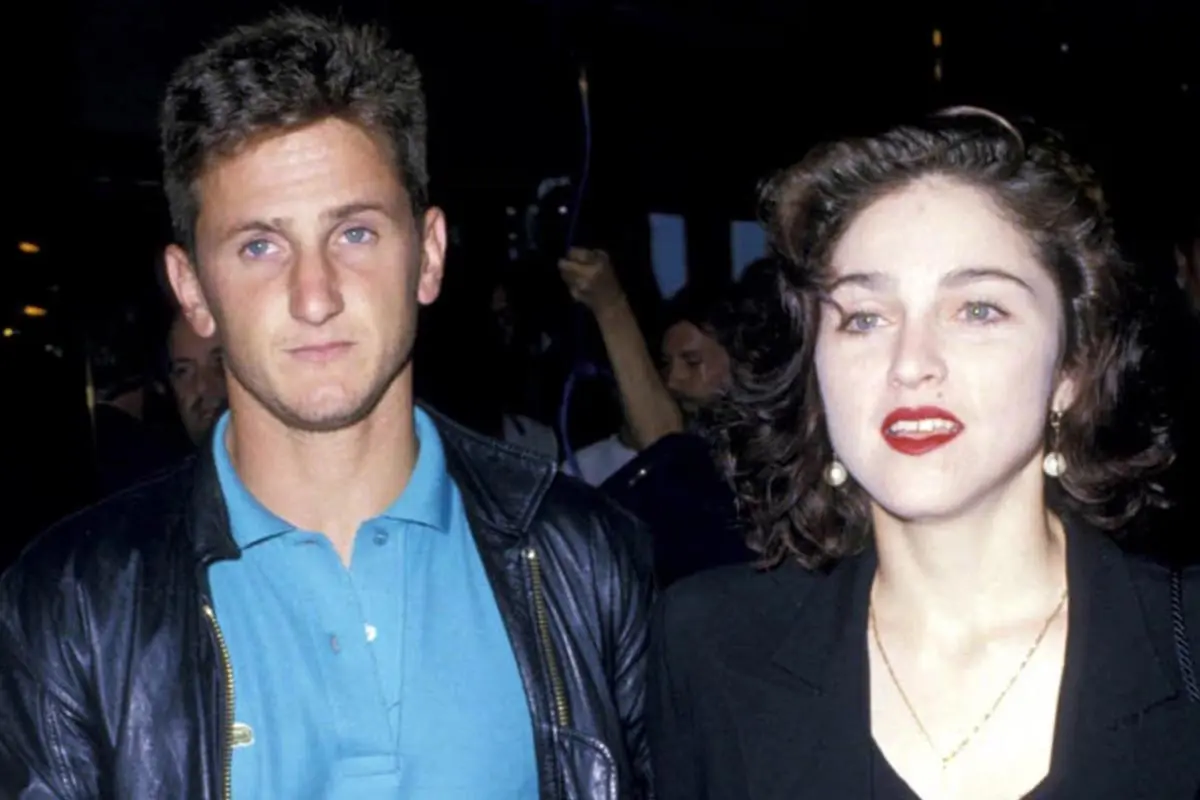
The dynamic inside the marriage was a slow motion car crash the tabloids could not stop filming. She was the ultimate exhibitionist performer; he was a volatile method actor with a drinking problem and a hair trigger temper around anyone with a camera.
In her 1991 tour documentary ‘Truth or Dare’, Madonna would later call Penn the love of her life, a remark that hardened the myth that the couple’s suffering was somehow worth it because the passion was real. That “love of her life” line continues to shadow discussions of their relationship.
Asked about that line on a recent Louis Theroux podcast, Penn called his ex wife ‘very sweet’ but dryly said they had mistaken a good first date for a marriage partner, admitting there was heavy drinking and constant conflict while insisting their time together was ‘not all jail’ and that he now looks back with genuine fondness.
The public, however, latched onto the ugliest version of events: an actor beating the world’s biggest pop star. That story survives mostly as a mash up of the withdrawn 1988 complaint, Penn’s very real violence toward paparazzi and the bruised, detailed picture of a destructive relationship Madonna painted in song.
From fantasy to confession: how Penn haunted her songs
‘True Blue’: honeymoon myth on wax
One year into the marriage Madonna released ‘True Blue’, an album named after one of Penn’s favorite phrases and explicitly dedicated in the liner notes to ‘my husband, the coolest guy in the universe’. That dedication would later echo when she revisited the song on tour.
It was the honeymoon record: bright, melodic and in love with the idea of old fashioned, monogamous romance, even as the reality behind the scenes was already starting to curdle.
Decades later, Penn turned up at her Rebel Heart tour stop at Madison Square Garden and reportedly smiled through a performance of the title track, a small, strange moment of grace in a story most people only remember for fights and arrest reports.
‘Like a Prayer’: divorce as creative rocket fuel
By the time she made ‘Like a Prayer’ in 1988 and early 1989, the mask had slipped. The album’s lyrics turn directly to her Catholic upbringing, the death of her mother, a strained relationship with her father and, crucially, her troubled marriage to Penn, which formally ended when they filed for divorce in January 1989.
Critics at the time heard a different Madonna: less boy toy, more confessional songwriter using the studio as a therapist’s couch, while the production wrapped her turmoil in gospel choirs, distorted guitars and anxious synth lines.
Nowhere is that tension clearer than ‘Till Death Do Us Part’, a racing pop track that reads like a microphone left on in the worst room of their house. A Washington Post review singled it out for its shockingly direct portrait of a violent, collapsing marriage, noting lyrics about vases flying, bruises and a wife reduced to ‘just your little wife’, all set to music you can grimly dance to.
Later retrospectives have quoted Madonna describing ‘Like a Prayer’ as a coming of age record that she made while isolated in the San Fernando Valley, newly separated from Penn and pushing herself to write about things she had previously been too frightened to touch, including the end of the marriage. Those later appraisals frame it as a turning point in her career.
In a 1989 Rolling Stone interview, she framed ‘Till Death Do Us Part’ as a fictionalized but brutally honest take on a sadomasochistic relationship that feels impossible to escape, and noted with some amusement that Penn loved the track precisely because it did not mince words. Accounts of their breakup often point to that song as a key to understanding their dynamic.
In other words, the same volatility that made their private life a nightmare also forced her to level up as a writer, turning her from a singles driven superstar into an album artist who could turn marital wreckage into enduring pop art.
After the wreckage: the friendliest exes in pop?
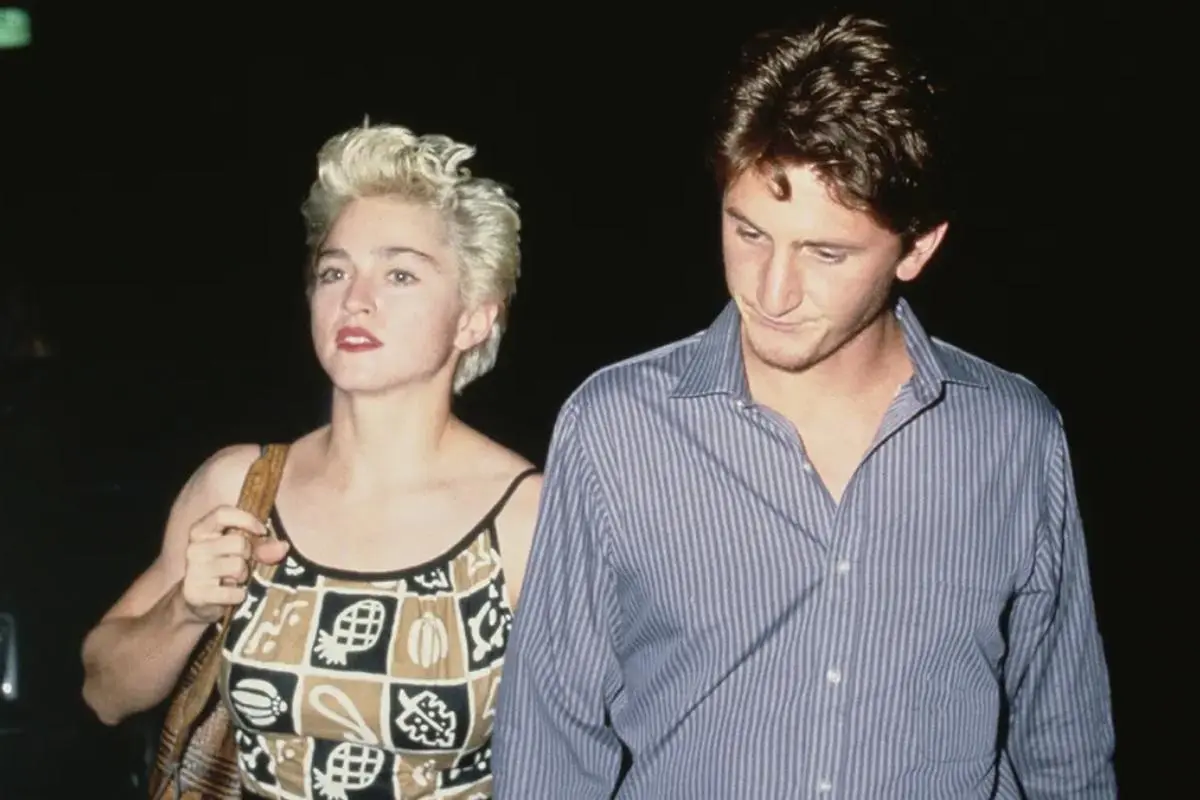
Unlike many scandal coated 80s couples, Madonna and Penn kept orbiting each other once the lawyers were finished. They have shared red carpets, charity work in Haiti and affectionate public shout outs that would be unthinkable if the darkest rumors about their marriage were true.
At a 2016 Art Basel charity gala in Miami, Madonna even joked that she would marry Penn again if he bid high enough in the auction, let him theatrically handcuff her onstage and then dropped the punch line that she was still in love with him, to a chorus of sentimental gasps. That Art Basel moment became instant tabloid fodder.
It is hard to think of many other divorces where the pop star ex wife raises money by auctioning off wedding photos and the ex husband gamely plays along, but that has become part of the odd warmth of their later years.
Why their four year marriage still matters
Madonna and Sean Penn’s marriage was short, ugly and arguably doomed from the first paparazzi flash, but it set the template for a certain kind of celebrity coupling: combustible, voyeuristic and impossible to look away from.
For music fans, the real legacy is not the tabloid copy but the songs. Without those four years of love, jealousy and mutual self destruction, there is no ‘Till Death Do Us Part’, no darker undercurrent in ‘Like a Prayer’, and maybe no pressure for Madonna to grow up on record as fast as she did.
Plenty of stars have had messy relationships in public. Very few have turned that mess into a body of work that still holds up when you ignore the gossip and drop the needle. That is why, helicopters and all, Madonna and Sean Penn’s four year detour into marriage still fascinates anyone who cares about how real life bleeds into great pop music.