
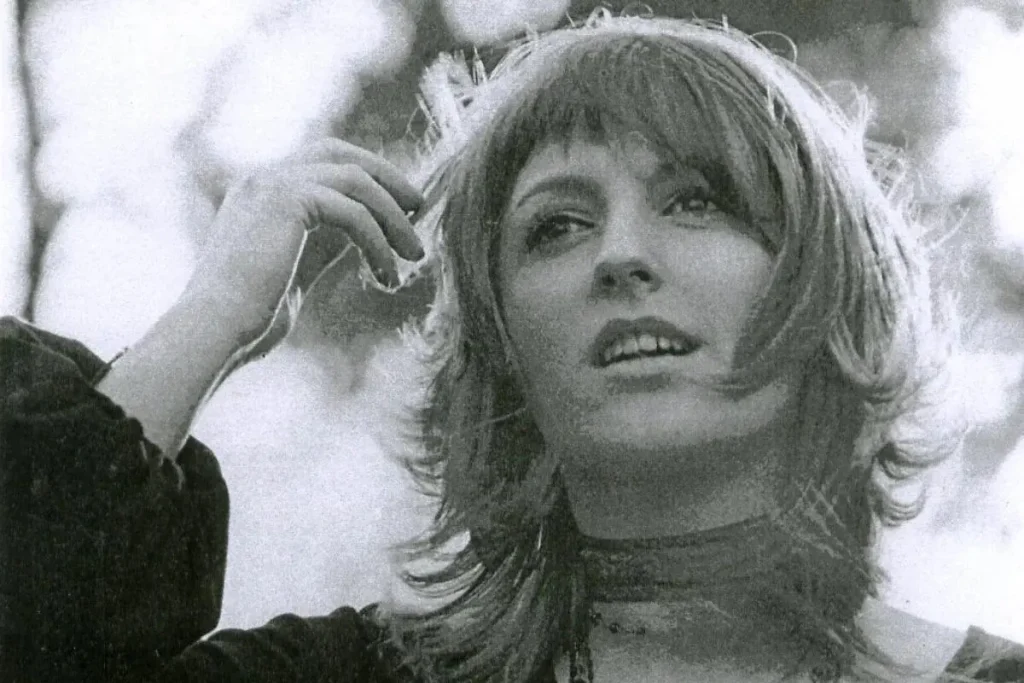
Clare Torry walked into Abbey Road as a 25-year-old session singer and walked out having delivered one of rock’s most famous human performances: the wordless wail on Pink Floyd’s “The Great Gig in the Sky.” The mythology says it happened fast: a couple of takes, a small fee, and a polite goodbye.
The uncomfortable part is that the music industry spent decades treating that kind of “just a session” magic as disposable labor. Torry’s story isn’t only a Pink Floyd footnote. It’s a case study in what happens when an improvised performance becomes the hook of a timeless recording, but the paperwork acts like it never happened.
The track that turns breathing into a melody
“The Great Gig in the Sky” sits on The Dark Side of the Moon, an album whose cultural gravity is so strong it can make even non-album-tracks feel like global singles. Pink Floyd’s official album page still frames the record as a unified work with a precise track sequence, and “Great Gig” is its emotional freefall between “Time” and “Money.”
Musically, it’s a slow-burn progression with plenty of air, and that openness is the point. If the rest of Dark Side is clocks, cash registers, and existential narration, “Great Gig” is the moment when language fails and the body takes over. No lyrics, but unmistakably a message.
“No words, no melody line”: the prompt that created history
The most revealing origin detail is also the simplest: Torry was asked to sing with no set lyrics and no fixed melody, only chords and a vibe. Alan Parsons, the engineer on The Dark Side of the Moon, described the setup bluntly in an interview recalling the session: “Sorry, we’ve got no words, no melody line, just a chord sequence.” (Alan Parsons, quoted in The Guardian.)
That prompt matters because it demolishes the usual excuse that a session vocalist is merely executing a pre-written part. Torry wasn’t handed a tune to decorate. She was asked to invent the thing listeners remember.
Two and a half takes, 30 pounds, and a very modern question: who composed that?
The headline facts are famous for a reason: the recording was completed in a couple of hours, and Torry was paid £30. Over time, that number became shorthand for a larger injustice: a performance that helped define an album, compensated like an anonymous gig.
But the real controversy isn’t the cash. It’s credit. Copyright and publishing follow the composition, and historically the composition is treated as melody and lyrics on paper, not the improvised vocal that turns chords into an emotional narrative. The industry loves improvisation when it sells records, and hates it when it threatens royalty splits.
The edgy claim (with a sober caveat)
It’s tempting to call Torry’s part “the song,” full stop. That’s overstating it. But it’s absolutely fair to say her vocal is the identity of the track for millions of listeners, and identity has economic value. If your “session” contribution becomes the reason people hit replay, it starts to look less like work-for-hire and more like authorship.
Torry’s own regret: the quote that stings
Torry later acknowledged what many young performers learn too late: you can’t retroactively negotiate the contract you didn’t know you needed. In 1998, she said, “If I’d known then what I know now, I would have done something about organising copyright or publishing,” a remark preserved in the track’s public documentation.
That line lands like a warning label on the whole session economy. The industry relies on newcomers not knowing which questions to ask.
The lawsuit and the settlement: what we know, what we don’t
In 2005, Torry’s challenge ended with an out-of-court settlement reportedly in her favor, with terms undisclosed. That “undisclosed” part is important. It means we don’t know the size of the payout or the exact royalty structure, only that the dispute was resolved without a public judgment detailing the logic.
Still, the visible outcome is hard to miss: later releases add a credit acknowledging Torry’s contribution to the composition of the vocal. That quiet change is the kind of industry admission that matters more than a thousand fan arguments.

Why “vocal composition” is a big deal
Those two words redraw the boundary between “performance” and “writing.” A vocal can be both. A guitar solo can be both. Any improvised line that becomes a fixed, repeatable part of the recorded work can carry compositional weight.
And yes, it makes the old model nervous, because it implies a lot of classic recordings may have hidden composers: the people who invented unforgettable parts during the session while someone else kept the publishing.
Where the credit shows up today (and why that’s the real victory)
Streaming platforms tend to flatten nuance, but they also make credits more visible than old LP sleeves ever did. On Apple Music’s listing for “The Great Gig in the Sky,” Torry is shown among the songwriters alongside Richard Wright, reflecting the post-settlement credit reality.
Spotify’s track page likewise exists as a canonical listening destination for the modern audience, and it’s where many listeners discover “Great Gig” without owning physical liner notes at all.
The point isn’t which app you use. The point is that Torry’s name now travels with the song in the places music actually lives.
Alan Parsons’ “interesting remix” comment and the myth of unused takes
Parsons also mentioned that unused parts may exist “somewhere in the archives” and suggested they could make “an interesting remix version one day.” (Alan Parsons, The Guardian.)
That idea is catnip for fans, but it also raises a practical question: if alternate improvisations are released, does that create new authorship issues? In modern contracts, it often would. In 1973, it was more like: don’t ask, don’t tell, don’t get paid twice.
What this story teaches working musicians (and why it’s still happening)
Torry’s case is not just rock history. It’s a template for today’s sessions, from backing vocals to sample-friendly instrumental hooks. The moral isn’t “never do sessions.” The moral is “treat every session like it might become immortal.”
Practical protections session players can use
- Clarify the role: are you performing a written part, or creating original material?
- Get it in writing: one page is better than a handshake, even among friends.
- Discuss splits early: if you’re inventing hooks or toplines, ask about publishing before the red light turns on.
- Keep documentation: session logs, emails, and even dated voice memos can matter later.
In the UK, copyright is automatic, but how it’s exploited and paid is where contracts, publishing, and collecting societies become decisive. The UK government’s copyright guidance makes clear that copyright applies to creative works, but ownership and permissions are a separate layer you negotiate or assign.
At the global level, WIPO’s overview of copyright explains the basic purpose: protecting creators’ rights in literary and artistic works, including music. That sounds abstract until you watch one person’s once-in-a-lifetime improvisation turn into an eternal revenue stream.
The provocative angle: Pink Floyd didn’t “steal” a vocal, the system did
It’s easy to reduce this to villain and victim. Real life is usually messier. Session culture in the early 1970s was built for speed: get the take, pay the fee, move on. The problem is that the economics of music changed around those recordings, while many contracts stayed stuck in the old mindset.
So the bigger accusation isn’t that a famous band personally plotted to erase a singer. The bigger accusation is that the industry normalized a model where the most memorable musical ideas could be bought cheaply if they arrived through the “wrong” job title.
“Sorry, we’ve got no words, no melody line, just a chord sequence – just see what you can do with it.”
Alan Parsons, quoted in The Guardian
That quote reads like creative freedom. It also reads like a trap: please compose something unforgettable, but don’t expect to be treated like a composer.
A quick timeline (so the drama is easy to follow)
| Year | What happened | Why it matters |
|---|---|---|
| 1973 | “The Great Gig in the Sky” released on The Dark Side of the Moon. | A “session” becomes a defining work in rock history. |
| 1998 | Torry publicly reflects on not organizing copyright or publishing earlier. | Shows how knowledge gaps shape creative careers. |
| 2005 | Out-of-court settlement reported; terms undisclosed. | Resolution without a precedent-setting public ruling. |
| Post-2005 | Releases begin to acknowledge “Vocal composition by Clare Torry.” | Credit becomes the lasting, visible correction. |
Listening differently: how to hear Torry’s authorship
If you want to hear why this became a credit fight, do one focused listen. Track the way Torry shapes the arc: the early restraint, the midrange cries, the climactic leap, and the sudden vulnerability as the chords resolve.
Those aren’t random noises on top of a backing track. They’re decisions: contour, tension, release, motif. That’s composition, even if it’s composed in the air instead of on paper.

Conclusion: a reminder written in reverb
Clare Torry’s “Great Gig” performance is proof that a voice can be an instrument and an instrument can be an author. The settlement details may be sealed, but the credit speaks loudly: the industry eventually admitted that some “session” work is songwriting in disguise.
For musicians, it’s a thrilling story and a practical warning. When someone says, “Just do what you feel,” you might be minutes away from making history. Make sure history knows your name.


