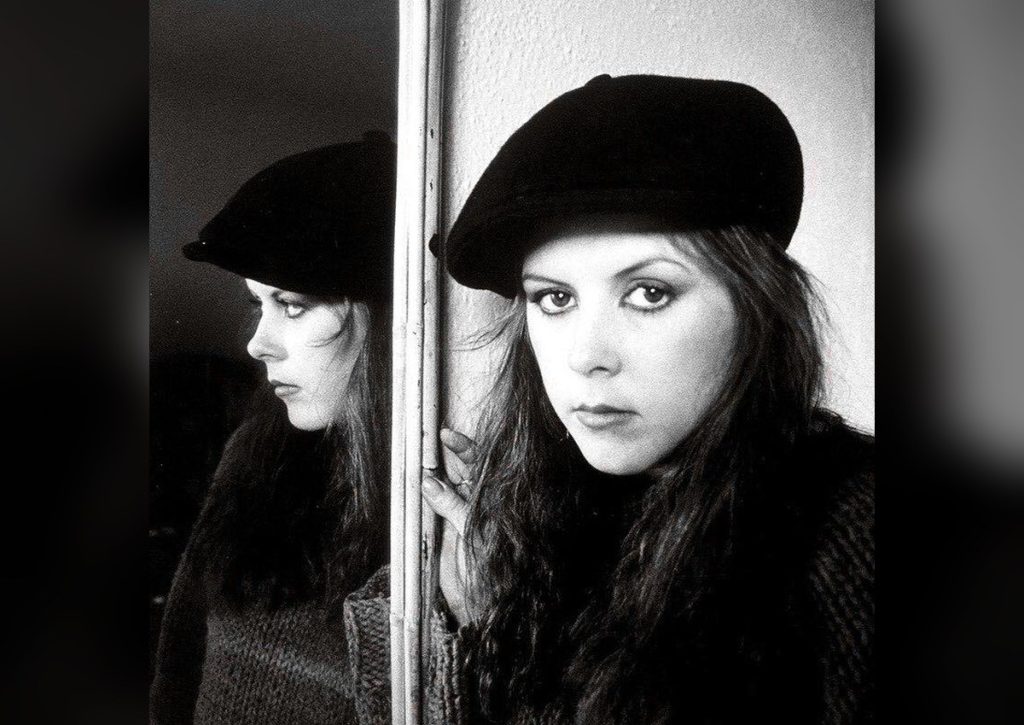
Kirsty MacColl spent an entire career being introduced as something other than what she was. Folk royalty’s daughter. The voice on someone else’s Christmas song. The funny one with the Elvis joke. All true — and all beside the point. Line up the actual work and a different picture appears: one of Britain’s sharpest songwriters, and an interpreter so good she repeatedly made other writers’ songs definitively hers.
Out from a famous shadow
Born in Croydon, Kirsty was the daughter of folk legend Ewan MacColl — the man who wrote “The First Time Ever I Saw Your Face” and “Dirty Old Town” — and dancer Jean Newlove. It was the kind of heritage that could have flattened a young writer into a tribute act. Kirsty sidestepped it entirely: her first band was not a folk outfit but a scrappy punk group called Drug Addix, and her first solo single, 1979’s “They Don’t Know”, was three minutes of perfect, Spector-tinted pop.
That song is its own parable of her luck. Her version stalled when her label ran into distribution trouble — but a few years later Tracey Ullman’s cover of it became a transatlantic Top 10 smash, with Kirsty’s melody, Kirsty’s aching “baby!” and Kirsty’s writing credit doing the heavy lifting under someone else’s name. It set the pattern for a career: the songs always travelled further than the fame.
The wit arrived fully formed in 1981 with “There’s a Guy Works Down the Chip Shop Swears He’s Elvis” — a title that still does more character work than most entire albums, and a record that made the UK charts while announcing exactly what kind of writer she was: funny, humane, and merciless about men who talk a better life than they live.
The cover that beat the original
In 1985 she took “A New England”, a spare two-verse song from Billy Bragg’s debut, and heard a hit inside it. Her instinct was practical: the song was too short, so Bragg wrote her a further verse, and she flipped a line of the chorus into a question — “Are you looking for another girl?” — turning a young man’s shrug into something more wounded and more true. The record reached number 7 in the UK, her biggest solo hit, and effectively boosted both careers at once. Bragg has sung her extra verse in tribute ever since her death — the writer covering his own cover, in her honour, every time he plays it.
Then came the voice the whole world knows without always knowing her name. MacColl was married to producer Steve Lillywhite, and when the Pogues were labouring over a bittersweet Christmas duet in 1987, she cut the female part — and made it unimprovable. On “Fairytale of New York” she gave as good as Shane MacGowan got, trading insults with a bite and tenderness no one has matched since, as an army of cover versions keeps proving every December. It returns to the UK charts virtually every Christmas, and every year a new generation asks the same question: who is she?
Her voice, meanwhile, became one of British pop’s quiet luxury goods. The Smiths brought her in to sing on “Ask”; Talking Heads put her on “(Nothing But) Flowers”; half the producers in London learned that a Kirsty MacColl harmony stack could lift a chorus like scaffolding you never see. She was, in effect, a session singer of last resort for people who could hire anyone — which is its own kind of review.
The wordsmith’s late bloom
Her own records kept the wordplay front and centre — she called a 1991 album Electric Landlady and meant every syllable of the joke — while the writing deepened. She wrote with and sang for half of British pop, and her harmony stacks became a signature other producers openly coveted. And she kept evolving right to the end: her final album, 2000’s Tropical Brainstorm, swapped jangle for Cuban and Latin rhythms and produced “In These Shoes?” — a sly, strutting single that went on to a long second life in film and television, introducing yet another audience to a writer they couldn’t quite place.
She was, by any fair reading, that rarest thing in pop: a complete musician — writer, singer, arranger, interpreter — who happened to be easy to underestimate because she was funny, female, and allergic to self-mythology.
The verdict that matters
Ask a casual listener about Kirsty MacColl and you may get a shrug, or a hum of “Fairytale”. Ask a songwriter and you’ll get the accurate verdict, usually delivered with reverence. The chip-shop Elvis line. The flipped chorus of “A New England”. Every barbed, broken-hearted reply she fires back at MacGowan. That’s a writer’s writer, doing the hardest thing in the trade: being clever and moving in the same breath, over and over, for twenty years.
She never needed the spotlight to be the best thing in the song. Usually, she just was.