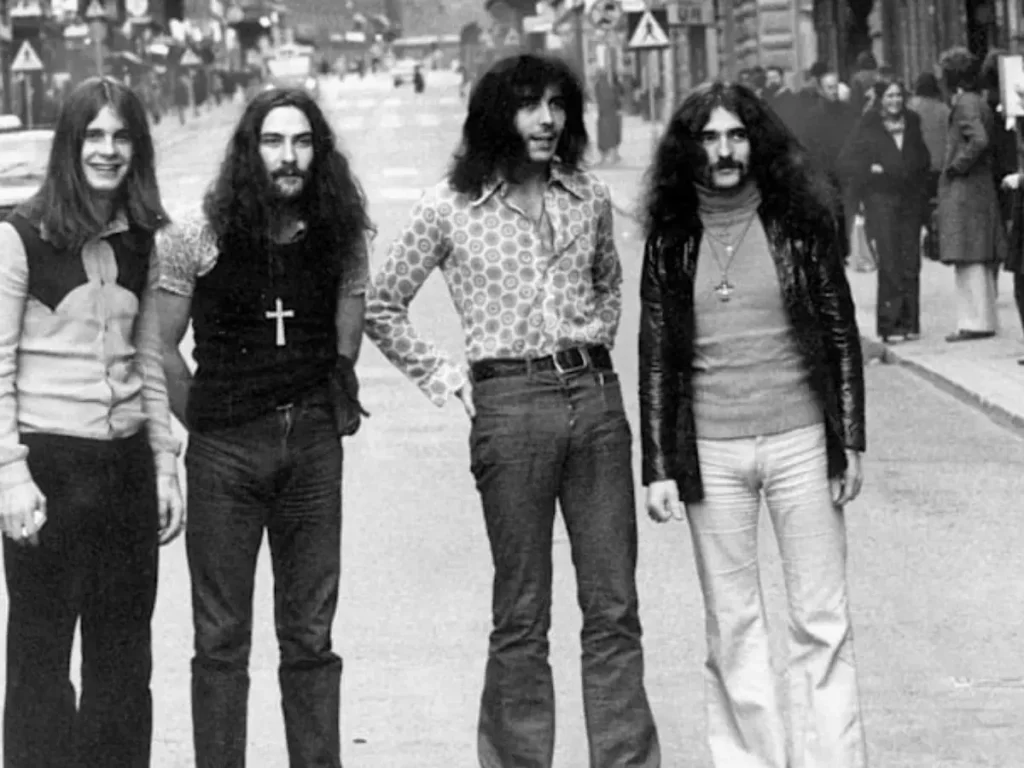
Picture this: Ozzy Osbourne, Tony Iommi, Geezer Butler and Bill Ward strolling down Kungsgatan in central Stockholm, long hair, leather and crosses, looking like trouble in broad daylight. A Swedish feature on Paranoid documents that very photo, taken on 19 April 1971, and notes how the album had already stormed charts in Sweden and across Europe by then.Aftonbladet’s retrospective ties that image to the band’s early 70s breakthrough.
The next night, those same four working-class kids from Aston walked into Stockholm’s Konserthuset – the city’s temple of classical music – and turned it into a thunderous, smoke-filled rehearsal for the future of heavy metal. There is still debate in fan circles over paperwork and exact dates, but the weight of the evidence says that 20 April 1971 was Stockholm’s night of the Sabbath.
Paranoid on top, Master of Reality in the shadows
By early 1971, Black Sabbath were in a strange place: critically despised, commercially huge and musically miles ahead of most of their peers. Paranoid had given them “War Pigs,” “Iron Man” and the title track, songs that turned anti‑war rage, working‑class anxiety and blunt riff power into something radio could not quite ignore and kids absolutely could not resist.
Instead of taking a breather, the band rolled straight into sessions for their third album, Master of Reality, in the first months of 1971. Bill Ward later described that period bluntly: the group were “getting into coke, big time… uppers, downers, Quaaludes, whatever you like,” to the point where they would come up with ideas and immediately forget them again in the haze, as he recalled in interviews about the making of “Children of the Grave.”
That is the headspace they were in when they stepped back out onto European stages in April 1971. The Paranoid-era set was already a greatest-hits barrage, but they were starting to smuggle in freshly recorded material that would not arrive in record shops until later that summer.
Scandinavian spring: following the trail to Stockholm
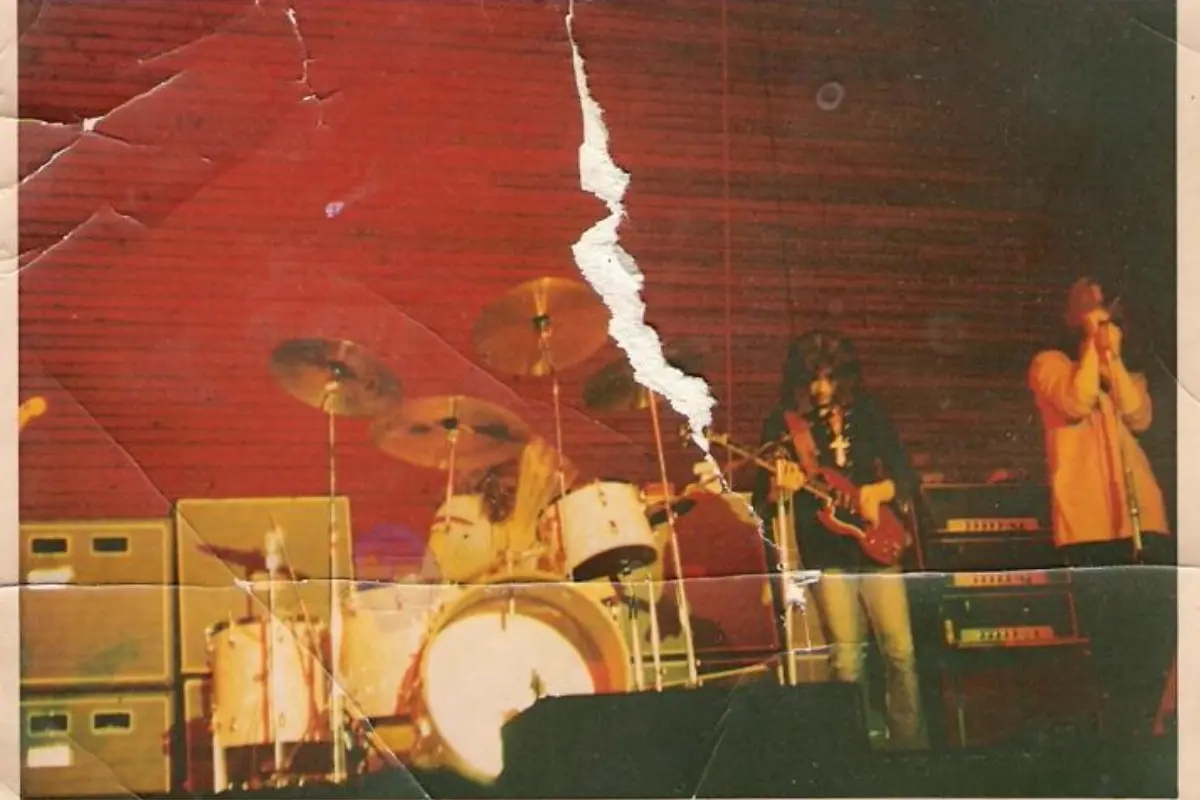
Joe Siegler’s detailed Paranoid tour chronicle shows how that spring unfolded: studio work on Master of Reality wraps in early April, then from 14 to 18 April the band hit a run of Danish halls, including KB Hallen in Copenhagen and shows in Odense, Aarhus and Holstebro. The same document then jumps to a Scandinavian leg starting 21 April in Gothenburg and continuing through Oslo, Bergen and Sandnes, but curiously lists an earlier Stockholm Konserthuset gig on 20 April 1970 with support band Jonathan Swift, leaving an awkward hole in the 1971 schedule.
A Swedish live-rock chronicle plugs that gap cleanly: it lists Black Sabbath at Konserthuset, Stockholm on 20 April 1971, followed by Konserthuset, Gothenburg on 21 April 1971, explicitly marking both as part of the Paranoid era and also noting the band’s smaller club dates in Sweden back in 1969. To Swedish fans who were there, the Stockholm 1971 show is not a rumour; it is the night the heaviest band on earth finally graduated from youth clubs to the big city concert hall.
Ozzy Osbourne’s own tour archive backs up the basic route almost beat for beat. It documents a Paranoid tour leg that runs through Denmark (Copenhagen’s Falconer Salen on 18 April), then Stockholm’s Konserthuset on 20 April, Gothenburg’s Konserthuset on the 21st, followed by Njaardhallen in Oslo on the 22nd, Konsertpaleet in Bergen on the 23rd and Sandnes on the 24th, before landing at a marathon Royal Albert Hall show in London on 26 April. The Oslo entry even preserves the full setlist, with “Black Sabbath,” “Paranoid,” “Hand of Doom,” “Iron Man,” “N.I.B.,” “Behind the Wall of Sleep,” “War Pigs,” “Fairies Wear Boots,” “Wicked World,” “Into the Void” and “Children of the Grave” all present – a pretty reliable picture of what Stockholm heard two nights earlier.
Put together with that Kungsgatan street shot, the picture is clear: the band arrived in Stockholm at least a day early, walked the city, posed for at least one Swedish photographer, and on 20 April 1971 delivered the capital’s stop on a tightly packed Scandinavian run.
Konserthuset: Nobel pomp meets heavy metal
Stockholm’s Konserthuset is not some grimy rock barn. It is a blue Nordic-classical palace at Hötorget, opened in 1926, built specifically to house what is now the Royal Stockholm Philharmonic Orchestra and to host high ceremony. The main hall seats around 1,770 people, and once a year it becomes the world’s most-watched stage when the Nobel Prizes in physics, chemistry, medicine, literature and economics are awarded under crystal chandeliers and floodlights.
The building’s own description calls it “a temple in honour of music,” a place designed for orchestral precision, chamber intimacy and carefully staged award galas rather than marshalls and smoke bombs. By 1971 it was already starting to welcome jazz and pop, but hard rock of Black Sabbath’s volume and lyrical darkness was still close to heresy in such a setting.
So on the evening of 20 April 1971, you had an almost comic collision: the same stage where laureates in physics receive medals from the Swedish king was occupied by four young Brummies bellowing about corrupt generals, heroin addiction and faceless forces of war. If the Nobel Prize represents official culture, Black Sabbath in that hall represented the exact opposite – the unvarnished soundtrack to what those official speeches politely refused to discuss.
What Stockholm actually heard
Because there is no surviving full tape from Stockholm itself, historians lean on the shows around it. Copenhagen on 18 April was essentially a concentrated blast: “N.I.B.,” “War Pigs,” “Black Sabbath,” “Iron Man,” “Into the Void,” “Paranoid” and “Fairies Wear Boots” all in a row. Four days later in Oslo they stretched out to an eleven-song set, adding “Hand of Doom,” “Behind the Wall of Sleep,” “Wicked World” and the then-unreleased “Children of the Grave.”
Stockholm would almost certainly have sat between those two poles: a Paranoid-heavy set built around mid-tempo, riff-driven anthems, but already road‑testing Master of Reality material like “Into the Void” and “Children of the Grave.” The band were never a jam act in the Grateful Dead sense; instead, the chaos came from tiny tempo lurches, extended solos and the sheer physical impact of playing this music at punishing volume in a perfectly tuned classical hall.
For Swedish fans in 1971, many of whom had only experienced this music on crackly Vertigo LPs, the shock would not only have been the volume, but the swing: “Fairies Wear Boots” and “N.I.B.” live are closer to mutant blues and jazz shuffle than straight 4/4 rock, with the band dropping in and out of grooves like a club combo rather than a stadium machine.
The sound of the Stockholm show: four instruments, one avalanche
Tony Iommi’s SG and Laney wall
Tony Iommi’s rig on the Paranoid tour was brutally simple and brutally loud. In his own words, he was basically running a Gibson SG into Laney heads and 12-inch cabs, while almost everyone else was still chasing Marshall or Hiwatt stacks; he would sometimes switch to Fender amps for the odd brighter solo. The Laney Supergroup-style heads were set with bass almost off and mids, presence and gain cranked, creating that dry, saw-toothed distortion that still cuts through decades later.
By 1971, Iommi was also flirting with lower tunings that would fully bloom on Master of Reality, which only made those riffs heavier in a room already built to magnify orchestras. In Konserthuset’s main hall, each open chord from his SG would have hung in the air like church bells that had been dragged through a foundry.
Geezer and Bill: jazz chaos in a classical room
Geezer Butler’s bass tone on this tour was closer to a second guitar than a traditional low-end thump. He drove big tube amps so hard that the sound smudged into Iommi’s, creating that famous wall where you can barely tell who is playing which line, only that the entire band is moving like one huge, detuned machine.
Bill Ward, meanwhile, did not play like a typical early-70s rock timekeeper. Rooted in jazz and swing, he treated songs like “War Pigs” and “Black Sabbath” as shifting landscapes, throwing in triplets, cymbal splashes and sliding accents that made the music feel constantly on the edge of derailing. In a hall where drummers were more used to playing neat symphonic parts, his wild, behind-the-beat fills would have sounded almost indecent.
Add Ozzy’s nasal, utterly English voice on top, barking anti‑war sermons and gleefully introducing songs about heroin and dead soldiers, and you have a kind of inverted church service. It is easy to see why conservative commentators misread it as satanic; in reality, those Stockholm lyrics were closer to a tabloid from the front lines than to a black mass.
So what were they actually doing in Stockholm?
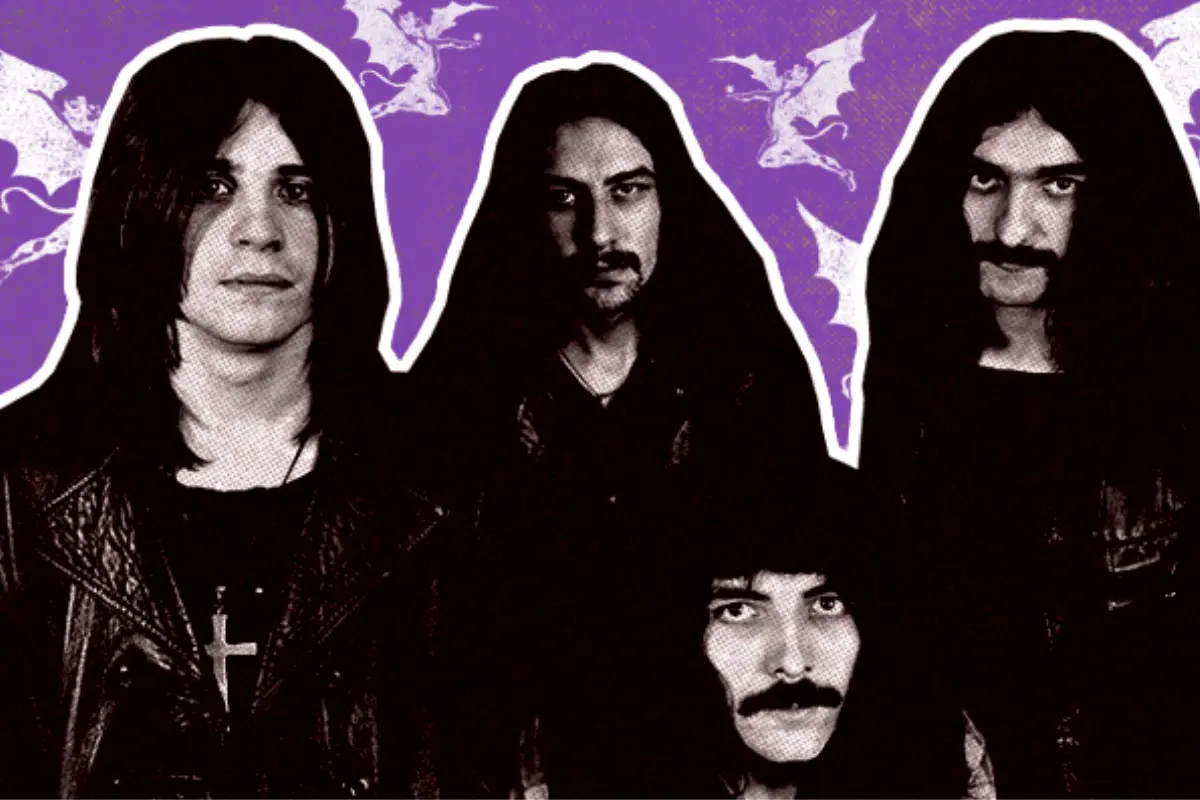
Strip away the mythology and the answer is almost disarmingly practical. Black Sabbath were in Stockholm on 20 April 1971 because it was the logical northern stop on a Paranoid tour leg that snaked from Denmark through Sweden, Norway and back to London. They were working musicians, grinding out another date, trying to keep a volatile band on the road while a new album waited in the wings and a worsening drug habit shadowed every decision, as the tour records from that period make clear.
At the same time, that everyday tour stop had outsized symbolic weight. The Kungsgatan photo shows them as tourists and young men, but the Konserthuset booking shows them as something more: a band heavy and popular enough to take over the capital’s most prestigious concert hall, if only for one night. In Swedish retrospectives on Sabbath’s 50-year metal legacy, that leap from youth clubs to the Nobel hall stands out as a turning point. In a country that would later give the world its own metal institutions, from Europe to Entombed, that matters.
For players today, recreating that Stockholm 1971 feel is not about copying every detail, but about understanding the recipe: a mid‑priced SG‑style guitar into a loud British-voiced amp with the mids dimed, a bassist unafraid of distortion, a drummer who swings more than he should and a singer who sounds like he means every word. If you want to start smaller, our own guide to easy guitar chord songs even uses “Iron Man” as a textbook example of a simple but devastating power‑chord riff, mostly on the A and D strings with those crucial slides that make the whole thing lurch forward.
On paper, then, 20 April 1971 was just another tour date. In reality, it was the night the world’s heaviest new band walked into the Nobel hall, lit up their amps and proved that four scruffy kids from Aston could make a venerable Swedish institution shake on its foundations.