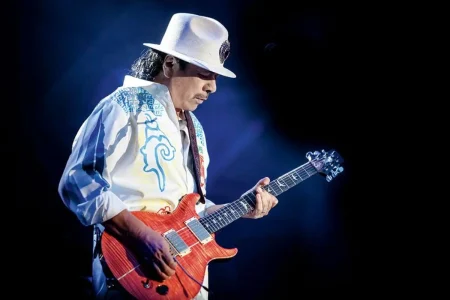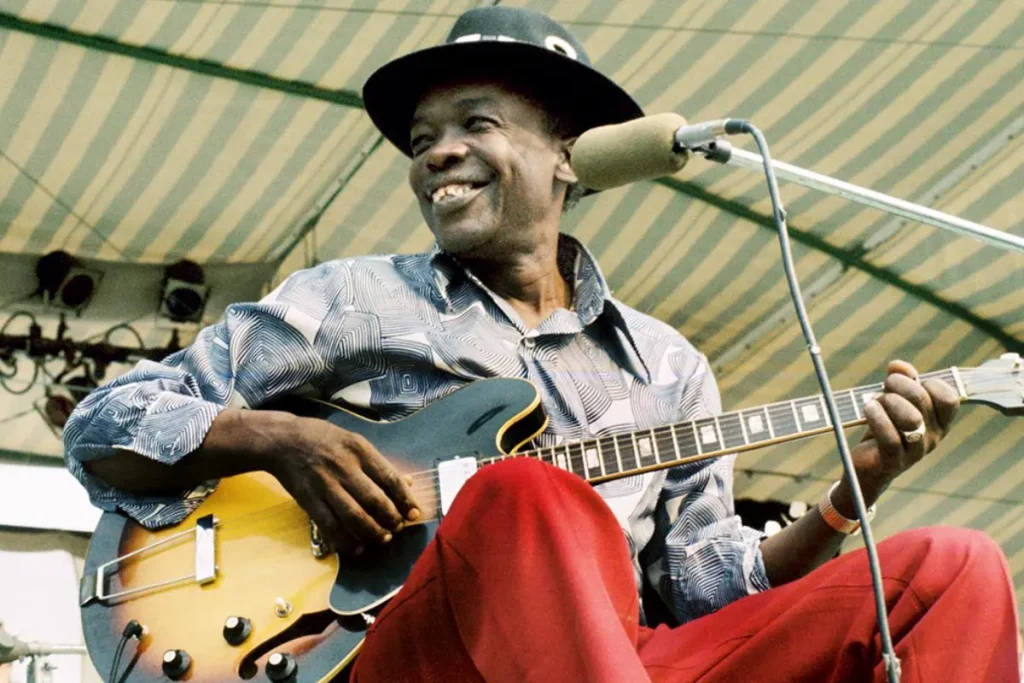
Carlos Santana remembers walking into a room and seeing John Lee Hooker holding court like some blues pharaoh, four women at his side, eating fish and chips and Junior Mints at the same time. Charlie Musselwhite remembers something very different – a lone voice and guitar sliding out of a cheap radio at midnight, sounding cool, haunted and just a little dangerous. Between those two images sits the real Hooker: hilarious, sensual, stubborn and utterly uninterested in playing by anybody else’s rules.
Two eyewitnesses to the Hooker legend
In a recent MOJO profile, Santana laughs as he recalls Hooker in full late‑life glory. The old man is in a chair, two women on each side, one team feeding him candy, the other passing him greasy takeout, while they massage what Santana called his “hot soft hands.” Hooker is not posing for anyone. He is simply enjoying himself, and as Santana puts it, “He was hilariously funny to be around,” the kind of larger‑than‑life character you might assume was invented for a movie, except he was very real.
Musselwhite’s memories run darker. He talks about listening to late‑night radio when “Hobo Blues” came crawling across the AM static – just a man, a guitar and a foot tapping time. “Everybody respected John,” he says, because “his style was so unlike anybody else,” and on those solo sides it “just sounded so cool, even sinister.” In the same MOJO piece he drops a perfect Hooker punch line: when Madonna’s camp phoned to invite him into a video, Hooker politely schmoozed her, hung up, then told his manager, in effect, he was not doing it. He did not know who Madonna was, and he did not care.
The funkiest man alive, in a suit and shades
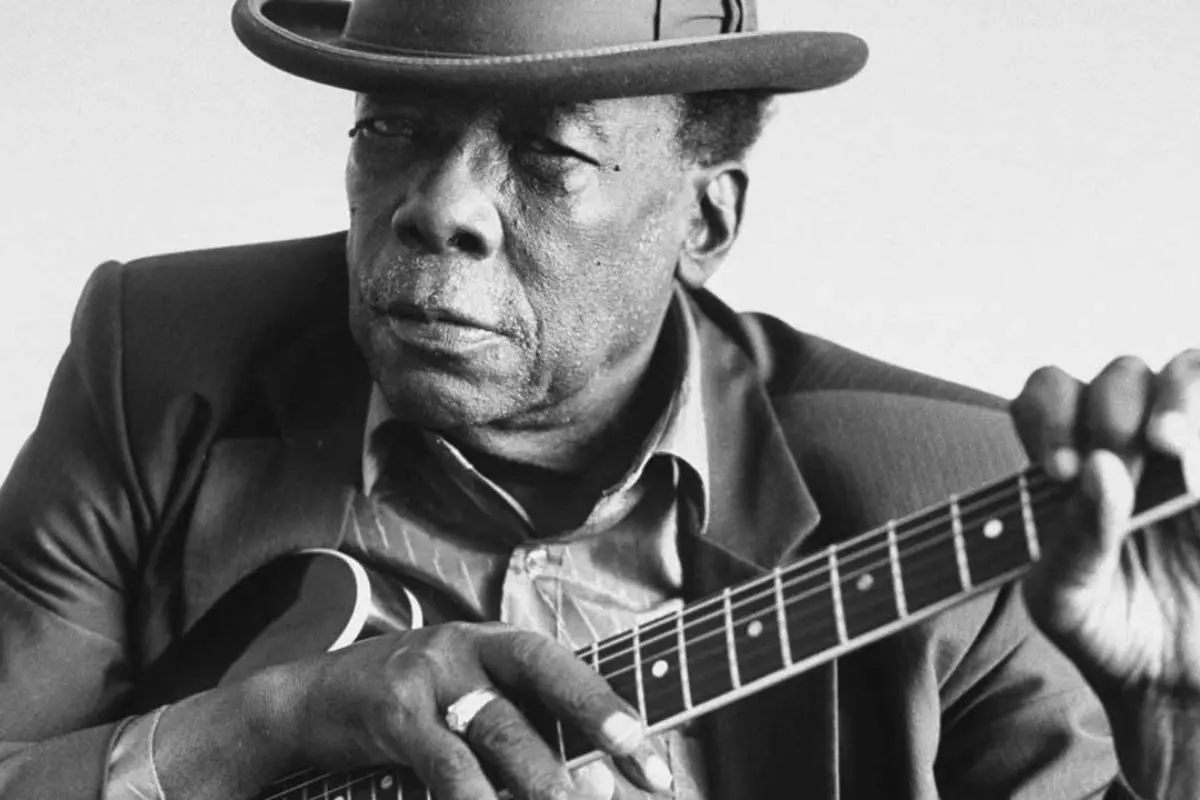
Stories like that land because they match how Hooker carried himself offstage. A Mississippi Today feature on centennial exhibits describes him at home in Los Altos dressed exactly as on stage – sharp suit, hat, dark glasses – a regal, impenetrable presence even while watching a ball game. Miles Davis reportedly called him “the funkiest man alive,” and friends remembered him as a ladies’ man whose charm baffled other men as much as it disarmed women.
Musselwhite, one of his closest allies, recalled that no matter how much fame or money came, Hooker “was always the same John Lee” he had first met: generous, dryly funny, slow to move unless there was music or food involved. That combination of royal bearing and working‑class stillness is part of why younger rock players treated him with a mix of fear and devotion. You did not just hire John Lee Hooker. You entered his orbit.
How one guitar and a footstep rewired the blues
By the time “Boogie Chillen” hit jukeboxes in 1948, Hooker’s sound was already stripped to the bone: electric guitar, voice, and that relentless foot stomping on a plywood board. Early sides like “Boogie Chillen,” “Hobo Blues,” “Crawling Kingsnake” and “I’m in the Mood” were mostly cut solo, his open‑tuned guitar droning against a pulsed rhythm that ignored the textbook 12‑bar form and bent bars to fit his story. John Lee Hooker: The Boogie Man
In the mid‑1950s he began recording with small electric bands, pushing the boogie feel harder on singles such as “Dimples” and “Boom Boom.” Those records hit in Britain, turning him into a cult hero for young R&B‑obsessed musicians, even as he simultaneously toured American folk circuits as a one‑man blues storyteller. His profile sagged in the 1980s, then exploded back into view in 1989 when he cut The Healer, a duets album with disciples like Carlos Santana, Bonnie Raitt, George Thorogood, Los Lobos and Canned Heat that plugged him directly into a new generation of blues and rock fans.
Modern critics have tried to correct the old cliché that Hooker was some primitive holdover from the Delta. Reviewing the expanded edition of his 1962 album Burnin’, Pitchfork points out that Hooker was actually a musical modernist, electrifying country blues in Detroit and collaborating with future Motown players to create lean, danceable tracks like “Boom Boom.” The review notes how his so‑called endless boogie – short riffs, heavy backbeat, almost mantra‑like repetition – proved influential enough that bands such as ZZ Top ended up in legal trouble for borrowing his rhythmic blueprint too closely.
Why “Hobo Blues” feels like a ghost at the door
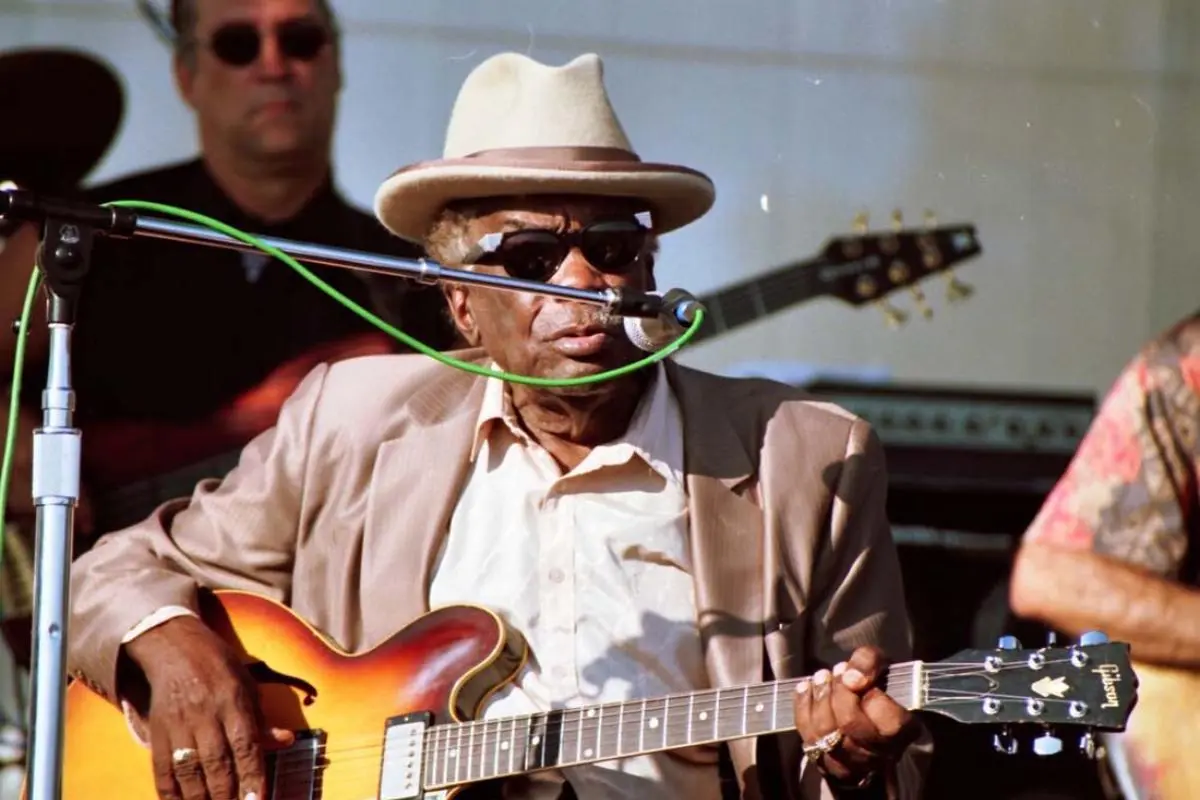
So what was Musselwhite hearing on that late‑night radio that felt “even sinister”? Musicologist Ethan Hein’s deep dive into “Hobo Blues” offers a clue. The original 1949 recording is played in an open G tuning but sounds somewhere between A‑flat and A, part of why it feels slightly out of joint. It is essentially a one‑chord groove, Hooker hammering the low string on nearly every beat while his voice floats above, sometimes locked to the guitar, sometimes drifting so freely that, as Hein puts it, it can feel like there are no barlines at all.
Add his audible foot tapping – reportedly on a board in the studio – and you get a rhythm section made out of one man’s body. The time wobbles, phrases stretch and snap back, and the whole thing hovers between trance and threat. That is why “Hobo Blues” can sound both intimate and eerie: it is not just a song about a runaway; it is the sound of someone walking out the door and never quite arriving anywhere safe.
Three tracks that tell the whole story
| Song | What to listen for |
|---|---|
| Hobo Blues | The lurching one‑chord pulse, the way his voice pushes against and behind the beat, that lonely foot keeping its own crooked time. |
| Boogie Chillen | How little is actually happening – one riff, one groove – and how huge it still feels, like a whole club contained in a single guitar. |
| The Healer | Santana’s glassy sustain weaving around Hooker’s gravelly vocal, a Latin‑tinged trance that proves his boogie could sit comfortably beside late‑20th‑century rock. |
Santana, Musselwhite and the late‑career miracle
The Healer was more than a clever concept album. Released when Hooker was in his seventies, it paired him with Santana, Raitt, Musselwhite, Canned Heat, Los Lobos and others, delivered his first Grammy for the updated “I’m in the Mood,” and cemented his status as “King of the Boogie” for listeners who had only known him from classic rock radio.
Craft Recordings later underlined that status with the five‑disc box set King of the Boogie, a 100‑track career survey that runs from bare‑bones 1948 cuts like “Boogie Chillen” and “Sally May” through live epics and a “Friends” disc full of collaborations with Santana, Raitt, Van Morrison, B.B. King, Eric Clapton and more. The box set The message is not subtle: for half a century, the smartest players in blues and rock lined up for the chance to stand next to Hooker’s groove.
Santana never treated Hooker as a museum piece. In a late‑80s Guitar World interview he talked about organizing a concert where the Berkeley Symphony would back Hooker, cellos sawing out his boogie riffs, because to him Hooker’s music was nothing less than “American classical music” that deserved the same orchestral respect as any European composer.
Musselwhite’s bond was just as deep, but more intimate. He played on multiple Hooker projects over the years, and has recalled that Hooker even served as best man at his wedding. In one interview he described their relationship bluntly: playing with John was fun, but more than that, “he was a good friend to me,” a true bluesman who kept performing right up until the end.
That end came quietly. As Wired’s obituary noted, Hooker died in his sleep at home in Los Altos after a career that produced more than 100 albums, influenced everyone from Van Morrison and the Rolling Stones to Bonnie Raitt, and earned him Rock and Roll Hall of Fame induction plus multiple Grammys, including a Lifetime Achievement Award. His late‑life success with albums like The Healer and Chill Out meant he finally enjoyed a measure of comfort that had eluded him in the lean years.
The Madonna problem: blues that refuses to bow
That is what makes the Madonna story so sharp. In pop logic, turning down a Madonna video in her imperial phase looks insane. For Hooker it was simple. He liked the idea on the phone, because he liked flirting and he liked people. Once the call ended, he weighed what really mattered to him – being comfortable, being surrounded by food and friends, getting paid fairly, playing when he felt like it – and the answer was no.
He was not impressed by MTV exposure or chart positioning. He had already outlived more trends than Madonna had costume changes. When you have rewritten the guitar vocabulary with a single riff and survived every rip‑off that came after, you do not need a pop cameo to validate you. In that sense Hooker was more punk than most punk bands: he simply did not care.
Why these stories still matter
Put Santana’s hotel‑room comedy, Musselwhite’s spooky radio memory and the Madonna snub together and you get a three‑dimensional portrait. Hooker was a hedonist who loved food, women and jokes; a mystic whose one‑chord vamps could make a room feel like it was levitating; and a fiercely independent man who would only say yes when the music and the moment felt right.
For listeners raised on the blues boom of the 50s through the 90s, revisiting those records with these stories in mind is a revelation. Spin “Hobo Blues,” “Boogie Chillen” and The Healer back to back and you can hear the same stubborn, playful intelligence at work. In an era where every legacy artist is expected to brand‑collaborate their way into relevance, John Lee Hooker still stands as the guy who could charm Madonna on the phone and then say, with a shrug, that he was not doing it.