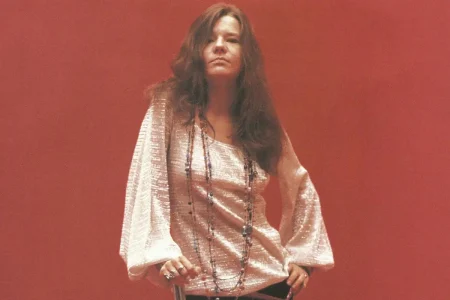
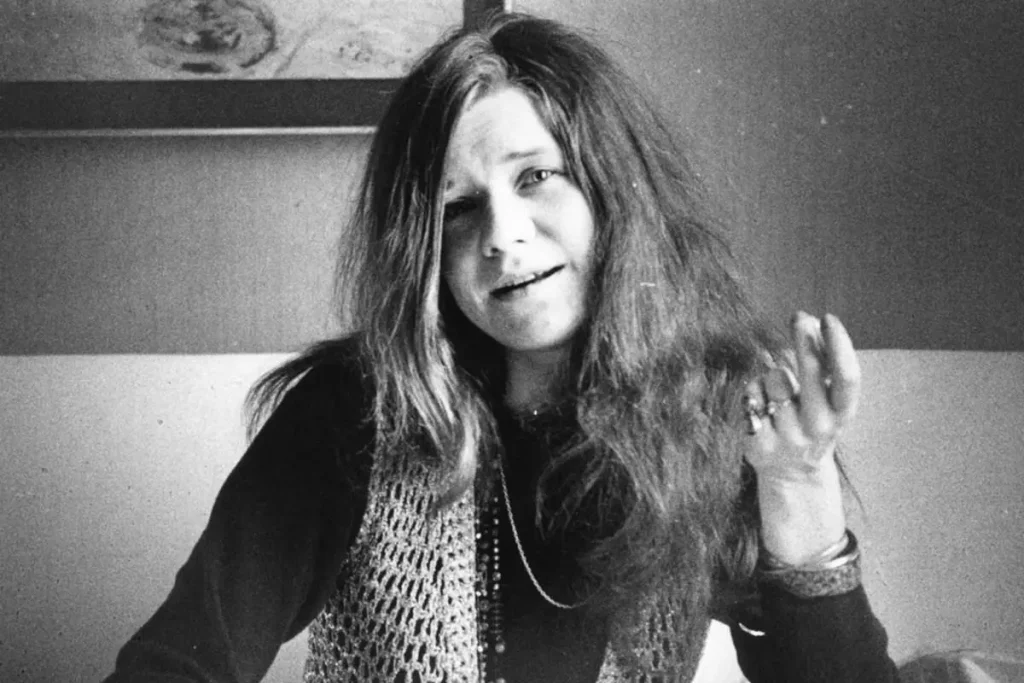
In just a couple of minutes on tape, Janis Joplin mocked consumer worship with her a capella prayer ‘Mercedes Benz.’ Yet the most revealing thing she ever bought might have been a slightly worn Porsche 356C that she promptly turned into a rolling hallucination.
That used mid-60s cabriolet she picked up in 1968 would, decades later, ignite a bidding war at RM Sotheby’s in New York, proving that a shabby hippie daily driver could become one of the most coveted Porsches on the planet.
From plain white 356 to technicolor self-portrait
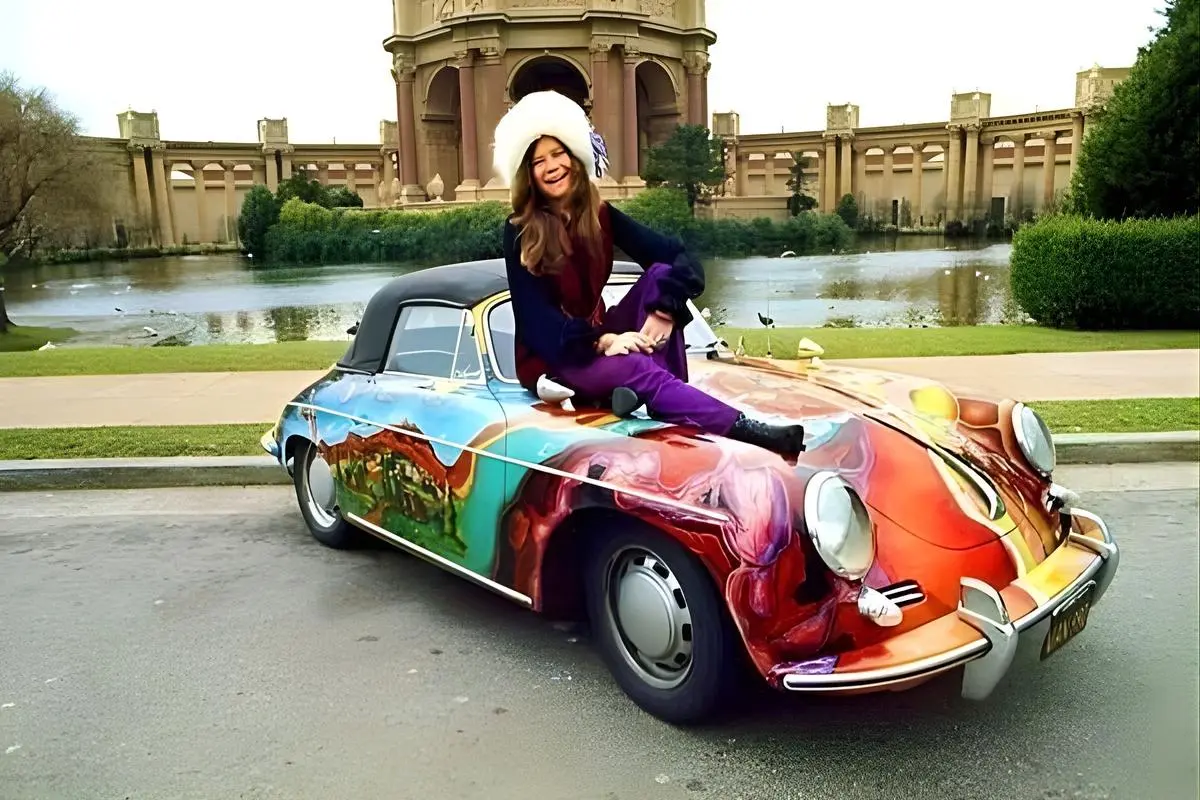
Originally the car was an unremarkable pearl white or dove grey 356C cabriolet – quick, tidy, and about as conservative as a Porsche gets. Joplin bought it used in 1968 and immediately handed it to band roadie Dave Richards, asking him to drown the bland factory finish in a psychedelic mural he called ‘History of the Universe,’ packed with butterflies, jellyfish, and portraits of Janis and her band.
The choice was deliciously perverse. Here was the woman about to record a song begging the Lord for a Mercedes because ‘my friends all drive Porsches,’ quietly cruising California in exactly the sort of German sports car she was mocking, only now painted like a freaked-out tarot deck instead of a dentist’s weekend toy.
What the paint actually shows
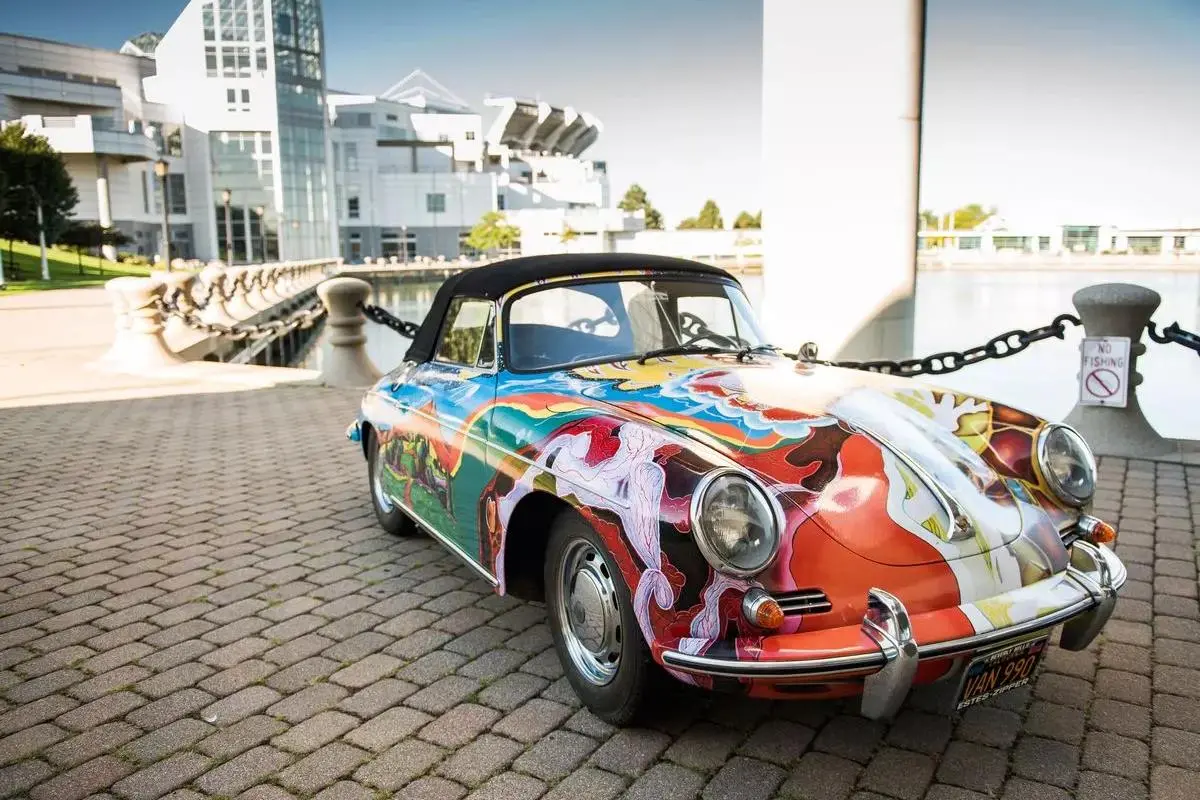
Photographs from the period show the Porsche covered nose to tail in cartoon hills, floating eyes, ghostly faces, mushrooms, flowers, butterflies and trippy skies. It looks less like a respray and more like someone wrapped the band poster scene around a German sports car and never bothered to cut out the windows.
In an era when most musicians were still being packaged by labels and stylists, this was DIY branding at its purest. The car broadcast exactly who Joplin was before she ever opened her mouth: loud, damaged, ecstatic, and unwilling to blend in with anything, especially other people’s expectations.
Daily driver, fan magnet, and near-perfect crime
Unlike most celebrity collectibles, this Porsche was not a stage prop on a trailer. Joplin drove it constantly around San Francisco and down to Los Angeles, her fans learning to recognize the car on sight and leaving handwritten notes under the wipers, and on the day she failed to show up for a session in 1970, friends knew to look for her at the Hollywood hotel where the Porsche sat in the garage; decades later, her siblings told CNN they planned to funnel the auction proceeds into social programs in her memory rather than simply cash out.
RM Sotheby’s auction catalog reads like a novella about what happened next. It describes how the Porsche, by then the most recognizable car in San Francisco, was once stolen and hastily sprayed in primer grey, only for the overpaint to be peeled back thanks to the clearcoat protecting Dave Richards’ original work; how, by the early 1990s, Janis’s family commissioned Denver artists Jana Mitchell and Amber Owen to painstakingly recreate every brushstroke from stacks of period photos; and how the restored 95 bhp 356C spent roughly two decades on display at the Rock and Roll Hall of Fame in Cleveland as a fully running artifact of the psychedelic era.
Condensed into a timeline, the life of Joplin’s Porsche looks like this:
| Year | Key moment |
|---|---|
| 1968 | Janis buys the used 356C cabriolet in California and hands it to roadie Dave Richards for its psychedelic makeover. |
| Late 1960s | The car becomes her daily driver around San Francisco and Los Angeles, even getting stolen and briefly oversprayed before being recovered. |
| 1970 | Joplin dies in Hollywood; the Porsche remains parked at the Landmark Motor Hotel and later passes fully into her family’s hands. |
| Early 1990s | Recognizing its cultural value, the Joplin family commissions a meticulous recreation of the original artwork on fresh paint. |
| 1995 | The restored Porsche goes on long-term loan to the Rock and Roll Hall of Fame in Cleveland. |
| 2015 | RM Sotheby’s sells the car in New York for a record-setting seven-figure sum to an anonymous buyer. |
From counterculture beater to million-dollar art car
By the time the car finally left the Joplin family’s hands, it had already spent around twenty years as a museum piece and cultural touchstone. When RM Sotheby’s offered it in December 2015 as part of its ‘Driven by Disruption’ sale, seven bidders fought over the keys until the gavel fell at 1.76 million dollars, more than triple the high estimate and a new public-auction record for any Porsche 356.
For her brother Michael, that price tag only confirmed what fans already felt. He has called the Porsche the most visual and important piece of Janis memorabilia that exists, a direct link to the singer he remembers blasting around San Francisco with the top down and ‘her feathers flying’ in the slipstream.
Seen coldly, that is an outrageous sum for what started life as a modest 356C cabriolet with roughly 95 horsepower and no racing pedigree. But collectors were not paying for numbers; they were paying for a one-off fusion of rock history, outsider art, counterculture mythology, and the rare feeling that a celebrity artifact still has the owner’s fingerprints all over it.
Why Janis Joplin’s Porsche still matters
Janis Joplin’s reputation as one of the defining rock voices of the late 1960s has only grown since her death, capped by her 1995 induction into the Rock and Roll Hall of Fame.
That status is etched into this car more deeply than into any gold record. The Porsche captures her contradictions better than any documentary: the supposed anti-materialist who happily bought a sports car, the blues purist who embraced pop spectacle, the vulnerable misfit who still wanted to be noticed from across the street.
It also quietly rewrites car-history timelines. A decade before BMW commissioned Alexander Calder to paint its first official Art Car in 1975, Joplin and a lowly roadie had already turned this small Porsche into a genuine work of rolling art, years before corporations decided that painted sheetmetal could double as high culture.
Plenty of rock stars have owned exotic machinery, but almost all of it feels like costume jewelry now, shiny and meaningless. Joplin’s 356C is different: it still looks like a diary you could drive, a fragile, noisy reminder that for a brief few years, raw talent, reckless living, and a used German sports car could accidentally create something museums and billionaires would fight over half a century later.