
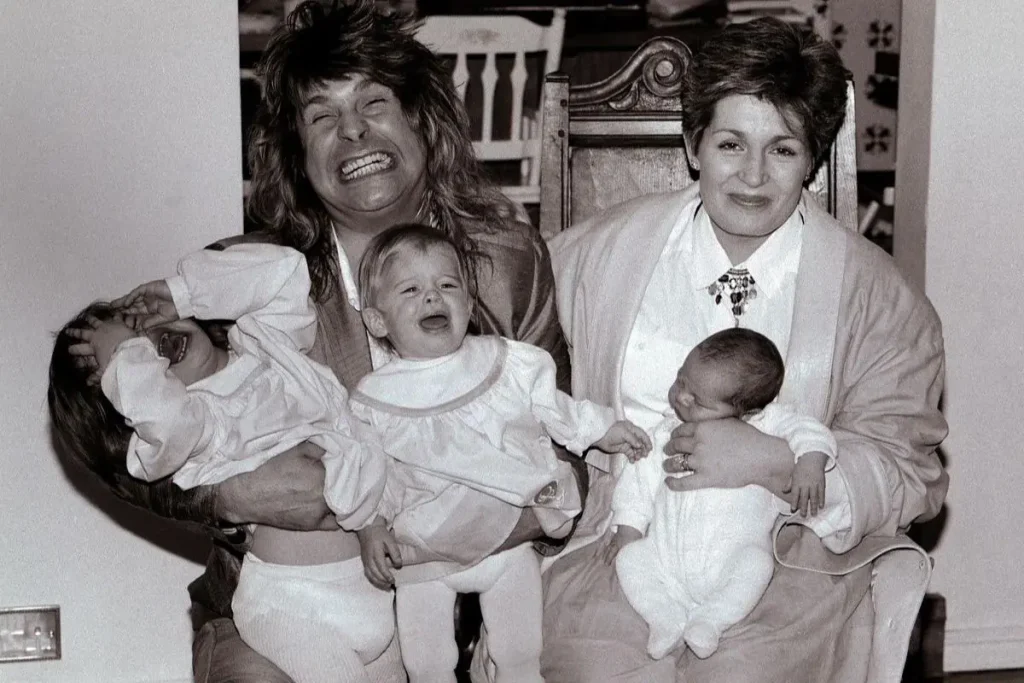
It is tempting to picture the 1980s Osbourne household as a permanent backstage afterparty: chandeliers shaking, amplifiers humming, and someone always yelling “Where’s the snake?” That image sells, but it misses the engine that kept the family going when Aimee, Kelly, and Jack were little.
Behind the myth was a rhythm that looks surprisingly familiar to any family built around travel-heavy work: one parent gone for long stretches, the other running the calendar, and everyone learning to live with abrupt mood shifts when the traveler returns. With Ozzy’s addictions and instability, that rhythm was not quirky; it was the difference between “functioning” and “flames.”
“I didn’t get sober until 2013.”
Ozzy Osbourne, quoted in Rolling Stone
The basic rhythm: “Ozzy is away” vs “Ozzy is home”
When Ozzy was away: the house ran like a command center
During the 1980s, Ozzy’s solo career meant cycles of recording, promotion, and heavy touring, and those cycles are plainly visible in the timeline of his career and Sharon’s management role. That matters because “touring cycle” is not an abstract phrase – it is months where a parent is physically absent and a family system forms around the absence.
In that away mode, Sharon’s day-to-day role was less “rock wife” and more operations manager: school logistics, household staff, travel coordination, and crisis prevention. If you strip away the celebrity, it resembles a military spouse dynamic, except the deployed partner is also battling addiction and returning to a workplace where excess is normalized.
The kids’ stability would have come from routine: school days that start on time, meals that show up whether or not the star is in town, and adults in the house who keep rules consistent. It is not glamorous, but it is how you keep children from absorbing the volatility of a touring parent as their normal baseline.
When Ozzy was home: two modes, both complicated
When Ozzy returned, the household did not automatically become “family movie night.” The “home” phase often swung between two recognizable states.
- Quiet, reclusive downtime – sleeping odd hours, zoning out in front of the TV, recovering physically, and sometimes isolating.
- Work-at-home chaos – phone calls, planning, personnel changes, rehearsals, and business arguments happening in the same rooms where kids do homework.
For children, that split is confusing: Dad is finally present, but presence does not equal availability. The emotional whiplash is not just “celebrity life,” it is an addiction household pattern where the family never fully knows which version of a person is walking through the door.
Sharon’s real job: manager, crisis manager, and keeper of routine
Sharon Osbourne’s public persona later leaned into comedy and bluntness, but the 1980s required something colder: structure. In profile, she is routinely described as Ozzy’s manager and the person who helped steer his solo career, and Ozzy has also spoken about his long arc toward sobriety in ways that underline how high-stakes that steering could be.
Management is not just negotiating fees; it is keeping the machine moving when the star becomes the problem. In a household, that means Sharon’s “work” bleeds into parenting because career emergencies can interrupt dinner as easily as a sick kid can interrupt a meeting.
In practical terms, a manager-spouse household tends to develop a few telltale features:
- Phones never stop – agents, promoters, lawyers, label contacts, band members, and accountants.
- Decisions happen at home – contracts, budgets, tour routing, and disputes spill into the kitchen.
- The calendar rules everything – school terms, rehearsals, recording blocks, press obligations, and recovery time fight for the same space.
Edgy claim, but fair: in families like this, the kids do not grow up in a “mansion.” They grow up inside a business. The square footage is bigger, but the pressure is also bigger because the business is tethered to one person’s health and behavior.
Ozzy as a dad: affectionate, funny, and unreliable all at once
Ozzy’s long-running reputation is not just “wild,” it is medically risky: substance dependence, blackouts, and chaos that became part of his brand. Even in later years, he has spoken publicly about sobriety and relapse in a way that underscores how long the struggle lasted, and the family later gave viewers a front-row seat to that dynamic on the reality series that made them a household name.
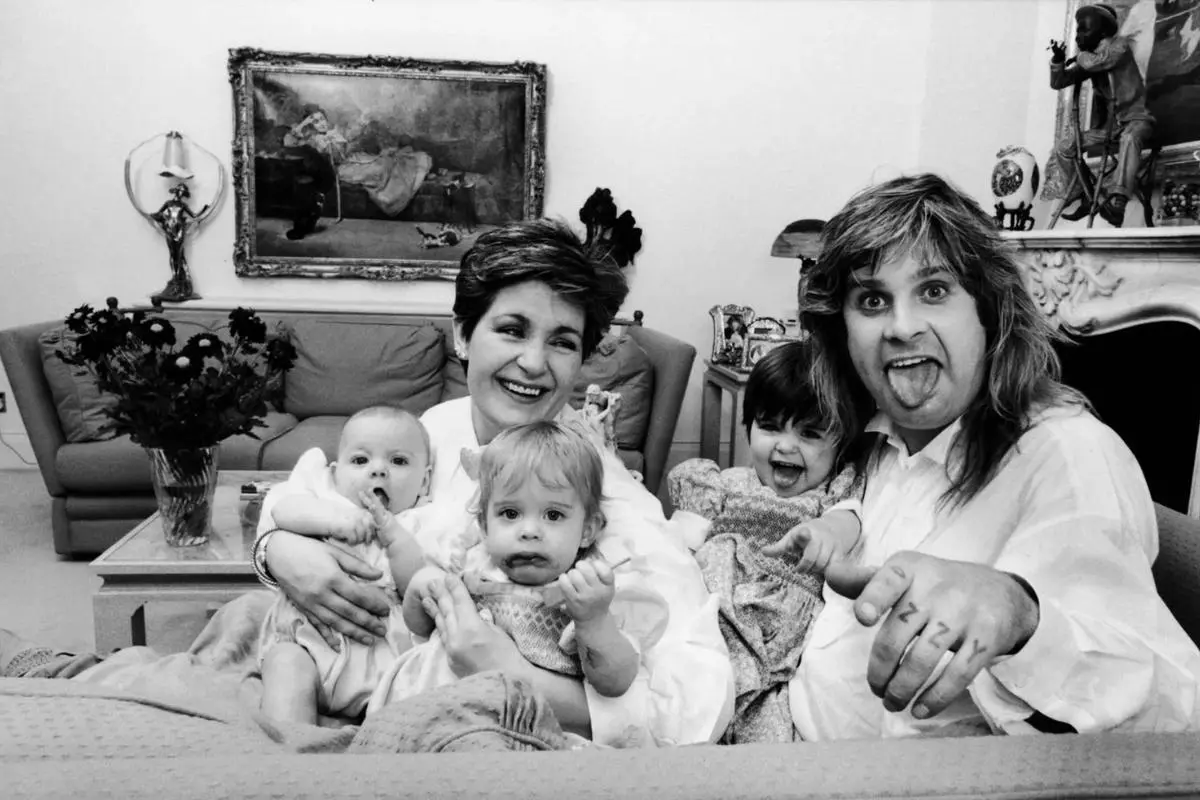
In many retellings, that creates a paradox that children understand better than outsiders: a parent can be loving and still not be safe. When Ozzy was present and relatively sober, he could be gentle, playful, and deeply affectionate. When he was not, his mood and availability could swing fast, and the household had to adapt.
For kids, the lived reality is often this: Dad is hilarious and warm, but he is also a weather system. You do not argue with a storm; you prepare for it, read the signs, and try not to be outside when it hits.
Why it didn’t look like the later TV-show version
MTV’s The Osbournes made the family feel like a nonstop chaotic sitcom, but reality TV is an edit, not a diary. The show’s premise and run are easy to verify, but Ozzy’s own written account in his memoir description of that life is useful context for why viewers so often project the 2000s tone backward onto the 1980s.
The 1980s household was more segmented and private by necessity. Touring physically removed Ozzy for long stretches, and Sharon’s management work pulled her attention into constant adult problems that kids should not have to track but often sense anyway.
Also, the camera changes behavior. A private household can be unstable without becoming “performative.” A televised household often becomes louder because conflict is content, and content is the paycheck.
“Controlled routine” is not boring – it is a survival tactic
When the household includes a parent who is unpredictable, routine is not a Pinterest aesthetic. It is a protective wall. That wall is built from small things that look ordinary from outside: consistent school attendance, bedtime rituals, and adults who keep rules stable even if the famous parent cannot.
Sharon’s management background likely reinforced that instinct. Managers live by schedules, contingencies, and damage control. That mindset maps cleanly onto parenting in an unstable environment: you plan the day, you anticipate trouble, and you keep moving anyway.
In a sense, the household’s “normal” parts were the most radical. Maintaining school and structure while one parent is spiraling is not suburban banality; it is discipline under fire.
Tour pressure at home: when the family room becomes pre-production
One overlooked detail in celebrity households is how much “touring” happens before the bus rolls. Planning, rehearsals, set decisions, personnel calls, and label discussions can colonize the home. The result is a strange domestic overlap: kids doing homework while adults argue about contracts, or a rehearsal schedule dictating when dinner can happen.
Ozzy’s own story is deeply bound to the machinery of tours and albums, which is part of why the family’s routine would have been so tied to his working calendar rather than “family preference.” Even mainstream biographies frame his life around career peaks and disruptions, and later reporting about his health – like public disclosure of his Parkinson’s diagnosis – reinforces how tightly his family life has long been linked to the realities of his body and wellbeing.
The “everything is on fire” moments: addiction plus deadlines
Every touring career has stress, but addiction turns stress into crisis. In a household like this, spikes tend to happen around predictable points: pre-tour pressure, post-tour crash, and high-stakes business conflict. If Ozzy’s functioning dropped, the consequences were not just emotional; they threatened livelihoods for a whole team.
This is where Sharon’s crisis-manager reputation makes sense. If your partner’s instability can cancel shows, trigger lawsuits, or blow up band relationships, you learn to enforce structure the way a bouncer enforces a door policy.
And yes, that can create a complicated emotional legacy for kids: gratitude for stability, resentment about rigidity, and confusion about why the household had to be run like a ship in a storm.
The kids’ experience: growing up around absence, noise, and “adult weather”
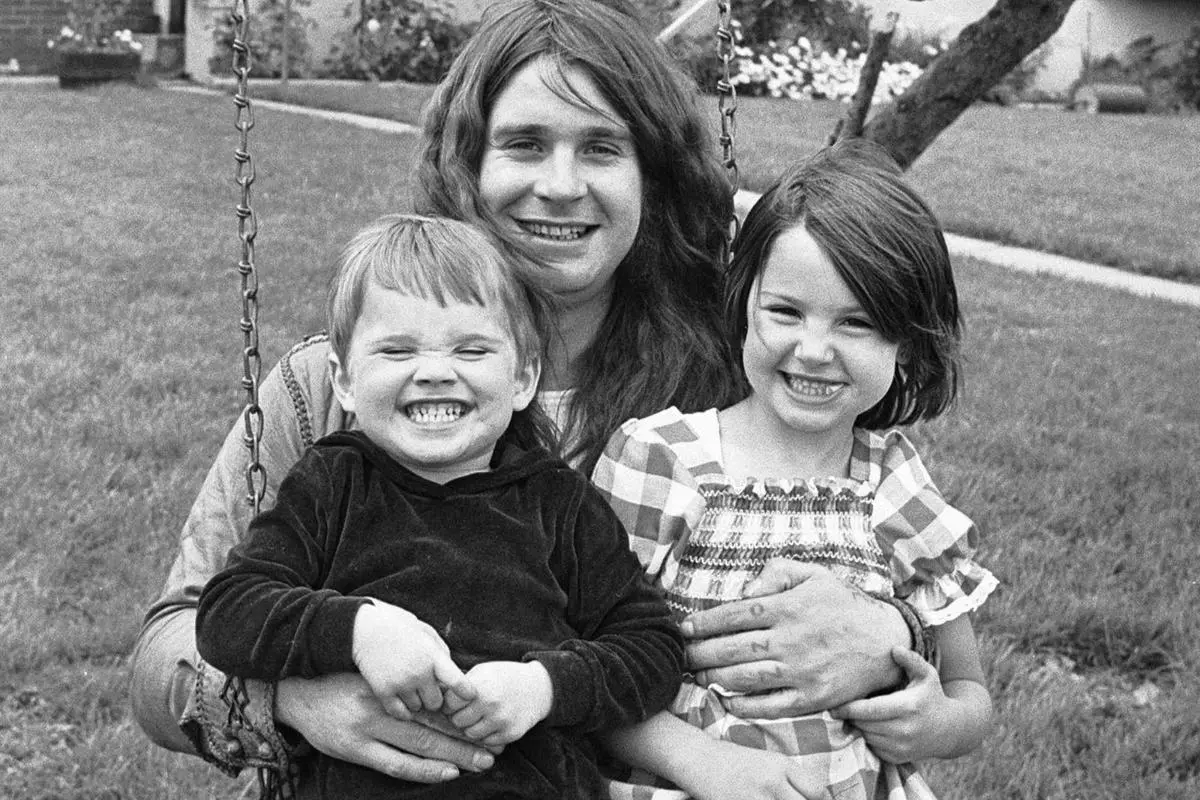
Aimee, Kelly, and Jack’s early years sit right inside the peak years of Ozzy’s solo superstardom, which means the family’s baseline was never “Dad goes to the office.” It was “Dad disappears into the global machine, then returns altered.”
From a child’s perspective, touring parents can feel like two different people: the one you miss and the one who shows up. Add addiction and exhaustion, and that split widens. The kids learn to track cues – speech patterns, sleep cycles, tone of voice – the way other kids track whether it is going to rain.
Later, when the family became publicly famous for being publicly chaotic, it was easy to laugh. But the 1980s version of that chaos was quieter and more intimate: whispered phone calls, tense mornings, and adults trying to keep children out of the blast radius.
What music fans get wrong (and what they can learn)
Music culture loves extremes: either the rock star is a lovable rebel or a total monster. Family life is rarely that clean. The more honest reading of the 1980s Osbournes is that they ran a household that had to be functional enough to keep a fragile career going and stable enough to raise children inside it.
That is not a fairy tale, and it is not a constant party. It is a high-income version of a very old human problem: how a family adapts when one parent’s work and health repeatedly destabilize the home.
“I’m not proud of some of the things I’ve done.”
Ozzy Osbourne, book description for I Am Ozzy
Conclusion: the Osbournes’ 1980s secret weapon was routine
The most interesting twist in the Osbournes’ 1980s story is that the “rock star” part was not the core of daily life – logistics were. Ozzy’s career created the cycles, Ozzy’s instability raised the stakes, and Sharon’s structure kept the household from sliding into permanent crisis.
So if you want the real picture, swap the mansion-party myth for something sharper: a family running a tight routine because the alternative was chaos, and chaos was always only one relapse, one deadline, or one phone call away.


