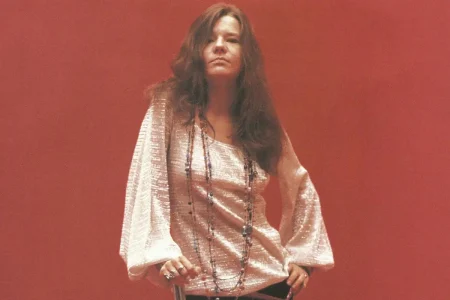
San Francisco in 1967 did not just “happen.” It was manufactured nightly in sweaty ballrooms and daylight rallies, then broadcast back to America as a psychedelic postcard: flowers, slogans, and very loud amplifiers. Two voices sliced through that haze with different blades: Grace Slick of Jefferson Airplane, cool and commanding, and Janis Joplin, volcanic and bleeding-on-purpose.
Put them in the same city, the same year, and you get a clash of archetypes that still defines what “frontwoman” can mean. Slick sounded like the revolution had a plan. Joplin sounded like the revolution might not survive the weekend.
San Francisco, 1967: A city turned into a stage set
By 1967, the Haight-Ashbury neighborhood had become the symbolic headquarters of the counterculture, attracting young people, artists, and opportunists in equal measure – and the scene’s public rituals (including the Human Be-In) helped pull that gravity into national view.
What is often remembered as a “summer” was really a pressure cooker: civil rights struggle, Vietnam escalation, and generational distrust all poured into one compact geography. The music scene functioned like a public address system for that anxiety, only with fuzz pedals and light shows.
“If you remember the 1960s, you weren’t really there.” – often attributed to the era, but the point is that memory itself became part of the mythmaking.
The myth was so strong that it continues to be curated, explained, and argued over in cultural histories of the Summer of Love in San Francisco.
Grace Slick arrives: a singer who could steer a riot
Grace Slick joined Jefferson Airplane in late 1966, and the timing was surgical. The band already mattered locally, but her presence sharpened the group into something iconic rather than merely popular.
Her impact is easy to reduce to two songs, but that reduction misses the deeper shift: she brought a kind of authoritarian clarity to psychedelic rock. Even when the lyrics were surreal, the delivery was unmistakably direct.
Jefferson Airplane’s Surrealistic Pillow became a defining document of the San Francisco sound and the broader counterculture moment.
“White Rabbit”: psychedelia with a spine
“White Rabbit” is frequently described as druggy, but its real trick is structure: it moves like a lesson plan. It builds, repeats, tightens, then detonates, like Slick is guiding a room of wide-eyed listeners toward one inevitable conclusion.
The song’s obvious literary reference is Alice, but its cultural reference is something more dangerous: permission. Slick’s vocal makes experimentation sound not only seductive, but orderly.
Her reputation as a key figure in the era has remained strong enough to sustain ongoing biographical attention and critical reappraisal.

Janis Joplin in 1967: the blues voice that the Haight couldn’t domesticate
If Slick sounded like a general, Janis Joplin sounded like a verdict. In 1967, she was fronting Big Brother and the Holding Company and building a reputation in the Bay Area scene that would soon become national.
Joplin’s power came from contradiction: she could deliver classic blues phrasing while sounding completely untrained and uncontainable. She didn’t “sing pretty” because the story she was telling was not pretty.
Her official biography frames her rise from Texas outsider to San Francisco breakout as a rapid, high-impact transformation.
Monterey Pop, 1967: when Joplin’s voice became unavoidable
Monterey Pop was not in San Francisco, but it was the West Coast scene’s national coming-out party. Joplin’s performance there is often treated as the moment the wider industry realized what the Bay Area had been watching up close.
The Monterey Pop Festival organization highlights 1967 as the foundational year that helped define the festival’s cultural reputation.
Joplin’s story is now so central to American rock mythology that it is routinely packaged for general audiences as a cautionary tale and a triumph at the same time.
Two women, one city: what “power” meant in 1967
It is tempting to frame Slick and Joplin as opposites: intellectual vs. instinctive, controlled vs. chaotic. That sells magazines, but it misses the point. Both were problem-solvers in a male-dominated rock economy, and both used voice as a weapon.
Here’s the more provocative claim: in 1967 San Francisco, they were not simply “female singers” in famous bands. They were competing models for how a woman could take up space onstage without apologizing.
Style comparison (quick and brutally practical)
| Category | Grace Slick | Janis Joplin |
|---|---|---|
| Vocal character | Clear, pointed, often declarative | Raw, raspy, blues-driven and explosive |
| Stage energy | Commanding, cool authority | High-voltage vulnerability |
| Best at | Turning weird ideas into singable hooks | Making pain sound like truth |
| San Francisco role | Voice of psychedelic manifesto | Voice of emotional excess the scene couldn’t polish |
The scene around them: rallies, ballrooms, and a city-wide amplifier
San Francisco’s counterculture was not only clubs. Public gatherings like the Human Be-In helped merge politics, spirituality, and music into a single event format.
The point of these gatherings was not subtlety. They were demonstrations of alternative social order, complete with music as the glue and the megaphone.
Even mainstream institutions now treat the period as a major cultural turning point with lasting influence on how America imagines youth culture, and it remains part of the curated historical record of the Summer of Love.
Gender, image, and the uncomfortable parts people skip
The “Summer of Love” branding made everything look soft-edged, but the industry surrounding it was still ruthless. Women were marketed, doubted, sexualized, and categorized. Slick and Joplin survived by refusing the easy category.
Slick weaponized intelligence and presence, projecting a kind of don’t-mess-with-me glamour. Joplin did the opposite: she made mess the message, then dared the audience to look away.
One reason the story still hits is that their problems have not vanished. The language is more polite now, but the expectations are familiar: be powerful, but not too powerful; be raw, but not embarrassing; be original, but also saleable.

Listening like a musician: what to steal from Slick and Joplin (without cosplay)
From Grace Slick
- Sing the consonants like you mean them. Her phrasing often lands on hard edges, which makes surreal lyrics feel concrete.
- Build dynamics intentionally. “White Rabbit” works because the vocal intensity escalates with the arrangement, not against it.
- Own the center frequency. She sits in the mix like a lead instrument, not decoration.
From Janis Joplin
- Make time elastic. Her blues phrasing stretches lines for emotional impact, then snaps back to the groove.
- Use grit as expression, not a filter. The rasp is not a gimmick; it’s a storytelling tool.
- Commit past comfort. Joplin’s best moments sound slightly dangerous, like the vocal could fall apart. That’s the point.
A final, edgy thought: 1967 didn’t “free” women, it just gave them a louder microphone
San Francisco 1967 sells itself as liberation, but liberation is not the same thing as safety. Slick and Joplin prove it: both gained unprecedented visibility, and both were forced to be tougher than the culture’s flower-crown marketing suggested.
Grace Slick showed that psychedelia could be precise and militant. Janis Joplin showed that vulnerability could be louder than any guitar stack. Together, they didn’t just soundtrack San Francisco’s peak year – they exposed its contradictions.
And that’s why the music still matters.