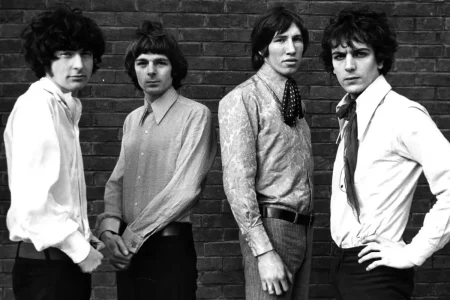
Wind & Wuthering is the Genesis album that feels like walking across moorland in a wool coat you secretly hate: gorgeous, damp, and slightly hostile. Released in 1976, it’s the band’s second record after Peter Gabriel’s exit, and the last studio album to feature guitarist Steve Hackett. It also captures a very specific kind of British melancholy: pastoral without being cozy, elegant without being safe, and literary without being pretentious (well, mostly).
The title nods to Emily Brontë’s Wuthering Heights, and the music behaves accordingly: windswept harmonies, unresolved longing, and big emotions delivered through restraint. If A Trick of the Tail proved Genesis could survive the “frontman apocalypse,” Wind & Wuthering shows what happens when the band survives but starts quietly splintering.
Where Wind & Wuthering Sits in the Genesis story
By late 1976, Genesis had already made an unlikely transition: drummer Phil Collins stepped up as lead singer, and the group doubled down on composition and musicianship. Wind & Wuthering is often described as more melodic and pastoral than its predecessor, but it’s also more internally tense, with a noticeable tilt toward Tony Banks’ keyboard-driven writing and long-form structures.
That internal tilt matters because this is also the point where Hackett increasingly felt his contributions weren’t getting equal space. Whether you hear that as “the band refining its identity” or “the band slowly erasing one of its most distinctive voices” depends on how much you value guitar color in mid-70s prog.
The sound: prog DNA, but filtered through mist
In many ways, Wind & Wuthering is prog rock becoming chamber music. The arrangements lean into careful counterpoint, long harmonic arcs, and textures that feel orchestrated even when they’re played by just five people. The record’s identity is tied to keyboards: banks of tone, not just solos.
The album’s lineup is the classic mid-period unit: Banks (keyboards), Mike Rutherford (bass and guitars), Hackett (guitars), Collins (drums and vocals), and Chester Thompson is not in the picture yet. The credits and track details consistently underline how much of the writing and structure came from Banks and Rutherford at this stage.
A quick “who drives what” table
| Element | What you hear on Wind & Wuthering |
|---|---|
| Keyboards | Front-and-center themes, long developments, and orchestral-style layering. |
| Guitar | More color and character than dominance: acoustic intros, lyrical leads, and textural parts. |
| Rhythm section | Collins’ drumming stays nimble; Rutherford’s bass often supports harmonic motion rather than “riffing.” |
| Vocals | Collins sounds more confident, but still serves the ensemble rather than overpowering it. |
Track-by-track highlights (and why they matter)
“Eleventh Earl of Mar”: a storm front in 7 minutes
The opener kicks the door in with dynamic contrasts and restless shifts, setting the album’s “symphonic but anxious” tone. It’s Genesis doing drama without theatrics: no costumes, just arrangement as storytelling. The lyrics reference the historical Jacobite context around the Earl of Mar, but the music is the real plot engine.

“One for the Vine”: Tony Banks’ quiet empire-building
If you want the strongest argument that Banks was becoming the band’s de facto director, “One for the Vine” is Exhibit A. It’s long, meticulously paced, and emotionally sneaky: it feels like a narrative epic, but it’s really harmonic strategy disguised as rock. The suite-like form and recurring motifs are a masterclass in building tension without leaning on volume.
“You can either make it more complicated or you can make it simpler. And it’s hard to know which is right.”
– Tony Banks, in a quote about choosing between making music more complicated or more simple
That quote fits this album perfectly. Wind & Wuthering often chooses “complicated,” but it’s complication in service of mood, not flexing.
“Blood on the Rooftops”: Hackett’s humanist sting
Here’s the record’s most direct gut-punch: a song that pairs a delicate acoustic opening with lyrics that look outward at violence, media spectacle, and emotional numbness. Hackett’s intro is one of the album’s most purely beautiful moments, and the piece stands out because it suggests Genesis could have become more political without becoming preachy.
Hackett has repeatedly spoken about feeling constrained within Genesis as the band’s writing process evolved, and his departure being framed as a turning point into a more independent path gives “Blood on the Rooftops” the feel of a statement made through elegance, not aggression.
“Unquiet Slumbers…” / “…In That Quiet Earth”: the album’s secret thesis
These two linked instrumentals are sometimes treated like deep-cut scenery, but they’re closer to the record’s emotional thesis. The titles explicitly reference Brontë, and the music behaves like weather: it shifts, it swirls, it refuses tidy resolution. If you ever wondered why fans describe this album as “hazy,” these tracks are the reason.
“Afterglow”: the ending that feels like a door closing
“Afterglow” is not an instrumental closer (despite the common mix-up), but it does close the album with a minimal, aching power. The chord movement is the weapon here: it’s built to make you feel the cost of whatever came before. In hindsight, it also foreshadows Genesis’ later talent for big emotions inside relatively simple frameworks.
The real drama: a band turning into two different bands
Wind & Wuthering is often described as a bridge between classic prog Genesis and the more streamlined, song-forward Genesis that would dominate the 1980s. The tension isn’t just “prog vs pop” in a cartoon sense. It’s about who gets to define the band’s core language: guitar color and risk, or keyboard architecture and control.
Hackett’s exit after this era is not a footnote; it’s the hinge. Once he’s gone, Genesis loses its most “cinematic” guitarist, and the ensemble’s center of gravity shifts even further toward Banks and Rutherford’s writing priorities. Even the basic historical framing of the album underlines its role as Hackett’s last Genesis studio statement.
How to listen like a musician (without sucking the fun out of it)
1) Follow the keyboard voicings, not just the melodies
Banks often stacks parts in a way that mimics orchestration: inner voices move while the top line holds. Try listening for “motion inside the chord” during “One for the Vine” and the instrumental pair. It’s the kind of arranging that makes the record feel larger than a rock band.
2) Notice how the guitars behave like a narrator
Hackett’s best moments here are rarely about “lead guitar heroics.” They’re about framing the scene: acoustic openings, lyrical sustains, and small harmonic twists that change the emotional temperature. That’s why the album’s prettiest moments often feel the most tense.
3) Treat the album like a novel, not a playlist
The sequence matters because so much of the emotional payoff is cumulative. The shift from the album’s more structured epics into the Brontë-referencing instrumentals and then into “Afterglow” lands harder when you take it as one arc. Even modern listings that foreground the album as a complete release tend to present it as a cohesive work, which is how it plays best.
Provocative take: Wind & Wuthering is the “anti-singles” classic Genesis fans claim to want
A lot of fans say they miss “the old Genesis,” but what they often mean is they miss the drama of the Gabriel era. Wind & Wuthering is different: it’s the band choosing craft over spectacle, mood over gimmicks, and long-term emotional architecture over quick hooks. That’s braver than it gets credit for, because it refuses to beg for attention.
It also explains why the album can feel slightly cold on first listen. It’s not trying to charm you. It’s trying to haunt you.

Best entry points (depending on your taste)
- If you love long prog narratives: “One for the Vine.”
- If you want maximum melody with minimal fuss: “Your Own Special Way.”
- If you’re here for guitar nuance: “Blood on the Rooftops.”
- If you like instrumental atmosphere: “Unquiet Slumbers…” / “…In That Quiet Earth.”
- If you want the emotional knockout: “Afterglow.”
Collecting and editions: what’s worth knowing
Because Genesis has been reissued many times, collectors often chase specific masterings and mixes. If you’re vinyl-curious, tracklist-focused discographic pages that reflect common editions also make it obvious how easy the record is to find in circulation, which makes it a great “starter” Genesis LP to hunt without paying trophy prices.
Conclusion: the moorland masterpiece with teeth
Wind & Wuthering is beautiful music made by a band that’s quietly arguing with itself. That friction is the point: it’s why the album shimmers, why it aches, and why it feels like the last time Genesis could be both symphonic and strange without compromise.
Play it loud enough to feel the low-end movement, then let the keyboards do what they were built to do: turn weather into harmony.