There are music festivals, and then there are one-shot festivals that feel like a glitch in history – too stacked to be real, too chaotic to repeat, and too loud to forget.
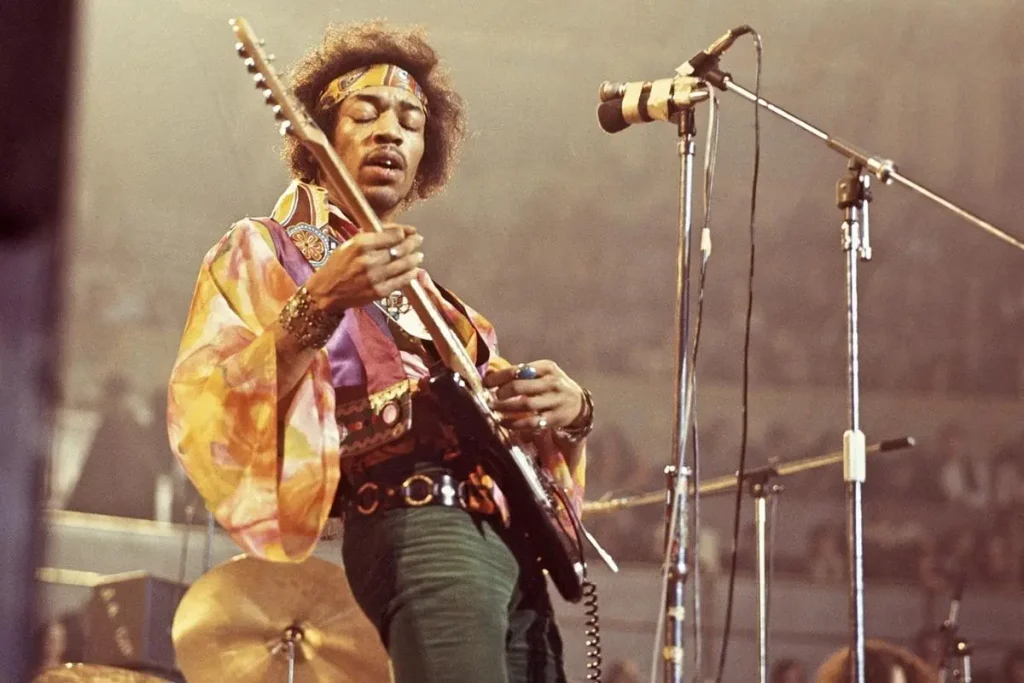
The Denver Pop Festival at Mile High Stadium was exactly that: the first and only time Denver tried to stage a mega rock gathering in a football stadium, headlined by Jimi Hendrix, and reportedly drawing about 50,000 people into a sunbaked concrete bowl for an all-day blast of late-60s rock, blues, and freak-out art music. It is widely remembered as a single-day event in 1969 that never returned for an “annual tradition.”
And if you’re a gear nerd (welcome home), the festival has an extra hook: the on-site amplification wasn’t just “big.” It was hi-fi power amp royalty – McIntosh iron normally associated with serious home listening, repurposed as brute-force concert muscle.
A one-and-done Mile High takeover
The Denver Pop Festival is often described in the same breath as the era’s other gatherings, but it had a very different vibe. Instead of a rural field, it landed in a major stadium, with crowds pouring into Denver for a lineup that reads like a record-store staff’s fantasy booking.
Accounts consistently highlight Hendrix at the top of the bill and a crowd around the 50,000 mark, making it a serious swing for a city that was not yet a default stop for every major touring package. The festival’s “only once” status is part of the mystique – it feels like Denver briefly stole a coastal-sized moment, then watched it evaporate.
“Pop festival draws 50,000 at Denver stadium.” – headline in The New York Times, June 1969.
The lineup: a beautifully unbalanced day
What makes this bill so spicy is the tonal whiplash. You weren’t simply getting “bands like Hendrix.” You were getting multiple scenes colliding: British soul-rock, California swamp rock, heavy psych, country-rock beginnings, and a blues original who’d already shaped rock’s DNA.

Who else played (and why it mattered)
- Johnny Winter – a then-exploding Texas blues phenomenon whose tone and speed made him a bridge between traditional blues and the era’s volume race.
- Joe Cocker – gritty, gospel-charged rock-soul that could turn a stadium into a revival meeting, even without studio polish.
- Creedence Clearwater Revival – a reminder that “festival rock” didn’t have to be psychedelic to dominate a giant crowd.
- Frank Zappa – the day’s agent of musical sabotage, gleefully challenging what a “rock festival” set was supposed to be.
- Poco – early country-rock energy that pointed toward the 70s, when harmony and twang would start selling like rock did. (Fan pages and memories vary on details, but Poco is consistently named on festival lists.)
- Three Dog Night – hitmakers with a radio-friendly punch that translated well to large venues.
- Iron Butterfly – heavy psych that helped normalize extended jams and thick, organ-driven volume.
- Big Mama Thornton – a blues heavyweight whose influence on rock is often under-credited, even though her repertoire and attitude were foundational.
That’s not just a lineup. That’s a cultural argument being staged at full volume: blues roots, pop hits, avant-garde satire, and guitar hero worship all fighting for air in one stadium day.
Hendrix in Denver: the “lost” show that refused to stay lost
Hendrix’s 1969 performances are often discussed as a moving target: new songs arriving, arrangements shifting, and a band chemistry that could be transcendent one night and unstable the next. Denver sits inside that turbulent, fascinating stretch of his live history.
Years later, heightened interest in this particular show was fueled by archival attention and reissues tied to Hendrix’s live legacy. The official Hendrix live archive and release catalog has repeatedly positioned Denver 1969 as a notable live document in the catalog, reinforcing that this wasn’t just another tour stop but a performance worth preserving.
Here’s the provocative claim: Denver may have been the kind of gig Hendrix needed more of – a massive crowd, high stakes, and the type of sound reinforcement that could actually keep up with his dynamics. The tragedy is that the festival itself, and Hendrix’s career, both had very little runway left.
Fan-powered production: romance, risk, and reality
You mentioned Terry Hanley being on the board. Many festivals in this era leaned on local promoters, volunteers, and “scene” organizers who were learning stadium-scale logistics in real time, sometimes with more passion than infrastructure.
That DIY spirit is romantic, but it’s also the reason so many festivals of the era were financially shaky, operationally messy, or simply never repeated. When you scale up to 50,000 bodies and add weather, police pressure, medical needs, and power distribution, “good vibes” becomes a thin safety net.
The hidden labor behind “a day of peace and music”
- Power and wiring: you’re effectively building a temporary industrial electrical system.
- Stage changeovers: every minute lost multiplies stress across the entire schedule.
- Sound coverage: a stadium punishes weak PA, especially for vocals and kick drum.
- Crowd control: the bowl shape makes pressure points and bottlenecks inevitable.
In other words, the Denver Pop Festival wasn’t just a concert. It was a field test of whether 1969 counterculture could successfully operate a modern stadium event without modern stadium systems.
The amps: when hi-fi got weaponized
The detail that grabs audio people is the McIntosh amplification. In the late 60s, McIntosh power amps became famous in rock because they could deliver high output with the kind of stability and low distortion that touring systems badly needed.
You referenced “four fan-powered amplifiers” rated at 350W: the McIntosh MC3500 as a 350-watt monoblock power amplifier (and the industrial MI-350 variants) are the key legends here. McIntosh describes the MC3500 as a 350-watt monoblock amplifier originally built for demanding applications, and it’s widely associated with the era’s biggest stages.
You also mentioned two MC275 tube amps on display. McIntosh’s MC275 is one of the most famous tube power amps ever made, but its modern product pages and reissues can cause confusion when discussing late-60s units. McIntosh’s current site is better used for broad context about the brand’s product lineage, not as a definitive citation for a specific 1968 display claim.
Quick gear reality check: what those watts meant in 1969
| Piece of gear | What it is | Why it mattered in a stadium |
|---|---|---|
| MCIntosh MC3500 / MI-350 | 350W mono power amplifier | Huge clean headroom – less likely to fold under festival-level SPL demands |
| MCIntosh MC275 | Iconic tube power amplifier (stereo) | High-quality amplification, though not the same “stadium brute” role as MC3500-class rigs |
The edgy takeaway: rock got louder partly because hi-fi got conscripted. When touring PAs weren’t mature enough, promoters and engineers reached for whatever was built like a tank and measured honestly. McIntosh fit that bill, and the MC3500 became a symbol of the moment when concert sound stopped being “loud enough” and started being “physically unavoidable.”
Listening guide: how to hear this era like an engineer
If you explore recordings from 1969 Hendrix or similar festival sets, listen for the push-pull between guitar rig volume and vocal intelligibility. Stadium concerts from this era often have vocals that sound like they’re fighting a weather system.
What to listen for
- Vocal clarity: If the PA can’t carry mids cleanly, the singer disappears once the band hits full stride.
- Low-end control: Bass and kick can turn into rumble without proper system tuning and speaker deployment.
- Guitar dominance: Hendrix’s amp volume and stage tone were part of the show, but they could also overpower early PA systems.
- Crowd bleed: Stadium ambience can smear transients, making the performance feel farther away than it was.
Think of it as historical ear training. You’re not just hearing songs – you’re hearing a transitional phase in live sound, where the industry was sprinting from dance-hall reinforcement toward modern concert production.

Why Denver’s only festival still matters
Denver Pop Festival is a reminder that the late 60s weren’t inevitable. Big stages didn’t automatically become safe, profitable, or repeatable. Some cities caught lightning once and never found the bottle again.
Its legacy sits at a great intersection: a major Hendrix performance, a lineup that captured multiple genres at once, and a gear story that proves how experimental concert sound still was. If you want a single snapshot of rock culture trying to scale up overnight, Mile High in 1969 is a pretty savage place to start.
Conclusion: the day Denver went for broke
The Denver Pop Festival didn’t become a tradition. It became a legend: one day, one stadium, one impossibly strong bill, and a sound system built from the kind of amplification you’d expect to see in a lab or a high-end listening room.
Hendrix headlining a one-time festival is already history. Hendrix headlining a one-time festival powered by McIntosh muscle is the kind of history that still makes musicians and audio people lean in and say, “Wait – they really did that?”