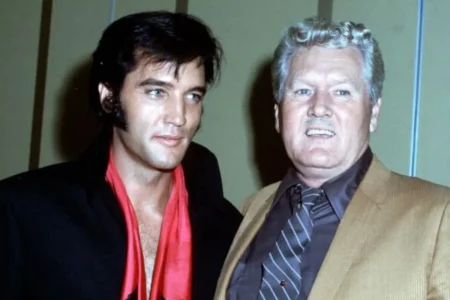
By 1969 a lot of people figured Elvis Presley was yesterday’s news. In twelve frantic months he proved them wrong, cutting some of his toughest records and storming the International Hotel in Las Vegas like a prizefighter coming out of retirement.
From movie jail to one last roll of the dice
Through most of the 1960s Elvis was trapped in a loop of lightweight movies and increasingly forgettable soundtrack singles while rock music grew up without him. Writer Richard Zoglin notes that by the end of the decade his career was “treading water” in bad films and non‑charting records, and he had not played a full live show in over eight years when Las Vegas came calling.
The 1968 NBC “comeback special” reminded the world what a dangerous live performer he still was, but television is a safe battlefield. A four‑week contract at the brand new International Hotel in mid‑1969 was something else entirely: two shows a night, seven nights a week, in a room twice the size of any he had ever faced before, as contemporary coverage made clear.
Biographer Richard Zoglin frames that International engagement as a two‑way rescue mission: Vegas needed a new star to replace the fading Rat Pack, and Elvis needed a stage big enough to reclaim his crown. His opening run drew more people than any previous show in the city and set up a residency of more than 600 sold‑out performances over the following years, as detailed in Zoglin’s account of Elvis in Vegas.
Memphis 1969: reinventing the sound
Before he gambled in Vegas, Elvis went home to Memphis to rebuild his sound. In January and February 1969 he cut the album From Elvis in Memphis at American Sound Studio, blending rock, soul, country and blues into the most adult music of his career and spinning off hits like “In the Ghetto” and “Suspicious Minds.”
Those American Sound sessions were a quiet revolution. Producer Chips Moman and the Memphis Boys house band pushed Elvis to work harder than he had in years, while behind the scenes Moman fought off publishing grabs from the Colonel’s camp so songs like “Suspicious Minds” and “In the Ghetto” would actually reach the public. Accounts from the studio describe Elvis performing in front of the mic like he was already onstage, determined to earn one more number‑one record instead of coasting on his name.
The result was a tougher, more worldly Elvis: still capable of churchy gospel high notes, but now singing about poverty, heartbreak and adult regret rather than beach parties. If you only remember the 1950s rocket fuel or the 1970s jumpsuits, the 1969 Memphis tracks are the missing link that explains how he got from one to the other.
| Recording | What to listen for | Why it matters |
|---|---|---|
| From Elvis in Memphis (album) | Dry, soulful production; Elvis sitting right in front of the band. | His strongest non‑soundtrack LP, proof he could stand beside Otis Redding or Ray Charles instead of chasing teen fluff. |
| “In the Ghetto” (single) | Understated vocal, story‑song lyric, gospel undertow. | His first US Top 10 in years and a rare stab at social commentary from a man accused of staying apolitical. |
| “Suspicious Minds” (single) | The tension in his voice as the band builds and the ending keeps “breaking down” then returning. | The last US number‑one of his lifetime and the song that would become the emotional peak of his Vegas shows. |
The International Hotel: the biggest stage in town
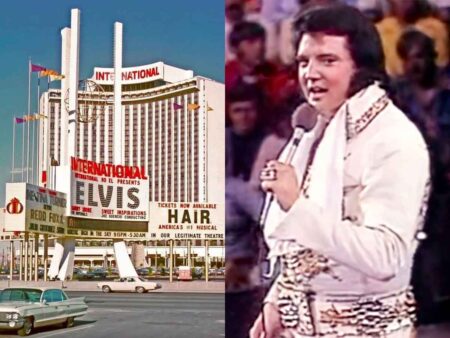
While those Memphis tapes were still fresh, Colonel Tom Parker locked in a deal with the new International Hotel, which had just opened with the largest showroom in Las Vegas. Graceland’s own timeline notes that Elvis spent July 1969 assembling a crack rock band, a male gospel quartet and a female soul group for a four‑week, 57‑show engagement from July 31 to August 28, mixing rearranged classics with his brand new material.
The International’s Showroom Internationale seated around 2,000 people, with extra chairs squeezed in nightly, and featured a stage big enough for a 40‑piece orchestra as well as Elvis’s six‑piece rhythm section and backing singers. When the 1969 tapes were finally compiled into the 11‑CD box set Live 1969, Graceland emphasized that all 57 shows sold out and that the residency set new attendance records for the Strip.
This was not the lonely rockabilly kid with a trio trying to shock nightclub patrons. This was Elvis as ringmaster of a small army: the newly formed TCB Band on guitars, bass, drums and keys, the Sweet Inspirations and the Imperials on vocals, and a full orchestra punching accents and swelling behind the big ballads. Rock, country, gospel and Vegas showbiz were all smashed into one unapologetically huge sound.

Opening night: Elvis vs Las Vegas
The build‑up bordered on hysteria. Contemporary reports from the Nevada State Journal describe fans lining up by the hundreds at the reservation counter, with every weekend date sold out and weekdays packed tight for his first public shows in eight years. That same piece, along with a Newsweek feature, paints a picture of Elvis rehearsing obsessively, dropping weight, then walking onstage in a black tunic and bell bottoms to face a 2,000‑seat room full of mostly over‑30 fans who had grown up screaming for him, as detailed in contemporary concert reviews.
Once the curtain went up, nostalgia and risk collided. The 10:15 p.m. invitation‑only opener kicked off with an instrumental theme and then “Blue Suede Shoes,” before Elvis tore through a barrage of 1950s hits: “All Shook Up,” “Jailhouse Rock,” “Don’t Be Cruel,” “Heartbreak Hotel” and “Hound Dog,” barely pausing for breath. Only then did he pivot into newer material like “Memories,” “In the Ghetto,” Beatles covers such as “Yesterday” and “Hey Jude,” and a then‑unreleased “Suspicious Minds,” finally closing with “Can’t Help Falling in Love,” a running order preserved in set lists from the 1969 shows.
People who were there talk about him racing through those early rockers as if he wanted to get the required oldies out of the way so he could test‑drive the grown‑up songs. He joked nervously between numbers, kissed every hand he could reach during “Love Me Tender,” and moved with a karate‑inflected aggression that felt closer to James Brown than to a polite lounge singer.
Behind the scenes, the TCB Band gave him weapons he had never had in the 50s. James Burton’s stinging Telecaster lines, Ron Tutt’s explosive drumming and Jerry Scheff’s elastic bass turned “Suspicious Minds” and “What’d I Say” into pounding, almost psychedelic climaxes, while the orchestra and choirs made “In the Ghetto” and “Can’t Help Falling in Love” sound like gospel finales. For once, Vegas wasn’t smoothing the rough edges off rock and roll; it was making them hit harder.
Vegas mania and the birth of a new Elvis
Newspaper coverage the first week reads like disaster reports from a fanquake. The Nevada State Journal wrote of Europeans flying in, a French woman mailing cash to reserve ten shows, and hotel executives marveling that they had not seen a single empty seat while Elvis smashed Strip attendance records and drew sincere standing ovations in a town famous for fake ones.
That same article reprinted Newsweek’s gleefully titled “Return of the Pelvis,” which described him backed by a 30‑piece orchestra, five‑man combo and seven‑voice chorus, still oozing the “sullen sexuality” that had scandalized America in the 50s. The piece quoted Elvis admitting that songs like “In the Ghetto” and “If I Can Dream” pointed to a more serious direction and that he was tired of playing movie characters who sang right after throwing punches.
In other words, 1969 Elvis was fully aware of how far he had drifted from the raw kid on Sun Records. The Vegas stage gave him room to reconcile those versions of himself: the dangerous rocker, the country boy with a gospel fixation, the movie idol, and the grown man staring down the political turbulence of the era from behind a sequined belt.
Was 1969 salvation or a beautiful trap?
Here is the uncomfortable question for any serious Elvis fan: did the International Hotel save him, or did it build the gilded cage that helped kill him? In 1969 the answer looked easy. The shows revitalized his reputation, put him back on the charts, and proved he could still blow bands half his age off the stage.
But the very success of that first residency locked him into a grueling pattern of Vegas and casino tours that would, within a few years, turn into a grind. The intense, lean performer of 1969 slowly gave way to the medicated, bloated Elvis of the mid‑70s, sweating through similar set lists in the same room that had once been his victory lap. The revolution he started in Vegas hardened into routine.
That tension is part of what makes 1969 so gripping to revisit. You can hear the hope and the desperation in equal measure: a man who has everything to lose suddenly acting like a hungry newcomer again. The Memphis sessions and the first International shows catch him at the exact moment where discipline, ambition and raw talent still outrun the drugs, the boredom and the entourage.

Why Elvis in 1969 still matters
If you grew up with “Hound Dog” on the radio or remember seeing the white‑jumpsuit years on television, going back to 1969 is like finally getting an answer to the question: what could Elvis have been if he had been allowed to grow up? The records from American Sound and the tapes from the International Hotel show a 34‑year‑old singer who could match the emotional range of Sinatra, the sweat and danger of the Stones and the volume of any late‑60s rock band.
For musicians, 1969 Elvis is a masterclass in phrasing, dynamics and how to front a big band without losing intimacy. For fans, it is the last time he sounded genuinely surprised by his own power. Listen to From Elvis in Memphis, then cue up a 1969 International Hotel show, and you may find that the most exciting Elvis is not the kid rattling censors in 1956 or the tragic figure of 1977, but the dangerous grown man who walked into Las Vegas in the summer of 1969 and took the town away from everybody else.