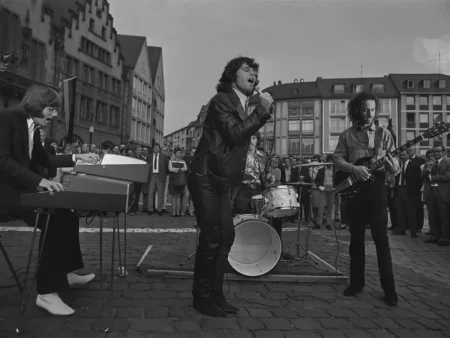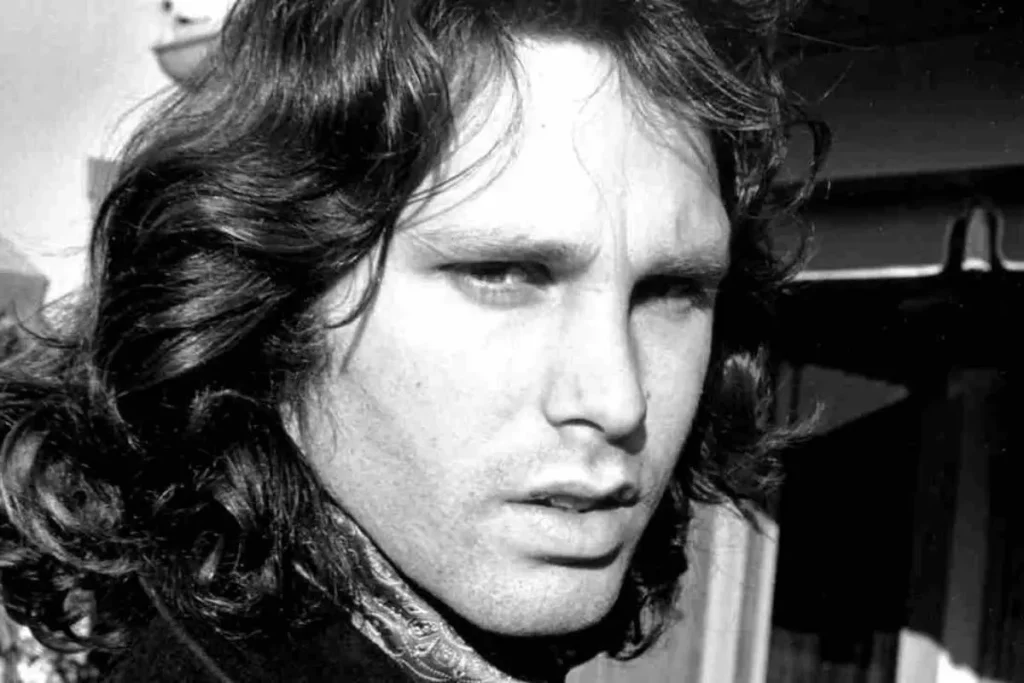
When The Doors hit theaters, Ray Manzarek said Oliver Stone hadn’t just made a bad biopic – he’d committed character assassination. In Manzarek’s telling, Stone’s Jim Morrison is a violent, drunken cartoon: a guy who torches closets, attacks friends, and stumbles through life like a walking bar tab.
“Oliver Stone has assassinated Jim Morrison… The film portrays Jim as a violent, drunken fool. That wasn’t Jim.”
Ray Manzarek
This argument still matters because Stone’s movie is many people’s “first Jim.” It doesn’t just entertain – it hardens a myth that can drown out Morrison the reader, Morrison the filmmaker-in-training, and Morrison the disciplined craftsman who helped build one of rock’s most distinctive catalogs.
The uncomfortable truth: the movie is influential, not reliable
The Doors (1991) is a loud, hallucinatory biopic with Val Kilmer as Morrison and Stone steering the ship like it’s headed straight for the underworld. It’s also a movie that has been criticized for taking liberties with events and personalities, especially by people who actually knew Morrison.
Even basic reference summaries frame it as a stylized, dramatized take rather than a documentary-minded retelling. That matters: if a film signals “myth” but audiences receive it as “history,” the mythology wins by default.
What Ray Manzarek said Stone invented (and why fans believed it)
Manzarek’s complaints were specific, not vague. He pointed to alleged made-up incidents: Morrison setting Pam Courson’s closet on fire, throwing a TV at Manzarek, and being portrayed as a film student who quit school and made provocateur films loaded with Nazi imagery.
Whether each scene is literal invention or a composite matters less than the effect: the movie makes “Jim the danger” the main plot. For a mass audience, that becomes the biography.
Reality check: Morrison and film school
One reason the “Jim the stumblebum” narrative bugs Doors insiders is that Morrison wasn’t drifting aimlessly when the band formed. He studied film at UCLA and, per UCLA’s institutional profile, he graduated.
That single fact changes the tone of the whole story. A graduate is someone who finishes a program – not someone who bails when it gets boring. The film version can make Morrison look like a dropout who lucked into rock fame; the reality points toward a person who could commit to a long, structured goal.
Why Stone’s version is so seductive: cinema loves a “monster genius”
Biopics often compress complexity into a few easy-to-read dials: addiction, arrogance, violence, self-destruction. Turn those up and you get instant drama. Turn up the quiet stuff – reading, writing, rehearsing, editing lyrics – and you get something closer to truth but harder to sell as a two-hour fever dream.
Stone’s film leans into spectacle, and that makes it feel emotionally “true” even when details are disputed. It’s the old trick: if the vibe is intense enough, the audience stops asking what’s factual.
The other Doors members: the pushback wasn’t just Ray being Ray
Manzarek wasn’t alone in worrying that the movie turned Morrison into a single-note brute. Drummer John Densmore’s memoir Riders on the Storm is part personal history, part moral accounting – and it’s frequently cited as a more grounded counterweight to the most sensational Morrison myths in Densmore’s firsthand account.
Meanwhile, the longer-running “Morrison as doomed Dionysus” storyline didn’t start with Stone. It had already been supercharged by earlier rock-biography culture, including the widely read (and debated) Morrison book No One Here Gets Out Alive, as discussed in library writing on how The Doors’ story has been shaped.
Is the movie wrong, or just telling a different kind of truth?
Here’s the uncomfortable middle ground: Stone may be aiming at mythic truth rather than journalistic truth. The film wants to portray Morrison as a symbol of the era’s extremes: sex, drugs, rebellion, collapse. The Sundance reflection on the film’s myth-making frames it as a collision of rock, myth, and cinematic interpretation rather than a sober ledger of facts.
But Manzarek’s point lands anyway. When the movie’s inventions are ugly and the “corrections” are quiet, the public memory tilts ugly.
How to “meet” the real Jim Morrison: a practical listening and reading map
If Stone’s Morrison feels like a violent stranger, the fix isn’t arguing online – it’s going back to primary artifacts. Here’s a practical way to build a more accurate picture using what Morrison actually made and what the band actually released.
Step 1: listen for the mind behind the mayhem
Morrison’s best lyrics don’t read like a mindless drunk’s diary. They read like someone who studied rhythm, symbol, and tension. Start with three tracks and listen for structure, not scandal:
- “The End” – long-form narrative and theater.
- “People Are Strange” – social alienation turned into pop clarity.
- “Riders on the Storm” – restraint and atmosphere, not just swagger.
Then compare that to the “always out of control” image. If you hear careful pacing, you’re hearing a working artist – not a nonstop bar fight.
Step 2: read Morrison as a writer, not a headline
New York Public Library programming and archival writing about The Doors often emphasizes their literary and cultural context – a useful reminder that the band’s story isn’t only about outrageous gigs and courtroom drama, as explored in a retrospective on The Doors’ broader cultural frame.
If you only consume Morrison through legend, his seriousness stays invisible. If you approach him as a writer who fronted a band, the “message” Manzarek defended (freedom, questioning authority, inner exploration) becomes easier to recognize.
Step 3: understand why the public wanted “bad Jim”
America has always had a market for cautionary-tale artists. A dangerous Morrison reassures the audience: “Genius burns out. Don’t try this at home.” A thoughtful Morrison is more threatening because he suggests the chaos might have been partly intentional, partly philosophical, and partly aimed at the listener.
Val Kilmer’s performance: accuracy vs. impact
Even many critics of Stone’s approach admit Kilmer commits hard. The debate isn’t whether the performance is watchable – it’s whether it locks in the wrong Morrison for a generation.
Roger Ebert’s review captured the split reaction: admiration for the filmmaking energy, skepticism about what the film chooses to emphasize, and a sense that the movie is more trip than biography.
A quick “film vs. history” table for Doors fans
| Claim or vibe in the film | A more defensible way to frame it |
|---|---|
| Jim as primarily a violent, reckless force | Jim as volatile at times, but also organized enough to finish film school and produce disciplined work |
| Jim as a dropout drifting into fame | Jim as a UCLA graduate who pivoted from film ambitions to music |
| The band as passengers in Jim’s chaos | The band as a collaborative unit with strong musical architecture (keyboard, drums, guitar) supporting the persona |
| The Doors as “only” a hedonist story | The Doors as a mix of counterculture theater, poetry, blues, and pop craftsmanship |
Why this argument still stings: the film can overwrite the band’s legacy
When a biopic gets big enough, it becomes the entry point. That’s why Manzarek’s language is so extreme. He’s not nitpicking continuity – he’s fighting for the default narrative of his band’s singer.
Even critical-aggregation snapshots show how polarizing the film remained in reception, which is often a sign that audiences were reacting not just to quality but to interpretation.
If you want the “real” Doors story, start with the band’s own home base
For basic grounding, use the band’s official site as your neutral starting point for names, timelines, and releases, then branch out into memoirs and archival material. It won’t answer every controversy, but it helps you avoid building your understanding on a screenplay.

Conclusion: Stone didn’t kill Morrison, but he did brand him
Ray Manzarek’s “assassination” quote resonates because it nails how pop culture works: a vivid image beats a nuanced truth. Stone’s The Doors is a powerful movie, but it’s also a filter that can make Morrison seem like a violent, drunken fool first, and an intelligent artist second.
If you want to test Manzarek’s claim for yourself, don’t rewatch the movie. Re-listen to the records, read firsthand accounts, and treat the film like what it is: a myth machine with a killer soundtrack.