There is a family snapshot from March 1991 that shows Eddie Van Halen grinning like a man who has just been handed something better than any guitar: his newborn son, Wolfgang, with Valerie Bertinelli beside them. No stage lights, no pyro, no Frankenstrat — just a new father in a living room, wearing the unguarded smile that never quite made it into the press photos. The remarkable thing about that picture now is not who is holding the baby. It’s what the baby went on to do.
A song before he could walk
Wolfgang William Van Halen was born on March 16, 1991, and the name was no accident: Eddie and Valerie named him after Wolfgang Amadeus Mozart — a composer’s name for a guitarist’s son, and a small statement about how seriously Eddie took the idea of music as an inheritance.
Eddie’s first tribute came almost immediately. Tucked onto For Unlawful Carnal Knowledge, released just months after the birth, is a gentle tapped instrumental titled “316” — his son’s birthdate, set to music. Long before Wolfgang ever picked up an instrument in anger, his dad had already written him into the Van Halen catalogue.
It is worth pausing on how unusual that is. Rock fathers have written plenty of songs about their children; almost none have handed a newborn a permanent place in the discography of one of the biggest bands on earth. The gesture set the tone for everything that followed between them.
The teaching happened the way everything musical happened in that house: by ear, by feel, and by leaving instruments where a curious kid could reach them. Wolfgang gravitated to drums first, then guitar, then the instrument that would change both their lives — the bass. Eddie, by every account his son has given, was less a drill sergeant than a delighted co-conspirator, the kind of father who heard his kid lock into a groove and immediately wanted to jam.
The 15-year-old in the biggest band in America
In 2006, Eddie confirmed the unthinkable: Michael Anthony — the band’s bassist and high-harmony secret weapon since the club days — was out, and Eddie’s teenage son was in. Wolfgang was 15 years old.
The announcement split the fanbase in a way only Van Halen news could. To sceptics it looked like nepotism on a rock-dynasty scale; plenty of grown musicians would have buckled under the scrutiny that followed. Then the 2007 reunion tour with David Lee Roth actually started, and the argument largely evaporated. The kid could play — seriously play — and something else became obvious from the photographs: Eddie, newly sober and visibly lighter, spent whole shows grinning at his son across the stage.
Wolfgang held the low end down for thirteen years. He played on A Different Kind of Truth in 2012 — the band’s final studio album, famously built in part from riffs and demos reaching back to the club era, a record that let the youngest Van Halen help excavate the band’s own past. From 2007 to 2020, father and son shared something almost no musicians get: a working partnership measured in thousands of hours on stage, standing a few feet apart.
Carrying it forward
When Eddie died in October 2020 after a long fight with cancer, Wolfgang’s response was not a covers act or a legacy tour. It was “Distance” — a song he had written for his father while he was still alive, released under his own project, Mammoth, with a video cut from Van Halen family home movies. The song went to number one at rock radio and earned Wolfgang his first Grammy nomination, for a track on which he played every single instrument himself.
That last detail is the tell. Mammoth is not a Van Halen tribute vehicle; it’s the opposite — a one-man declaration that the surname is a starting point, not a crutch. Three albums in, Wolfgang is still writing, producing and performing the records alone, and still fielding — with remarkable patience — the eternal questions about his father.
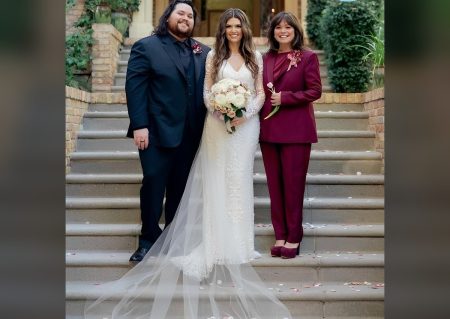
And the full-circle moment arrived at his 2023 wedding, when Wolfgang walked down the aisle arm in arm with his mother — to “316”, the piece written for the baby in that 1991 photograph, played as that baby got married.
The legacy behind the legacy
The Van Halen story is usually told as a two-brother epic, and fairly enough. But trace it back — to the hungry band that detonated on its first world tour in 1978, or the club years spent fighting up the bill — and what you find underneath is family: brothers, then a marriage, then a son who grew up inside the sound and eventually stood inside it on stage.
Some legacies are inherited like furniture. This one was handed over deliberately, one lesson and one jam at a time, by a father who loved his son so plainly that he wrote the boy’s birthday into a song — and by a son who has spent every year since making sure the name means something on his own terms.