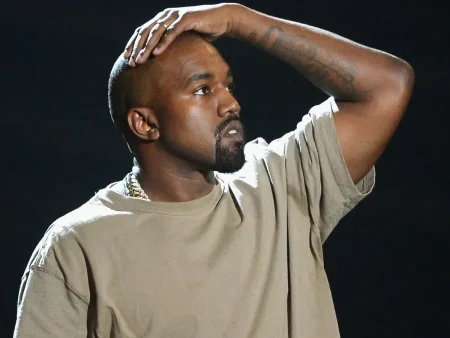
If Elvis visiting Nixon was the odd couple photo-op of the 70s, then Kanye West sitting in a MAGA hat across from Donald Trump in the Oval Office was the 21st century sequel – louder, stranger, and streamed in real time.
The relationship between Ye (the artist formerly known as Kanye West) and Trump has swung from adoration to embarrassment and back again. It is part bromance, part hustle, and part cautionary tale about what happens when celebrity ego collides with presidential power.
How the bromance started: outsider love in the 2016 shock
By the mid 2010s, both men had cast themselves as disruptive outsiders – Trump crashing the political class, and West promising future presidential runs from award show stages in a way that echoed his long running political ambitions. Their worlds fully collided during the 2016 campaign.
On the Saint Pablo tour in San Jose, days after the election, West told the crowd that he had not voted but “if I would’ve voted, I would’ve voted for Trump,” praising Trump’s raw, unscripted style while the audience booed. It was the first clear sign that a serious hip hop star was flirting with the new Republican president elect.
Weeks later, fresh out of hospital, West rode the golden elevator to meet Trump at Trump Tower. The president elect told reporters they had been “friends for a long time” and called West “a good man,” while West later tweeted that they had discussed bullying, education and violence in Chicago. It looked less like a policy summit and more like two brands recognizing each other’s value.
Pop star meets populist
Trump liked to tell interviewers that he and West went back years; Washington Post writers called the pairing “symbiotic” – a celebrity feedback loop where each man validated the other’s image as a rule breaking outsider.
For West, Trump’s improbable win proved that a polarizing entertainer really could take the White House. For Trump, having one of the most influential rappers in America show up at his building, uninvited by the establishment, sent a message to supporters that his appeal crossed old cultural lines.
MAGA hats, “dragon energy” and Oval Office theatre
The bromance went public in 2018. In April, West reopened his Twitter account and declared that Trump was his “brother” and that the two shared “dragon energy”, insisting people did not have to agree with Trump but could not make him stop loving the man.
Trump, a lifelong connoisseur of flattery, immediately tweeted back his thanks. It was a perfect exchange for both: West proved he would defy liberal expectations in hip hop, while Trump finally had a Black superstar enthusiastically wearing his merch.
That October, West walked into the Oval Office in a red MAGA cap, sat in front of the Resolute Desk, and launched into a freewheeling monologue about prison reform, mental health, airplanes and more. At one point he said the hat gave him “power” and compared it to a Superman cape while Trump watched almost speechless.
Music site Know Your Instrument later marked that Oval Office performance – complete with profanity and a bear hug for the president – as one of the defining “antics” in West’s public narrative, alongside his later antisemitic rants. For older listeners who remember Elvis offering Nixon a handgun, the Ye Trump summit made that earlier stunt look almost quaint.

| Year | Key moment | What it revealed |
|---|---|---|
| 2016 | San Jose pro Trump speech & Trump Tower visit | West tests fan backlash and gains direct access to Trump. |
| 2018 | MAGA tweets & Oval Office monologue | Bromance becomes political theatre for global TV. |
| 2018 | “I’ve been used” tweets | First attempt to slam the brakes on the alliance. |
| 2020 | “Taking the red hat off” & own campaign | West tries to step out of Trump’s shadow. |
| 2021 | Drink Champs: “I’ve still got a red hat” | The break turns out to be temporary and emotional, not ideological. |
| 2022 | Mar a Lago dinner with Nick Fuentes | The relationship becomes politically toxic for both. |
Cold feet: “I’ve been used” and then “taking the red hat off”
The Oval Office stunt was not the happily ever after either man expected. In October 2018, after conservative activist Candace Owens linked his name to her “Blexit” project, West tweeted that his “eyes are now wide open” and that he realized he had been “used to spread messages” he did not believe in. He wrote that he was “distancing” himself from politics to focus on creativity.
Politically, that looked like a public breakup. Culturally, it sounded like classic Ye: a hard pivot away from the firestorm he had helped ignite. But the next act made things messier.
In July 2020, West announced his own presidential run and, in a long Forbes interview, signaled he no longer supported Trump, saying he was “taking the red hat off” while launching his so called Birthday Party. He framed wearing the hat as a protest against expectations that Black voters must be Democrats, even as he criticized Trump’s record and hinted that the presidency now looked like “one big mess.”
The campaign itself was chaotic – missed deadlines, confused messaging, tearful rallies – and West finished with a sliver of the vote. The one thing it did prove was that he did not intend to live permanently in Trump’s political shadow.
On again: public loyalty after a failed run
If 2020 was the clean break, 2021 was the messy text at 2 a.m. In a marathon Drink Champs interview on Revolt TV, West laughed off the idea that he had really left Trump, telling the hosts, “I’ve still got a red hat on today” even if he was not physically wearing it.
He used the show to rail against Democrats, the Me Too movement and what he called mind control, insisting that people around him had tried to bully him out of supporting Trump. The politics were incoherent, but the emotion was obvious: he liked what Trump represented for his own sense of defiant independence.
At this point the pattern was clear. West would embrace Trump, absorb outrage, claim higher principles like “free thought,” then distance himself just long enough to catch his breath before drifting back toward the same red hat.
Antisemitism, Nick Fuentes and a toxic reunion
By 2022, the alliance had curdled. West went on a spree of antisemitic comments, from tweeting that he was going “death con 3 on Jewish people” to praising Hitler in an Alex Jones interview, triggering bans from platforms and the collapse of key business deals.
Amid that backlash, he turned up at Trump’s Mar a Lago club with white nationalist and Holocaust denier Nick Fuentes. The dinner sparked condemnation from the Biden White House and even Trump allies like David Friedman, his former ambassador to Israel, who publicly urged Trump to “throw those bums out” and disavow them.
Trump responded by claiming he had never heard of Fuentes and that West had simply “wanted to visit” for advice, insisting the evening had been quick and uneventful. Whatever the reality inside the dining room, outwardly the old bromance had become a public relations disaster – a reminder that Trump’s indulgence of West’s chaos now carried real political cost.
Trump 2.0: revisionist history and mutual usefulness
Trump’s comeback in the 2024 election, defeating Kamala Harris and returning to the White House, rewired the power balance again. West was no longer the guy who once visited a fading one term president. He was allied, at least symbolically, with a leader who had pulled off the rare feat of a non consecutive second term.
In that new era, West started rewriting his own MAGA story. In the documentary “In Whose Name?” he argues that wearing the red hat was less about endorsing Trump’s platform and more about rebelling against what he calls mental slavery and censorship, citing George Orwell’s “1984” and describing pressure from his own community as a kind of “modern slavery.”
Rather than admit a straightforward political endorsement that aged badly, he casts himself as a misunderstood free thinker using Trump as a prop in a bigger struggle over artistic and spiritual freedom. It is self serving, but it fits the way he has always narrated his career.
In a separate interview, West revealed that doctors had re diagnosed him as autistic rather than bipolar and said that insight helped explain past behavior, including his 2018 embrace of Trump. He described long running resistance to external control over his art, finances and image, framing his most controversial political stunts as products of that wiring.
Meanwhile, Business Insider reported West popping up in yet another power drama, publicly pleading on social media for Trump and Elon Musk to reconcile after a falling out. His posts begged the “bros” not to feud and insisted “we love you both,” positioning himself as an emotional go between for billionaires.

What their relationship really is: an ego feedback loop
Strip away the slogans and the headlines and the Ye Trump relationship is not about carefully argued ideology. It is about two men who see themselves as persecuted geniuses and enjoy watching their reflections in each other’s shine.
Trump gets what he craves most: celebrity validation that he is more than a politician, that he is a pop figure with Black fans and hip hop respect. West gets something just as potent: proof that he can ignore his own industry’s norms, sit next to the most polarizing president in modern history, and still dominate every camera in the room.
Like earlier artist president pairings – Sinatra and Kennedy, Elvis and Nixon – there is mutual benefit. Unlike those older stories, this one has played out in real time on social media, with no off switch and no elders in the room to impose shame. The result is a long running spectacle where each man treats the other less as a friend and more as a mirror.
Conclusion: a cautionary duet for music fans
The Ye Trump saga has survived tour cancellations, hospital stays, impeachments, antisemitic meltdowns and two different presidential terms. It keeps limping forward because each man still delivers what the other wants most: attention and affirmation in front of an audience.
For listeners who grew up on soul, classic rock or early hip hop, there is a blunt reminder here. You can admire the records and still keep a cold eye on the politics. Kanye West and Donald Trump did not just blur the line between art and power – they turned it into a reality show where loyalty, outrage and forgiveness are all just plot twists in a very long season.