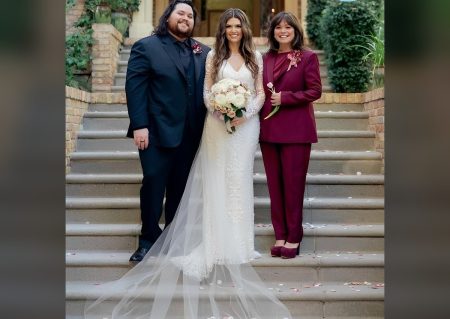
The photograph is pure warmth in an industry that rarely produces any: Wolfgang Van Halen in black on a Grammys red carpet, Valerie Bertinelli beaming beside him, a wall of gramophone trophies glinting behind them. But the reason they were there together makes it one of the more quietly devastating red-carpet pictures in recent rock history.
A song he never wanted to write
Wolfgang was at the 64th Grammy Awards in April 2022 as a first-time nominee: Best Rock Song, for “Distance”. It is the track he wrote for his father, Eddie Van Halen, during Eddie’s final illness, and released weeks after his death in October 2020 — the first single ever issued under Wolfgang’s solo project, Mammoth, and surely one of the heaviest ways any artist has introduced themselves. The video was cut from Van Halen family home movies: birthdays, backstage corridors, a father and son mugging for the camera across three decades.
Even the business side of the song was an act of love: Wolfgang announced at release that his artist proceeds from “Distance” would go to the Mr. Holland’s Opus Foundation, the music-education charity his father had long supported — Eddie’s cause, funded by Eddie’s song.
The track went to number one at rock radio, and the Grammy nomination followed. So the seating arrangement wrote itself. The nomination was for a song about the man they had both lost — her former husband, his father and bandmate of thirteen years. Who else would either of them bring?
Losing the award, winning the room
“Distance” didn’t win. The award went to Foo Fighters’ “Waiting on a War”, on a night when the Grammys doubled as a wake — Taylor Hawkins had died just days earlier, and the ceremony leaned hard into honouring him. If you had to lose a Grammy for a grief song, losing it to a grieving band was at least thematically merciful.
Wolfgang’s response afterwards was characteristically unbitter: he described himself as “feeling pretty damn grateful” simply to have been nominated for the first song released under his own name. No complaints, no campaign for next year — just a musician registering, publicly, that the work had been seen.
His own name, his own hands
That phrase — his own name — is the real story of the photo. Wolfgang has been navigating an impossible brief since he was 15 years old: honour one of the most revered surnames in rock without hiding behind it. He spent thirteen years as Van Halen’s bassist beside his father, absorbing nightly masterclasses most players would sell organs for. With Mammoth he went the other way entirely — writing, producing and performing everything himself, every guitar, every drum fill, every harmony, largely at the family’s own 5150 studio where his father made history. It reads less like a stylistic choice than a burden of proof: if one person plays it all, nobody can say the name carried him.
A Grammy nomination for a song he wrote, played and sang alone was the industry formally conceding the point. And he has kept building since: Mammoth II and further records, opening slots on some of the biggest rock tours on earth, festival stages under his own band’s name — all while patiently answering the eternal Eddie questions with a grace his father would have recognised. Valerie, for her part, has never pretended to be a neutral observer; her social feeds on nomination day read like every proud mother’s, just with a larger audience, and her own writing about grieving Eddie has made plain how much of that family’s love survived every formal ending.
There’s also a quieter subplot in the picture: Valerie’s own year. She has written and spoken with unusual candour about grieving a man she was no longer married to — the strange, unsanctioned mourning of an ex-spouse you never stopped loving — and about how she and Wolfgang held each other through it. The red carpet, of all places, became a public stage for a private truth: this family’s bonds never did run along the official lines.
The long game
He has yet to take a gramophone home, and it doesn’t appear to trouble him much. Rock families and the Grammys have a complicated relationship anyway — sometimes the recognition arrives years late and lands on the family rather than the artist, as the Osbournes’ emotional night at the 2026 ceremony showed. Awards are lagging indicators. The photograph is the leading one.
Because what the red carpet caught that night wasn’t a nominee and his plus-one. It was the whole arc of a family in one frame: the band that started in a Pasadena garage and conquered the world; the marriage that produced a son both parents openly adored; the loss that could have ended the story; and the young man who answered it by turning the worst year of his life into a number-one song — then bringing the one person who had been there for every single step of it as his date.
Eddie used to grin at Wolfgang across the stage. On Grammy night, it was Valerie doing the grinning. Different parent, same pride, same kid earning it.