Ed Sheeran has ended a week of silence over Macklemore’s removal from his US stadium tour, publishing a nine-point statement on Instagram that opens with the line “It’s important that I set out some facts” and ends with a flat refusal of the charge that has followed him since Monday. “I am not complicit,” he wrote.
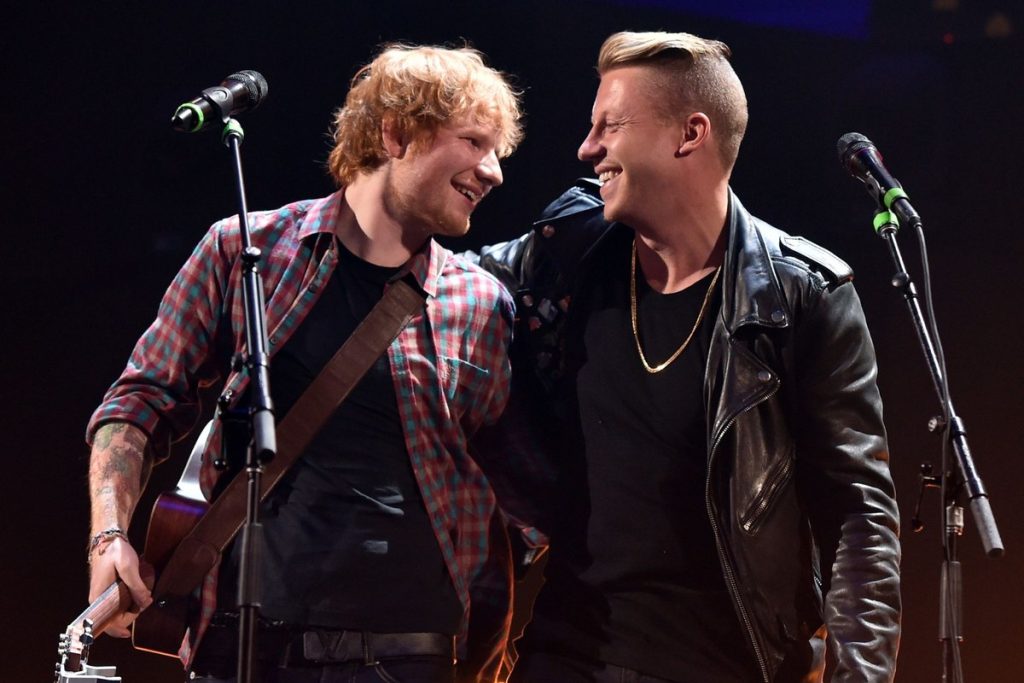
The short version of his argument is that the decision was never his to make. “Macklemore coming off tour was the promoter’s decision, it was not mine,” Sheeran wrote. “Macklemore’s contract for the tour was with the promoter, not me.” He said he spent the week in direct talks with venues, promoters and activists on both sides looking for a way to keep the rapper on the bill, and that he failed. “I have spent this week trying to build bridges, to find a solution and unfortunately, was unable to do so.”
That is a narrower claim than the one his critics have been making, and it leaves a good deal unresolved — including who actually applied the pressure, and whether a headliner of Sheeran’s size could have overruled it had he wanted to.
How a support slot became a standoff
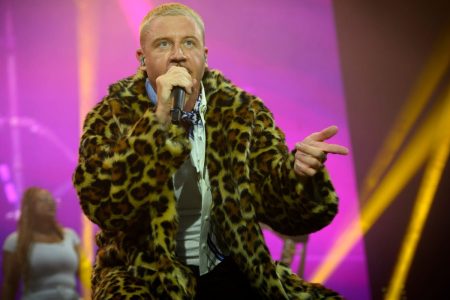
Macklemore opened for Sheeran on September 4 and 5 at MetLife Stadium in New Jersey. During his set he called for “all human beings to be treated with dignity, respect, and equality” and for a free Palestine, before performing “Hind’s Hall”.
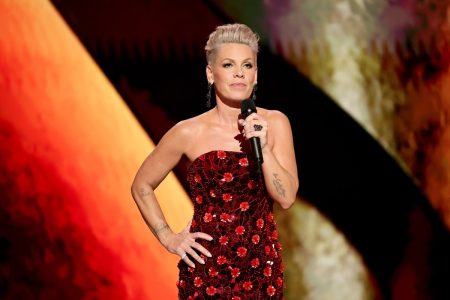
The Israeli-American Council called for his removal from the tour, saying he had used the platform to advance a one-sided political agenda. Macklemore answered that striving for equality “should never be controversial”. Other musicians picked sides: P!nk reshared a post from the group StopAntisemitism criticising the speech, Boy George posted an AI-generated image mocking Sheeran and said on X that he had “never been an @Edsheeran fan and nothing has changed”, while Foo Fighters guitarist Chris Shiflett backed Macklemore publicly, writing that he gets the “STFU and play” line all the time and does not subscribe to it.
On Monday, Macklemore was removed from the eight remaining dates he was booked to open. Messina Touring Group, which promotes the US leg of the Loop Tour, said the reason was that some venues had made clear “they will not allow a concert to take place with Macklemore on the line-up”.
Three statements that do not quite line up
The most contested part of the story is Robert Kraft’s role, and the three accounts of it emphasise different things.
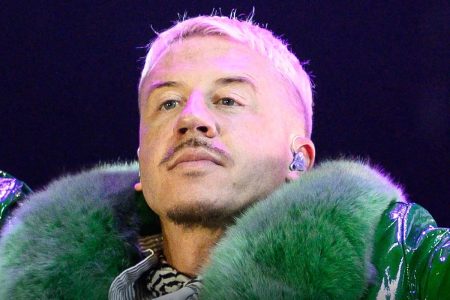
Macklemore’s version, given in his own Instagram statement, is the most direct: he says Sheeran told him that the New England Patriots and Gillette Stadium owner had called to say Macklemore would not be allowed to perform at his venue, and that Kraft had rallied other stadium owners into a collective ultimatum — keep Macklemore, lose the venues. He also went out of his way to call Sheeran a friend and to say the singer had been put in an impossible position.
Kraft has not disputed his involvement. In his own statement he said that while he agreed with Macklemore on much of what he said, he judged the rapper’s recent actions, alongside what he described as a broader history of rhetoric and imagery he considers offensive to the Jewish community, to cross a line for the September 25 and 26 shows at Gillette. He framed the call as a venue’s obligation to keep its events welcoming to all guests. What his statement does not address is Macklemore’s claim about co-ordinating other owners.
Sheeran’s account sits between the two. He confirms the contact without confirming the pressure campaign: “I spoke with the venues at length all week to try and build a bridge. One of those people was Robert Kraft.” He also says the venues’ objection was based on how part of the message was delivered “rather than on everything that was said” — a distinction none of the venues have publicly explained.
Macklemore, for his part, has framed the cost as the whole point. “Taking a side can cost you,” he wrote. “Money, brand deals, sponsorships, festivals, private shows, relationships and access. I’ve lost all of those things. But there is no neutral position between the oppressor and the oppressed.”
The argument Sheeran is actually making
Sheeran’s statement spends more words on his silence than on the logistics, which suggests he understands that is the real charge. He says he has personal views on the conflict and simply declines to use his shows to air them, because his audience “includes young people, often children, of all backgrounds” who “do not expect a political forum”.
He was careful to avoid attacking Macklemore in the process: “I respect Macklemore’s strength of purpose to stand up and shout for what he believes. However, there is room for multiple approaches to the same end: peace.” His closing line — “I know who I am, both as a person and as an artist” — reads as a man who expects the accusation to keep coming regardless.
Not everyone accepted it. The children’s entertainer Ms. Rachel publicly criticised Sheeran over the removal within hours of the statement, and campaigners have begun urging him to cancel the US leg outright.
The tour resumes on Saturday, September 19 at Lincoln Financial Field in Philadelphia, with Lukas Graham and Aaron Rowe opening. The two Gillette Stadium shows at the centre of the row are still scheduled for September 25 and 26.