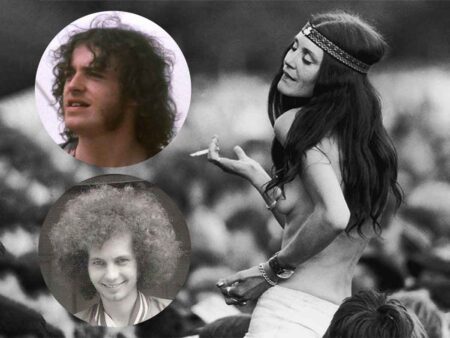
There’s a persistent myth that British blues-rock was a polite museum tour of American music: respectful, tasteful, and slightly over-educated. Ten Years After is the counterargument you can play at dangerous volume. Before the band became shorthand for “that insane Woodstock guitar moment,” they were a working unit with a brutal apprenticeship, a jazz-adjacent rhythmic sense, and a frontman whose right hand could sound like a machine running hot.
They began as the Jaybirds and, like so many UK groups with ambition, they chased stage time wherever it was plentiful, loud, and forgiving of sweat. One of the key proving grounds was Hamburg, the same city that hardened the Beatles into an all-night, crowd-commanding organism. That Hamburg circuit mattered because it rewarded stamina and ruthless timing more than trendiness, and bands either leveled up or got swallowed.
From the Jaybirds to Ten Years After: the less glamorous origin story
Ten Years After’s early identity is easy to flatten into a single word: “boogie.” But the Jaybirds period is more interesting than the label suggests, because it’s where their playing discipline and ensemble dynamics were forged. The group’s later reputation for extended improvisation only works when the band shares a tight internal clock, and that isn’t magic, it’s hours.
The Beatles’ own Hamburg chapter is famously documented as a period of constant performing, and it set a template other UK groups tried to emulate. Beatles Bible’s Hamburg photo and history archive underlines how central the city was to the idea of a UK band becoming battle-ready.
If you want the simple, verifiable outline of Ten Years After’s evolution from local band to international blues-rock name, a basic catalog and band overview is a useful map. It’s the kind of reference that’s better for dates and lineup context than for romantic storytelling.
Why Hamburg changed everything (even for bands that weren’t the Beatles)
Hamburg wasn’t just a place to “get discovered,” it was a worksite. You learned how to keep a set moving, how to win back a bored room, and how to build a peak without a studio safety net. It’s the opposite of the modern “content” era: no cuts, no edits, no mercy.
Even Hamburg’s own portrait of itself as a music city frames live performance as a defining feature. That matters because the ecosystem itself shaped bands into endurance athletes.
“Hamburg made the Beatles.” – a line you’ll hear in countless documentaries, but the deeper point is this: Hamburg made bands. The ones who survived brought that survival skill back home.
The sound: Chicago blues slow-burn, then a UK turbocharger
At their purest, Ten Years After sit on an axis between smoky Chicago blues phrasing and the UK’s late-60s obsession with volume and speed. The Chicago influence shows up in the band’s love of riffs that walk, not just run, and in how the vocals and guitar often answer each other like a barroom conversation. Their twist was to tighten everything until it felt like a race.
Ten Years After were also a band with more rhythmic intelligence than the stereotype allows. That’s where bassist Leo Lyons gets under-credited: when the bottom end is confident, the guitarist can be reckless. Add the band’s organ textures, and you get a blues-rock format that can sound thick without turning into sludge.

Alvin Lee: speed as a musical argument
Let’s be provocative: Alvin Lee didn’t just play fast, he used speed to corner the listener. In a genre where virtuosity sometimes floats above the groove, Lee’s attack often feels like it’s welded to the rhythm section. The result is a kind of boogie urgency that’s almost confrontational.
His profile and legacy are explored in depth by Alvin Lee’s official career archive, which provides context around his career arc beyond the single Woodstock moment that tends to swallow the rest of the story.
1967: “Ten Years After” and the case for their purest blues-rock statement
The debut album Ten Years After (1967) is frequently treated as the “before they got huge” artifact. That’s a mistake. Debuts like this can be the most honest records a band ever makes, because they’re still trying to prove their identity rather than expand it.
What you hear on the first album is a band that wants to be judged by feel, not by studio tricks. The arrangements sit close to traditional blues structures, but the playing already hints at the kinetic violence to come. If you’re hunting for the moment where British blues-rock still smells like the club floor, this is it.
For a straightforward reference point on the album’s basic release information and track listing, the debut’s release details and track listing are a quick factual anchor.
How to listen to the debut (so it hits as hard as it should)
- Follow the rhythm section first – it’s the hidden engine of the band’s later live explosions.
- Notice the restraint – Lee’s flash works because he doesn’t burn every match at once.
- Listen for organ space – the keys aren’t just “color,” they shape the band’s weight and momentum.
1968: “Undead” and the rise of “Going Home” as a live weapon
If the debut is Ten Years After’s “roots” document, Undead is the proof that the band’s real natural habitat was the stage. Live albums from this era can feel like marketing products, but the best ones are more like lab reports: the band, under pressure, revealing what really happens when the lights go up.
“Going Home” is the key because it’s not simply a song, it’s a format: a ramp that lets the group accelerate into extended improvisation without losing the crowd. The tune’s longevity is partly because it solves a problem every jam band faces: how to stretch without drifting.
Songfacts’ Ten Years After page is a handy starting point for the band’s best-known song titles and basic catalog signposts, especially for readers who want to build a listening checklist quickly.

Why “Going Home” works (and why so many jams don’t)
| Element | What Ten Years After does | Why it matters live |
|---|---|---|
| Riff design | Simple, repeatable, easy to lock | Frees the soloist without losing the room |
| Dynamics | Builds in waves, not a straight line | Keeps attention across long minutes |
| Rhythm feel | Boogie with precision, not chaos | Makes “fast” feel tight instead of sloppy |
| Band roles | Everyone supports the peak | Turns a solo into a group event |
1969: “Stonedhenge” and the hypnotic middle path
Stonedhenge is where Ten Years After sound like they’re exhaling, and that relaxed confidence is exactly why it lands. It’s not the record of a band trying to outrun its reputation; it’s the record of a band learning to steer it. The grooves can feel looser, but the internal control is stronger.
Tracks like “Hear Me Calling” show how the group could write with bite, while longer passages lean into a darker, more ominous jam atmosphere. It’s a reminder that boogie doesn’t have to be cheerful. It can be trance music with a blues accent.
A timeline-and-context overview of Stonedhenge provides a digestible take on the album’s place in the band’s arc and why it remains a fan favorite.
A spicy take: the “stoned” part was structural, not chemical
People love to reduce late-60s music to substances and vibes. But the hypnotic feel on Stonedhenge is mostly arrangement and time feel: repeated motifs, controlled variation, and the confidence to sit in a groove long enough for it to become physical. The band didn’t need to be out of their minds to make you feel like you were.
Woodstock: the nine-minute “Going Home” that became a career headline
Woodstock didn’t invent Ten Years After, but it magnified their strengths in one of the most widely circulated performance documents in rock history. In the film and its surrounding mythos, the band appear as a pure delivery system for momentum: riffs turning into sprints, sprints turning into avalanches.
The festival’s official lineup entry for Ten Years After places them firmly in Woodstock’s canon and keeps the basic association clear for readers tracing who played and why it mattered.
A high-level explainer of Woodstock’s scale and cultural impact is a solid companion for understanding how the festival’s media footprint turned certain performances into shorthand.
The band’s UK chart track record also helps explain why their story can get flattened into one filmed eruption: it clarifies what “visibility” looked like in real-world reception terms before and after the moment.
What you’re actually hearing in that “Going Home” blowout
- Riff discipline – the band doesn’t abandon the groove even when the guitar gets feral.
- Phrase logic – Lee’s speed still has punctuation, like a speaker who knows where the commas go.
- Audience psychology – the band times peaks like they’re reading the crowd’s pulse.
Legacy: the band that proved boogie could be high art (and street fight)
Ten Years After’s legacy is often summarized as “fast blues at Woodstock,” but that’s like summarizing a great film by one famous scene. The deeper contribution is how they married blues vocabulary to a near-jazz sense of ensemble responsiveness, then delivered it with rock volume and showmanship. That combination made them a bridge between purist blues-rock and the more expansive jam logic that followed.
For a clean snapshot of the band’s chart presence and UK release impact across their peak years, UKCharts provides a searchable overview that’s useful for grounding the conversation in real-world reception.
Starter listening: where to begin (and what to listen for)
If you’re new to Ten Years After, don’t start with a greatest hits playlist and call it a day. Start with a sequence that explains the band’s evolution, then circle back to the famous moments with better ears.
- Ten Years After (1967) – for the tight blues-rock blueprint and early fire.
- Undead (1968) – for the live risk-taking and the “Going Home” framework.
- Stonedhenge (1969) – for the hypnotic groove-and-jam sweet spot.
- Woodstock performance footage – for the cultural artifact version of their live power.
Want the edgy truth? Ten Years After were never the “coolest” brand in English blues-rock, and that’s why they’re worth revisiting. They were too direct, too sweaty, too committed to the groove to fit the critic-friendly narrative. But if you care about what a band can do when it treats blues not as heritage but as fuel, their run from the Jaybirds grind to Woodstock glory is still one of the genre’s most satisfying arcs.
Conclusion
Ten Years After didn’t just emerge during the golden age of English blues-rock; they helped define its physical intensity. From Hamburg-style hardening to the studio clarity of their debut, the live punch of Undead, and the trance-like pull of Stonedhenge, the band built a sound that could swing, sprint, and hypnotize.
And when “Going Home” hit at Woodstock, it wasn’t an accident or a fluke. It was the result of a band that had been training for that moment for years, one relentless set at a time.