The Eagles built a fortune on silk-smooth harmonies and California cool, but behind the sound was a band that argued like a divorce court. On one infamous night in 1980, the mask finally slipped in public.
At a supposedly mellow political benefit in Long Beach, Glenn Frey and Don Felder spent an entire show promising to beat each other up as thousands of fans looked on. Rock history now knows it as the ‘Long Night at Wrong Beach’ – the gig where the Eagles nearly came to blows onstage and quietly fell apart off it.
Before Long Beach: A band running on fumes
By the summer of 1980, the Eagles were exhausted. The Long Run had taken a year and a half to finish, with constant pressure to match the impossible standard of Hotel California.
The album still sold millions, but the sessions were toxic, the touring relentless, and friendships inside the band were already frayed. Frey had clashed with Randy Meisner years earlier, Joe Walsh had his own combustible streak, and Felder was pushing harder to be heard as a writer and singer.
On paper the band were at their commercial peak. In reality, they were a group of burned-out millionaires held together by contracts, cocaine memories, and the knowledge that walking away meant leaving huge money on the table.
A political benefit nobody really wanted to play
The flashpoint was a benefit show for California senator Alan Cranston at the Long Beach Arena on 31 July 1980, the final date of the Long Run tour. Frey had helped arrange the gig, but not everyone shared his enthusiasm.
Felder later wrote that he did not know who the Cranstons were and resented turning the Eagles into a campaign machine for a politician he did not care about. He nicknamed Frey and Don Henley ‘The Gods’ and believed they were dragging the band into politics for their own agenda, not the group’s.
Backstage, Cranston and his wife, Norma Weintraub, made the rounds to thank each musician personally. When she greeted Felder, he replied politely, then muttered ‘I guess’ under his breath as she walked away. Frey heard it and took it as an insult to his guest and to the whole event.
According to multiple accounts, Frey stormed into the tuning room, hurled a beer bottle against the wall, and went onstage seething. By the time the band hit the first chords, the mellow California dream had turned into a vendetta with guitars.

The show where threats replaced harmonies
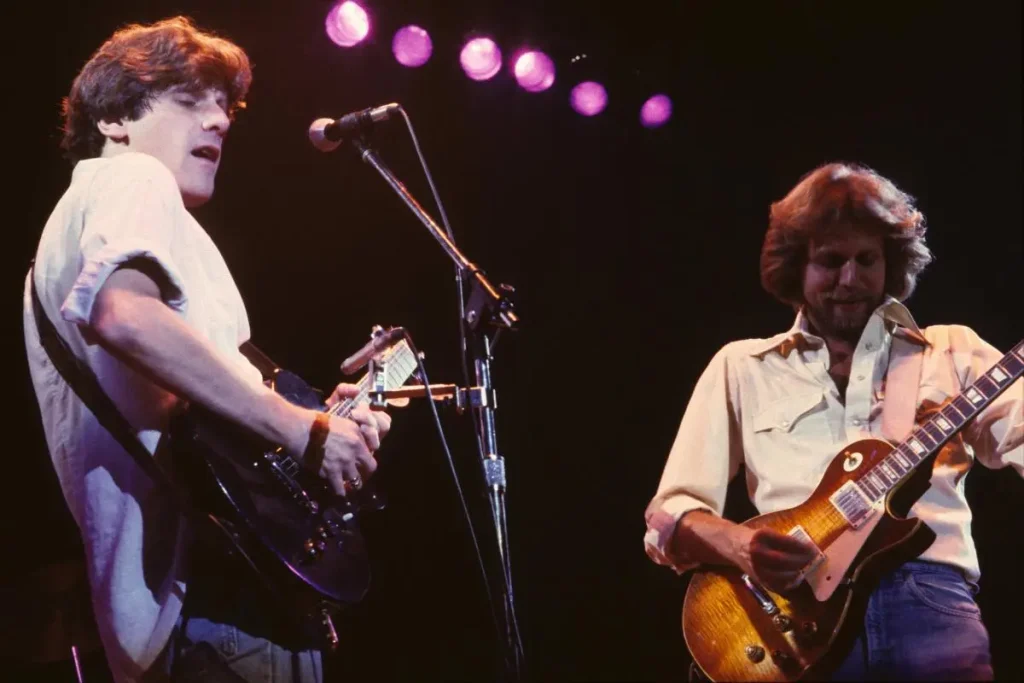
From the opening numbers, fans at the Long Beach Arena were watching two different concerts. Out front they heard the familiar perfection of ‘Lyin’ Eyes’, ‘I Can’t Tell You Why’ and the rest of the Eagles’ songbook. Inside the band, Frey and Felder were waging a low-level war between every verse.
Felder later recalled Frey walking over during ‘Best of My Love’ and hissing that he would kick his ass when they got offstage. Frey, in turn, remembered Felder staring back and promising there were only a few songs left before he did the same to him.
Both men were drunk, wired, and physically depleted from months of touring. One Long Beach columnist later joked that they looked like 90-pound ghosts fueled by ‘various liquids and powders’, a far cry from the bronzed cowboys on their album sleeves.
‘Only three more songs till I kick your ass’
As the set rolled on, the threats escalated. Frey has said that at one point Felder looked back and growled, ‘Only three more songs till I kick your ass, pal’, to which Frey shot back that he could not wait.
Sound engineers captured some of the muttered abuse on the multitrack tapes. You can reportedly hear Frey sneering ‘real pro’ at Felder between lines, followed by an expletive-laced reminder that he had been paying him for seven years.
Almost nobody in the crowd knew what was happening, because the crew were muting microphones whenever the pair were not actually singing. On tape it sounds like a band locking into classic harmonies; in the wings it looked like a bar fight waiting for the final chorus.
The fight that never quite happened
Everyone expected the brawl to erupt as soon as the last chord rang out. Instead, something almost more chilling happened: the two men never got close enough to swing.
As the set closed with ‘Take It Easy’, Felder bolted for the side of the stage, grabbed a cheaper Takamine acoustic, and smashed it against a concrete pillar. Frey, who had been spoiling for a fight all night, snapped that Felder had picked his cheapest guitar to destroy.
Rather than lunging at each other, they split in opposite directions. Felder dived into a waiting limo and was gone before Frey could get offstage. The punches never landed, but the damage was done: everyone understood the band could not go on like this.
How that night finished off the Eagles
The Long Beach show is widely cited as the unofficial end of the Eagles’ first run. The band still owed their label a live album, so producers stitched together Eagles Live from tapes recorded across the tour, with parts mixed on opposite coasts because Frey refused to be in the same city as the others.
Timothy B. Schmit later recalled calling Frey soon after the gig and being told simply that the Eagles were finished. There was no teary press conference, no public farewell, just a quiet corporate death notice delivered through managers and lawyers.
In interviews that followed, Henley laid down the famous line that they would play together again ‘when hell freezes over’, a quip that fans initially took as a joke and then sadly believed. Frey publicly ruled out any sort of ‘lost youth and greed’ reunion tour, even as the catalogue kept selling.
From hell freezing over to lawsuits
Ironically, hell did freeze over. In the early 1990s a country tribute album led to all five Long Run era Eagles reuniting for a Travis Tritt video, then quietly agreeing to a full reunion under the suitably titled Hell Freezes Over banner.
The 1994 MTV special and live album were massive, and for a brief window it looked as if the Long Beach ugliness had been buried. Felder was back, the harmonies were intact, and Frey joked to the crowd that they had never really broken up, just taken a 14 year vacation.
But the old resentments over money and control never really went away. Felder was fired from the band in 2001, sued Henley and Frey over what he considered unfair business terms, and wrote his memoir Heaven and Hell, where he again cast his former bandleaders as ‘The Gods’ who controlled everything from set lists to percentages.
Frey died in 2016 without ever fully reconciling with Felder. In later comments, Felder said he had hoped for a final dinner, a handshake and a hug that never came.

Why Long Beach still fascinates classic rock fans
Four decades later, the Long Night at Wrong Beach keeps resurfacing in documentaries, think pieces, and anniversary articles. Recent coverage in Parade framed it as one of rock’s most infamous onstage arguments, a night when two otherwise controlled performers let the audience glimpse how much they actually hated each other by that point.
Part of the fascination is simple voyeurism. The Eagles were marketed as tasteful grown ups in a decade of cartoon excess, yet here they were, promising violence over open microphones during ‘Best of My Love’. It proved that even the supposedly sensible bands were powder kegs.
But the story also explains something about their art. Those seamless harmonies and immaculate arrangements came from men who drove each other past the breaking point, chasing a standard that could never quite match the fantasy they were selling.
Key moments of the Long Night at Wrong Beach
| Time | What happened |
|---|---|
| Pre show | Felder mutters ‘I guess’ to Cranston’s wife, Frey explodes backstage. |
| During set | Frey and Felder trade threats between verses, some caught on the multitrack tapes. |
| After final song | Felder smashes a guitar and flees, the band effectively breaks up. |
Legacy: Beautiful music built on barely controlled chaos
If you grew up with the Eagles on the radio, Long Beach is more than rock gossip. It is the night that revealed what it really cost to make that music.
The split that followed scattered the members into hugely successful solo careers, then pulled them back together when nostalgia and money became too powerful to resist. Yet the shadow of the Long Night at Wrong Beach never quite left; even in reunion interviews you can hear the careful hedging whenever Felder’s name comes up.
Maybe that is why those old records still feel alive. You can listen to ‘Best of My Love’ or ‘Take It Easy’ and imagine two guitar players sharing a microphone while plotting to knock each other out after the show. The sweetness was always laced with something darker, and on that July night in 1980, the darkness finally stepped into the spotlight.