Duane Allman’s guitar tone is one of rock’s great magic tricks: rich and warm, yet sharp enough to cut through two drummers, organ, bass, and another lead guitar without turning into fizzy mush. People love to debate whether it was the Les Paul, the Marshall stacks, the slide, or some mythical set of settings scribbled on a road case.
Here’s the more interesting (and slightly provocative) truth: the gear mattered, but Duane’s tone was really a discipline. The sound comes from loud, simple ingredients driven hard, plus a session guitarist’s instinct for leaving space and making every note speak like a singer. You can buy the same brand names; you cannot buy the economy.
The core rig: why “big, loud, and basic” wins
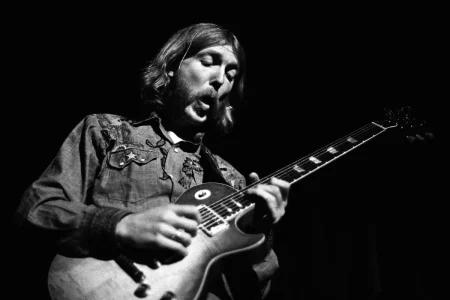
The classic picture is accurate: Duane’s main stage recipe was a late-’50s Gibson Les Paul Standard into Marshall “Plexi”-era heads, often feeding multiple 4×12 cabinets. In practical terms, that setup gives you a thick midrange, fast pick response, and natural compression when you crank it.
What makes the myth sticky is that it isn’t complicated. It’s almost offensively straightforward: guitar, cable, amp, volume. In an age where players stack pedals like pancakes, Duane’s sound is a reminder that most “warmth” is simply amp power section and speakers working, not a pedal doing the talking.
Gibson Les Paul Standard: the “ax” that does the heavy lifting
Duane is strongly associated with a late-’50s sunburst Les Paul Standard, the archetype that later became the reference point for what players mean by “fat, singing humbucker tone.” A vintage-spec Les Paul gives you sustain and a vocal midrange that stays coherent when the amp is loud.
Christie’s documentation of Duane-related guitar lots shows how seriously the market treats his instruments and their provenance, underscoring how central these Les Pauls are to his legend and sound.
Marshall Plexi-style heads: the edge-of-breakup sweet spot
Plexi-era Marshall circuits are loved because they distort in a musical way when pushed: not just more gain, but more harmonic density and a “bloom” after the pick attack. Duane’s warm tone is less about ultra-saturation and more about that lively edge where chords still have air.
Marshall’s early-amp origin story helps explain why those circuits became the backbone of loud rock guitar, which is exactly the ecosystem Duane thrived in.
Two 4x12s: not just volume, but physics
Running multiple 4×12 cabinets is not merely a macho stage flex. More speakers can mean a broader soundfield and a different feel under the fingers: the guitar “pushes back” and encourages long, singing notes.
It’s also part of why Duane’s tone feels three-dimensional. A single small cab can sound great, but it rarely creates that Fillmore-sized cushion of air around the notes.

The rare fuzz: distortion as punctuation, not a personality
Duane is sometimes linked to a Dallas-Arbiter Fuzz Face, but the key detail is the word occasionally. If you’re chasing his tone and you start with fuzz, you’re starting at the end of the story.
The Fuzz Face is iconic because it can be both woolly and expressive, but it’s also easy to overdo. Duane’s own biographical and gear notes are a useful reminder that fuzz wasn’t the foundation of his sound so much as an extra color.
| Ingredient | What it contributes | Duane-style takeaway |
|---|---|---|
| Les Paul humbuckers | Thick mids, sustain, strong fundamental | Let notes ring and phrase like a vocalist |
| Cranked Marshall | Harmonic growl, compression, bite | Ride guitar volume and pick attack |
| Multiple 4x12s | Big projection, wider low-mid footprint | Think “room tone,” not bedroom tone |
| Fuzz (occasional) | Extra saturation and texture | Use it like spice, not the meal |
The real cheat code: session work turns tone into language
A lot of players chase Duane’s sound as if it’s a static EQ curve. But his tone is inseparable from how he speaks on the instrument: short statements, answers, repeats, and escalating intensity that never loses the thread.
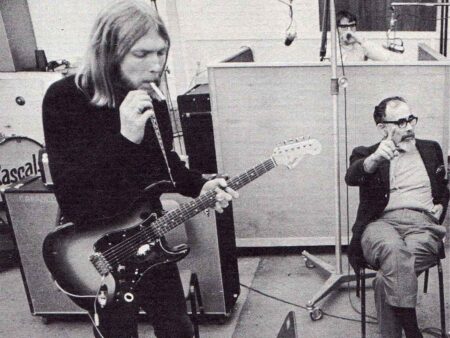
That “cohesive and conversational” quality is exactly what you learn when you’re a hired hand in studios: you must create impact without stepping on the vocal, the horns, or the groove. Summaries of his career consistently emphasize his extensive studio work and the way it shaped his touch, not just his rig.
Why R&B discipline makes rock solos better (and rarer)
R&B sessions train you to respect the pocket. You don’t get to wander rhythmically just because you can play fast. You lock to the drummer, you leave room for the singer, and you make every fill feel inevitable.
Those habits translate directly into the Allman Brothers’ extended improvisations. The solos stretch, but the time stays glued. And when the time stays glued, the tone sounds warmer because the listener isn’t bracing for chaos.
Economy of phrasing: the “warm” part is often what you don’t play
Here’s an uncomfortable claim: many players with great gear still sound thin because they talk too much. Duane’s lines breathe. He uses repetition, small variations, and clear cadences so the ear can follow the story.
“Through his studio work, Duane had developed a great sense of rhythm as well as a keen understanding of economy, in terms of phrasing.”
Andy Aledort, Guitar World
That economy also keeps distortion musical. Overdrive gets ugly when you stack dense notes with no space. Duane’s phrasing gives the amp time to recover, so sustain feels like singing rather than sizzling.
Try this: the “two-sentence solo” exercise
- Sentence 1: Create a 2-bar motif that ends on a stable chord tone.
- Sentence 2: Answer it with a variation that climbs higher and ends with a longer held note.
- Repeat the pair, but change only one element each time (rhythm, ending note, or slide ornament).
This is how you get long solos that feel like one idea evolving, not a random dump of licks.
Slide tone: warmth, but with human-like inflection
Duane’s slide playing is the other half of the myth. Slide exposes every flaw: pitch, timing, touch. When it’s good, it becomes the closest thing the guitar has to the human voice.
In practice, his reputation is inseparable from the Allman Brothers’ signature blend of blues-based improvisation and slide melody – context you can trace straight through the band’s catalog and legacy overview.
If you want a Duane-flavored slide sound without fighting your guitar, start by lowering action only as needed and using a slide that’s comfortable and stable on your finger. Most “bad slide tone” is actually bad intonation and uneven pressure.
How to approximate the rig today (without owning a vintage Les Paul)
You don’t need a museum piece to get close. You need the behavior of the system: humbuckers, a Marshall-voiced circuit, speakers moving air, and your hands controlling the gain.
Practical recipe
- Guitar: Any Les Paul-style with medium-output humbuckers. Use the neck pickup for roundness, bridge for bite.
- Amp: Plexi-style or JTM-style platform. Set it to edge-of-breakup and push with guitar volume rather than a high-gain pedal.
- Cab/IR: 4×12-style voicing. If you’re using a modeler, choose a classic British 4×12 impulse response.
- Gain: Less than you think. If your fast runs smear, back off.
- EQ: Favor mids. Too much bass makes slide and long notes lose definition.
“Plexi loud” without the divorce: modern workarounds
Real Plexi volume is antisocial. The workaround is attenuation, master-volume designs, or quality modeling. What matters is keeping the pick dynamics intact: if everything is equally compressed, you lose the conversational feel.
Listening homework: where the tone lessons actually live
Duane’s most famous recordings are not just tone showcases – they’re masterclasses in structure. The “warmth” is often the calm authority of a player who knows exactly where beat one is.
- Fillmore-era improvisations: Listen for repeated motifs and how intensity increases without tempo drift.
- R&B sessions: Listen for tight fills that never steal the spotlight from the vocal.
- Slide features: Listen for micro-pitch moves and vibrato speed changes that mimic singers.
Broader reference works like Grove Music’s Duane Allman entry help frame why these recordings matter beyond “great tone”: they’re central to his legacy as a stylist.
Why Duane’s tone still embarrasses modern players
Here’s the edgy part: modern guitar culture often confuses more with better. More pedals, more gain, more notes, more presets. Duane’s sound is a rebuke to that consumer logic.
His rig was powerful, but the real power was editorial. He could play blazing lines, yet he chose phrases that served the groove and told a story. That’s why his solos can run long without feeling self-indulgent.
List-making isn’t musicology, but it’s still telling that Duane’s standing in the modern guitarist canon remains high: the recognition is as much about musical intelligence as it is about the famous sound.

Quick reference: Duane Allman tone checklist
- Humbuckers with clarity, not extreme output.
- Marshall-style overdrive from volume, not fuzz-as-default.
- Speaker “push” (real cab or good IR).
- Right hand dynamics: pick harder for bark, softer for bloom.
- Phrase like a singer: repeat, answer, breathe.
- Stay married to the groove.
Conclusion: the myth is real, but it’s not for sale
Yes, Duane’s warm tone was built on classic tools: a late-’50s Les Paul vibe, Plexi-style Marshalls, and big cabinets. But the part that still stops people cold is the session player’s mindset: economy, rhythm, and conversation.
Chase the ingredients if you want, but chase the discipline if you want results. Duane’s tone is what happens when volume meets taste, and taste wins.