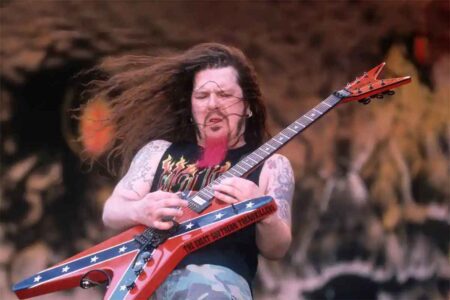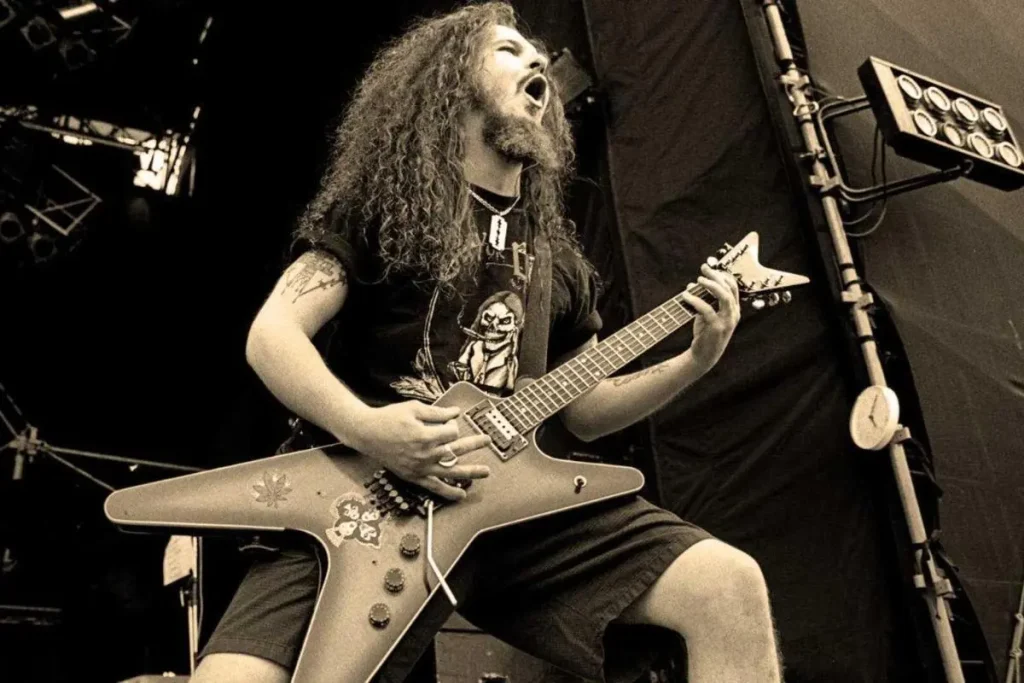
Imagine being phoned by Dave Mustaine and offered the guitar slot in Megadeth, only to turn it down because the band would not also hire your brother. That kind of stubborn, ride-or-die loyalty defined Darrell “Dimebag” Abbott just as much as his screaming pinched harmonics and concrete-cracking riffs.
By his mid-teens he was terrorising Dallas guitar contests, winning so often that promoters finally asked him to stop entering and give everyone else a chance. A decade later he and drummer brother Vinnie Paul had dragged Pantera out of spandex and hairspray into a new groove-heavy metal that felt like Sabbath and Van Halen pushed through a meat grinder, and he did it all with a drink in one hand, a prank in his back pocket and, tragically, a bullet waiting for him onstage.
Brotherhood before fame: the Megadeth call that never happened
In 1989, as Pantera were still a regional draw with big ambitions, Dimebag received a call that could have rocketed him straight into the big leagues: Dave Mustaine wanted him to join Megadeth, already one of the titans of thrash metal.
Dime’s answer was instant and non-negotiable – he would only take the gig if Vinnie Paul came with him on drums. As Vinnie later told it, Mustaine dangled a steady paycheck, health insurance and even a Nike endorsement in front of the young guitarist, but Dime refused to leave his brother behind, and because Megadeth had just hired Nick Menza, the Abbott package was politely declined.
Teenage prodigy with a lightning-bolt guitar
Banned from the local guitar contests
In his mid-teens, Dimebag entered a guitar showdown at the Agora Ballroom in Dallas and walked away that would become the skeleton of his signature axe. He kept coming back and winning, eventually collecting multiple guitars until organisers finally asked him to sit out future contests and serve as a judge so someone else could have a shot.
Turning a prize guitar into the Dean from Hell
The maroon Dean ML he won at those contests was later rebuilt by friend and luthier Buddy Blaze with a Floyd Rose tremolo, Bill Lawrence bridge pickup and a blue lightning-bolt finish, returning to Dime as the now-iconic Dean from Hell seen on the Cowboys from Hell cover. From there he dove into gear design, working directly on signature guitars, amps, pedals and pickups so his brutal tone and harmonic squeals could survive the road every night.
From spandex to groove metal
Pantera started life as a glam band in the early 80s, all big hair and bigger choruses, but by the time they cut Cowboys from Hell they had stripped away the image and locked into a heavier, mid-tempo power groove built around Dimebag’s riffing. That album’s title track and raw, unfussy production marked a clean break from their past and quietly set the template for a new generation of groove-focused metal records.
Riffs that rewired heavy metal
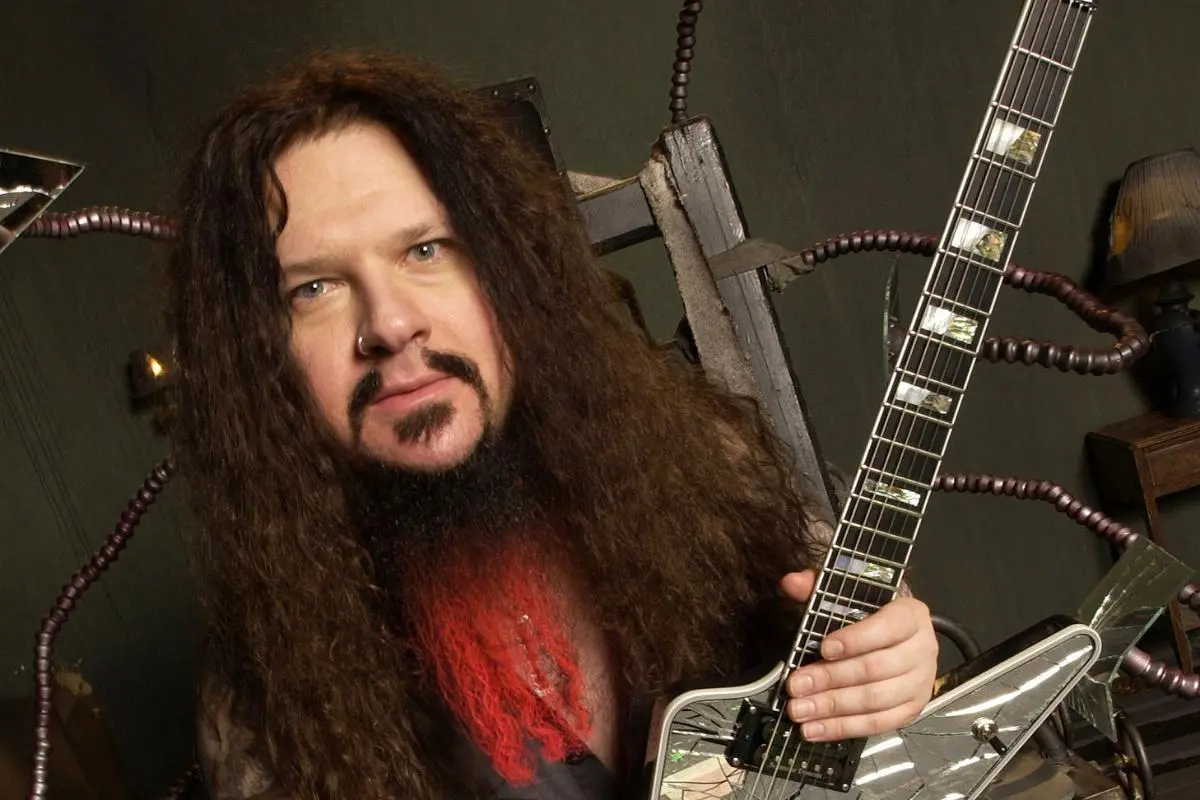
Ask 10 guitarists for Dimebag’s defining riff and at least half will say Walk. The song rides a two-chord 12/8 stomp that is so distinctive Metal Hammer has called its intro not only Pantera’s most recognisable.
What makes his catalogue endure, though, is the range: the locomotive churn of Cowboys from Hell, the cathedral-sized balladry of Cemetery Gates and the ominous, weather-system solo in Floods that sounds like the sky itself tearing open. For listeners raised on Iommi and Eddie Van Halen, these tracks are the clearest proof that Dimebag took 70s flash and welded it to 90s heaviness without losing either side.
| Year | Track | Why it mattered |
|---|---|---|
| 1990 | Cowboys from Hell | Blueprint for Pantera’s groove-first sound and Dime’s emergence as a new guitar hero. |
| 1990 | Cemetery Gates | Proved he could be as melodic and emotional as any classic rock soloist. |
| 1992 | Walk | Two-chord stomp that became an arena chant for misfits worldwide. |
| 1996 | Floods | Haunting multi-part solo often cited as his single greatest performance. |
Party animal, prankster and inventor of the Black Tooth Grin
The shot that started with a Megadeth lyric
Dimebag’s infamous drink of choice, the Black Tooth Grin, started as a private joke on tour with Megadeth. Hearing the phrase in the song Sweating Bullets, he christened a brutal mix of Seagram’s 7 (later often Crown Royal) and a splash of Coke with the name, pouring rounds for bandmates and crew until the phrase and the drink spread through metal bars everywhere.
From backstage ritual to liquor brand
Years after his death, longtime partner Rita Haney helped turn that backstage ritual into Blacktooth Beverages, a small-batch liquor line built around a seven-year American rye whiskey, a rye-vodka blend and canned Black Tooth Grin cocktails. The goal is simple: bottle the rebellious, communal spirit Dime created when he yelled for another round and pulled fans and friends into his orbit.
Prank wars on the tour bus
The same impulse that made him a generous host also powered a vicious sense of humor. In footage from the Dimevision videos, you can watch him discover a stray pair of shoes on the bus, fill one with chili and vodka, microwave it and then hand it back to the unsuspecting owner as if nothing had happened – just one of many pranks that kept life around him loud, messy and hilarious.
The night metal lost its loudest voice
On December 8, 2004, Dimebag was onstage with his post-Pantera band Damageplan at the Alrosa Villa nightclub in Columbus, Ohio when a gunman rushed the stage and opened fire, killing the guitarist and three others before police shot the attacker, former Marine and obsessed Pantera fan Nathan Gale. The venue has since been demolished to make way for affordable housing, but the memory of that night still hangs over every small-club metal show, and tribute events like Dimebash keep his name on festival posters and in fans’ glasses every year.
For many musicians it was the moment they realised the distance between stage and crowd is only a few feet of worn carpet, and that the people who lift you up can sometimes be the ones you most need protection from. Metal had lost a folk hero in the cruelest way possible.
Why Dimebag still matters
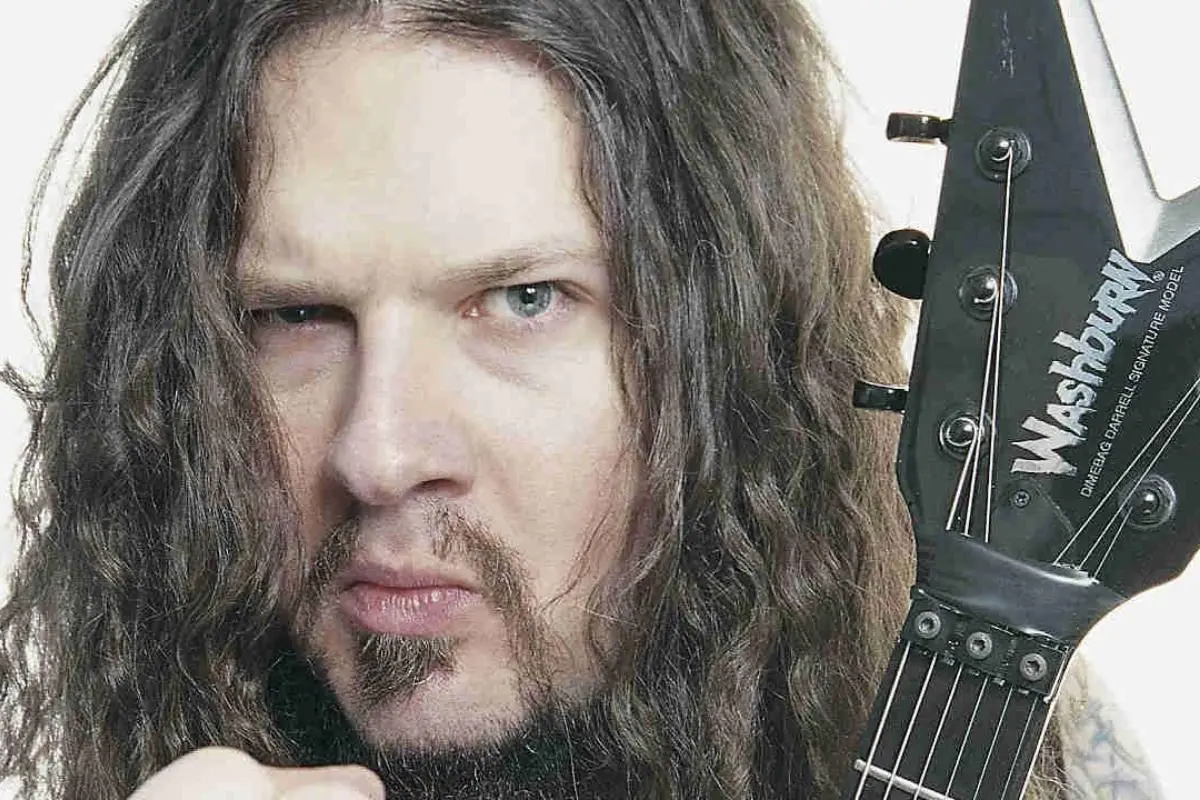
For listeners who came of age on Sabbath, Priest and Van Halen, Dimebag was the bridge into a far heavier era. He kept the blues phrasing, pinch harmonics and showmanship of the 70s, but tuned down, cranked the gain and wrote riffs that could make a stadium crowd move in unison even while radio was busy chasing grunge and alt-rock.
His impact has inspired everything from annual Dimebash jams to touring art exhibits like Six-String Masterpieces.
If you want to explore his legacy, start with Cowboys from Hell and Vulgar Display of Power front to back, then move on to Far Beyond Driven and the home-video chaos of the Vulgar Videos and Dimevision. Listen for how he uses silence, bends and whammy dives to make each riff feel like the punchline to a very loud joke.
The last word: loyalty at full volume
Dimebag Darrell will always be remembered for jaw-dropping solos and riffs like Walk, but the deeper story is about character. He turned down an instant ticket to fame rather than abandon his brother, carried his friends and fans along for the ride and somehow turned brutally heavy music into a celebration instead of a wall of rage – which is why, every time those grooves kick in, he still sounds less like a fallen guitarist and more like an unstoppable force of metal.