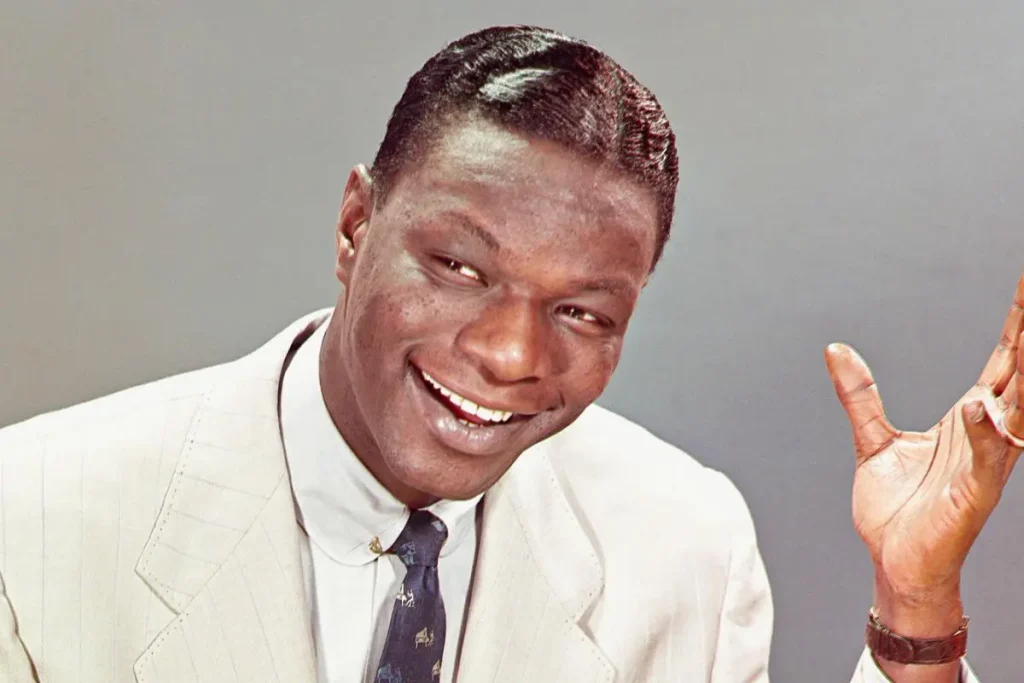
Nat King Cole is frozen in many people’s minds as the voice of Christmas, crooning softly while chestnuts roast and snow falls on some idealized 1950s suburb. Behind that velvet tone, though, was a jazz radical, a barrier-breaking TV star and a man pushed into activism by the violence of Jim Crow.
Born Nathaniel Adams Coles in Montgomery, Alabama and raised on Chicago’s South Side, Cole rose from church organ lessons to international fame, turning a childhood gift at the piano into a career that reshaped American popular music. For many listeners between Bing Crosby and Elvis, his records were not background; they were the soundtrack of adulthood.
A voice like velvet over steel
Cole’s success was not an accident of marketing; it was built on freakish natural ability. He was never formally trained as a singer, yet his baritone combined conversational ease with laser-guided intonation, helping him sell more than 50 million records worldwide. Biographer Daniel Mark Epstein called that sound “one of the great gifts of nature”, a line that still sounds almost modest.
Put on “Unforgettable” or “Nature Boy” and you hear how he glides just behind the beat, relaxing the listener while never losing rhythmic grip. The consonants are crisp, a legacy of a preacher father who insisted his children enunciate every syllable, while the phrases float with a jazz musician’s sense of time. Many singers admired how he sounded casual yet landed every note like a classical instrumentalist.
Jazz revolutionary behind the crooner image
The silky ballads can obscure a crucial fact: Nat King Cole began as a hardcore jazz pianist. In the late 1930s he formed the King Cole Trio, a lean guitar-bass-piano unit that packed clubs and helped define the modern piano trio sound. You can hear the blueprint in later small groups led by Oscar Peterson or Ahmad Jamal, with their drum-tight swing and piano lines that dance rather than bludgeon.
Those early trio sides still surprise listeners who know only the later string-heavy hits. His left hand walks like a bassist, his right hand skims bebop lines, and he never seems to crowd the beat. If you mute the vocals on “Straighten Up and Fly Right,” you can hear why serious historians rank him among the most influential jazz pianists of his era, not just the smoothest balladeer.
That deep instrumental grounding is part of why the pop records feel so solid. Even on the most sentimental material, his internal metronome never wavers and his chord choices keep the harmony quietly interesting. Under the lush arrangements, a working jazz musician is still in there, counting off the tempo and leaving just enough space for the listener’s imagination.
From radio phenom to prime-time pioneer
By the mid 1940s, Cole had already slipped into American living rooms through the airwaves, hosting a national radio show with his King Cole Trio. A decade later he finally achieved the goal he told Ebony he was chasing: “No Negro has a TV show – I’m breaking that down.” In 1956 NBC premiered “The Nat King Cole Show,” a weekly program that brought a Black host and an integrated roster of guests into millions of homes; the series earned solid ratings but could not secure a national sponsor, and Cole eventually walked away, wryly quipping that “Madison Avenue is afraid of the dark.”
| Year | Barrier challenged | Why it mattered |
|---|---|---|
| 1946 | National radio show with King Cole Trio | Put a Black jazz group into mainstream American homes at dinnertime. |
| 1948 | Buying a home in whites-only Hancock Park | Directly confronted housing segregation in one of Los Angeles’s poshest enclaves. |
| 1956 | “The Nat King Cole Show” on NBC | First national variety series built around a Black host, with integrated guest lineups. |
| 1961 | Definitive re-recordings of earlier hits | Showed his catalog – and his voice – could thrive in the hi-fi LP era. |
Jim Crow in his front yard and on his stage
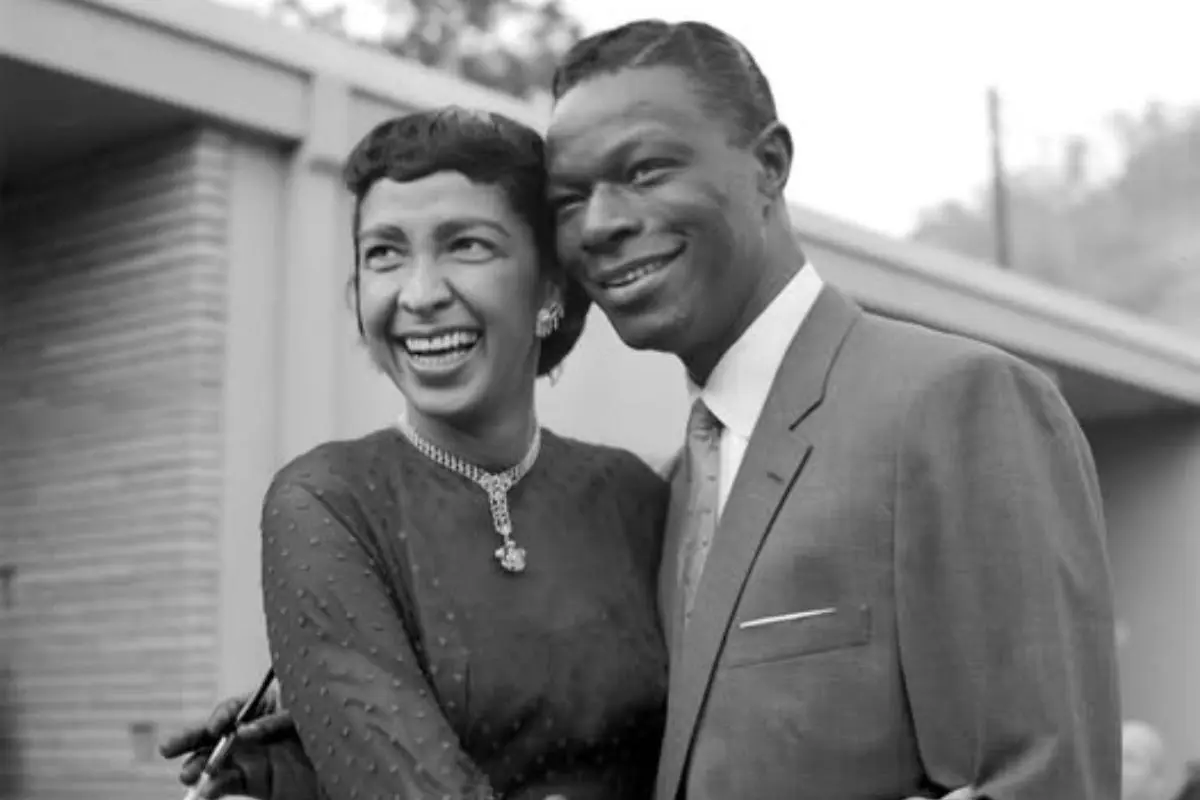
The fight over who got to see him did not stop at the studio door. In 1948 Cole bought a house in the whites-only Hancock Park neighborhood of Los Angeles, prompting the property owners’ association to warn that they did not want “undesirables” moving in; the Ku Klux Klan burned a cross on his lawn, and the family dog was later poisoned. Cole answered the association’s threat with a single razor-sharp line – “Neither do I. And if I see anybody undesirable coming in here, I’ll be the first to complain” – and stayed put, helping to break the neighborhood’s segregationist covenant.
Eight years later, on April 10, 1956, violence followed him onto the bandstand. While he performed for an all-white audience in Birmingham, Alabama, several white men linked to the local White Citizens’ Council rushed the stage, knocked him from his piano bench and attempted to drag him away as police later found rifles and clubs waiting in a car outside. Archive reports revealed that roughly 150 men had been recruited for the attack, a planned act of racial terror aimed at a musician who was, by then, a member of the NAACP.
At first Cole insisted he was an entertainer, not a protest leader, and he kept playing segregated dates in the South even after the assault, drawing furious criticism from parts of the Black press. Stung, he quietly paid for a lifetime NAACP membership, pointed out that he had already raised money for the Las Vegas branch and described himself as a “crusader in my own way,” believing that winning the respect of both white and Black audiences could ease racial tension more effectively than speeches alone.
“The Christmas Song” and a catalog that will not age
For all that history, many people meet Nat King Cole only once a year through a single recording. Mel Tormé and Bob Wells wrote “The Christmas Song” in the mid 1940s, but Cole believed in it enough to re-record it several times, finally cutting a lush stereo version in 1961 that became the definitive take and remains in heavy seasonal rotation. Decades later his daughter Natalie spliced her own voice onto his original “Unforgettable” track to create a virtual duet that swept the Grammys, while her father – who had smoked up to three packs a day and died of lung cancer at just 45 – was posthumously inducted into the Rock and Roll Hall of Fame.
The 1961 “Christmas Song” has taken on a strange second life in the streaming era. That recording is now widely regarded as the standard version of the tune, and in 2023 it finally cracked the Billboard Hot 100 top ten, more than six decades after it first appeared, setting a record for the longest climb to the chart’s upper reaches.
Crucially, it is not only nostalgia buffs who are listening. In a recent survey of prominent classical and jazz musicians, opera star Angel Blue picked “The Christmas Song” as her favorite holiday standard, noting that the ballad was made famous by “the great Nat King Cole” before adding her own family memories to why it still matters. In a recent survey of prominent classical and jazz musicians, opera star Angel Blue picked “The Christmas Song” as her favorite holiday standard.
On paper the statistics look almost as impressive as the music sounds. Cole racked up 28 Top 40 hits, from “Mona Lisa” to “Ramblin’ Rose,” won a competitive Grammy for “Midnight Flyer,” saw four of his signature songs added to the Grammy Hall of Fame and, in 1990, received the Recording Academy’s Lifetime Achievement Award recognizing his towering influence. Cole racked up 28 Top 40 hits, from “Mona Lisa” to “Ramblin’ Rose,” and received the Recording Academy’s Lifetime Achievement Award recognizing his towering influence.
Why Nat King Cole still matters
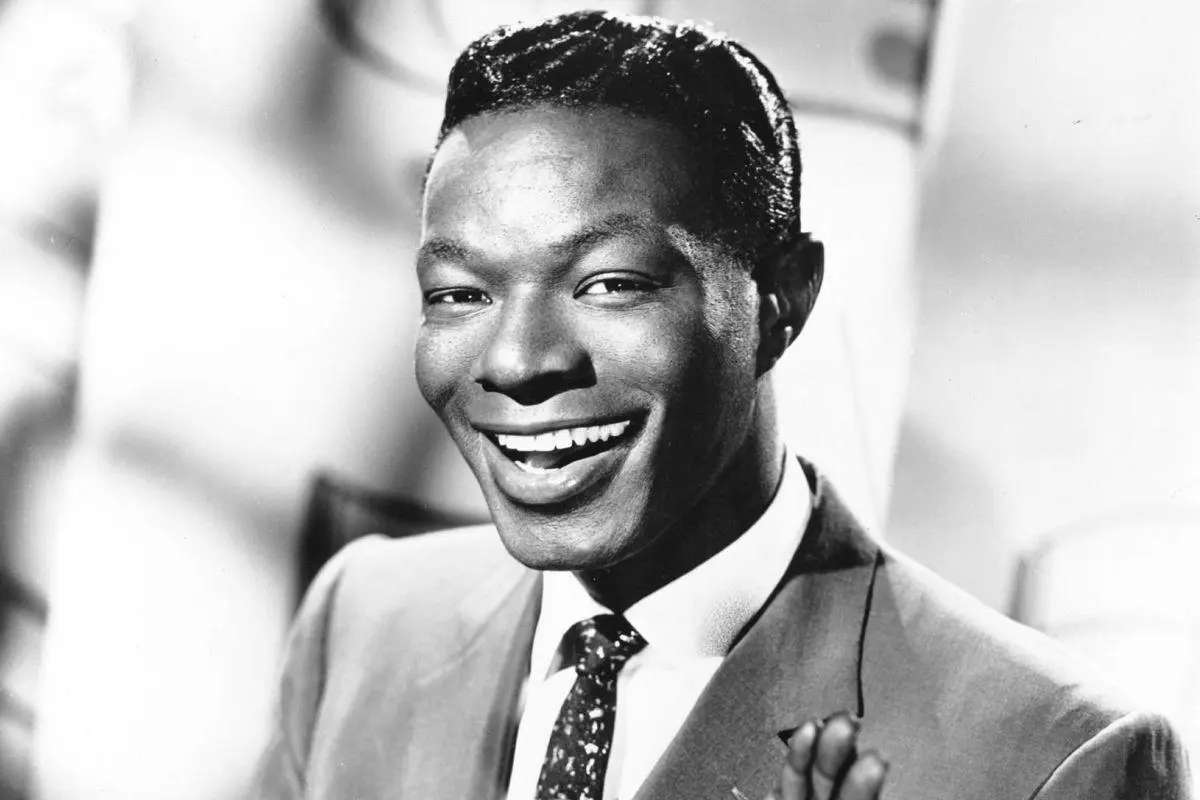
It is tempting to leave Cole as a mood – candlelight, a fireplace, that perfect baritone at low volume – but that sells him short. He was a working jazz musician who turned pop ballads into small miracles of timing, a Black superstar who insisted on moving into forbidden neighborhoods, and a reluctant activist who learned that even the smoothest entertainer could not dodge the battle over basic dignity.
In a culture obsessed with outrage and volume, Cole’s example is almost subversive. He did not march as loudly as some contemporaries, yet his very presence in white living rooms, singing about love in flawless English while segregationists fumed, nudged the country forward a few inches at a time. If his voice feels “unforgettable” to you, it is not only because of the melodies, but because underneath the silk you can still hear steel.