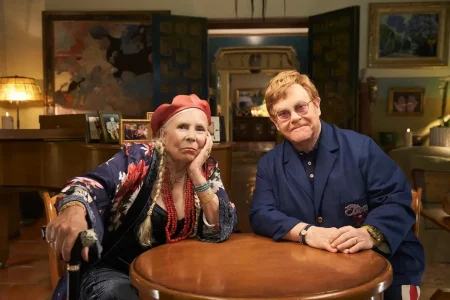
Most people can sing along to Rocket Man, but far fewer could pick Bernie Taupin out of a lineup. For more than half a century, Taupin has been the pen behind Elton John’s voice, turning a piano showman into rock’s last great old-school songwriter in the tradition of Gershwin and Cole Porter.
Their partnership is also one of pop’s strangest marriages: they almost never write in the same room, they once split up without a fight, and yet Elton still insists there would be no Elton John without Bernie. Here is how two misfits built a catalog that has soundtracked proms, weddings and barrooms for generations.
Thrown together by a newspaper ad
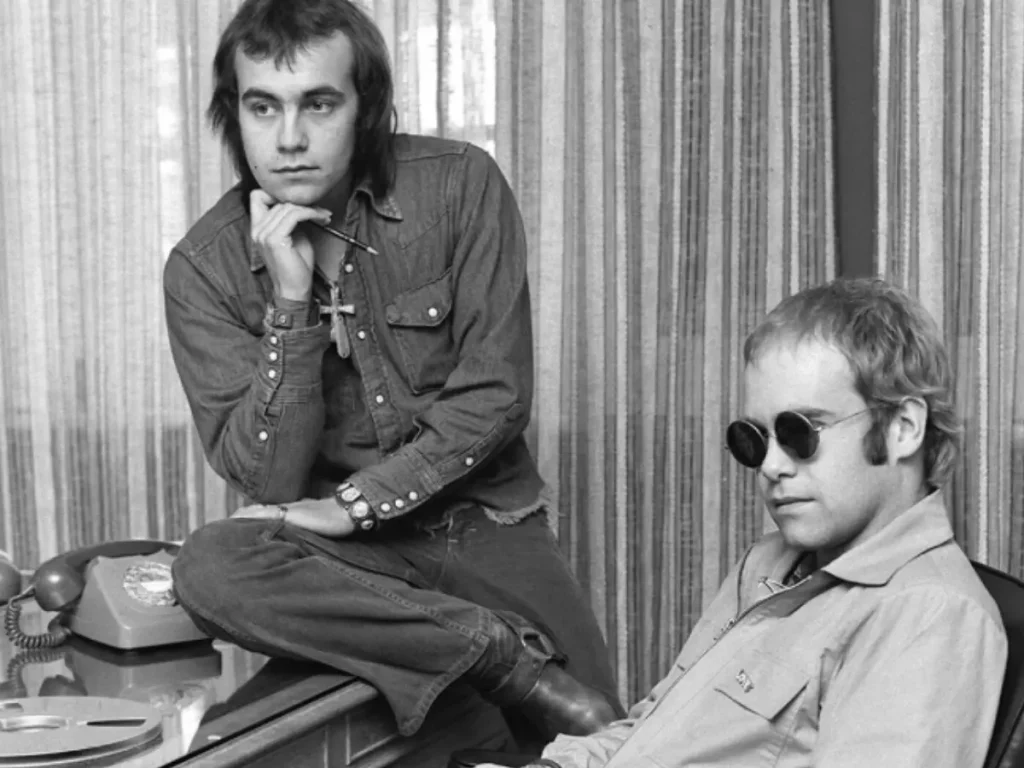
In 1967, 17 year old Bernie Taupin and 20 year old pianist Reg Dwight both answered a tiny ad in a British music paper from a company looking for songwriters. At the audition Dwight admitted he could not write lyrics, so an A and R man handed him a sealed envelope of verses to take home; inside were Taupin’s poems. Within a couple of years Taupin had moved into Elton’s family home, and one morning at the kitchen table he dashed off the words to what became Your Song in roughly ten to fifteen minutes while Elton’s mother listened from the next room. Taupin’s early partnership with Elton anchored that breakthrough.
Before Elton was a star, the pair were staff writers in London’s office bound song factory world, churning out material for other artists. Taupin would hand over lyrics, Elton would set them to music, and for a time they reportedly wrote around twenty songs before they even properly met, establishing a pattern of working at arm’s length rather than huddled over the same piano. Biographers describe them from the start as more like oddball brothers who happened to share a creative brain than bandmates fighting over chords, a dynamic that would last decades.Their complementary roles were clear almost immediately.
Two rooms, one song: how the magic actually works
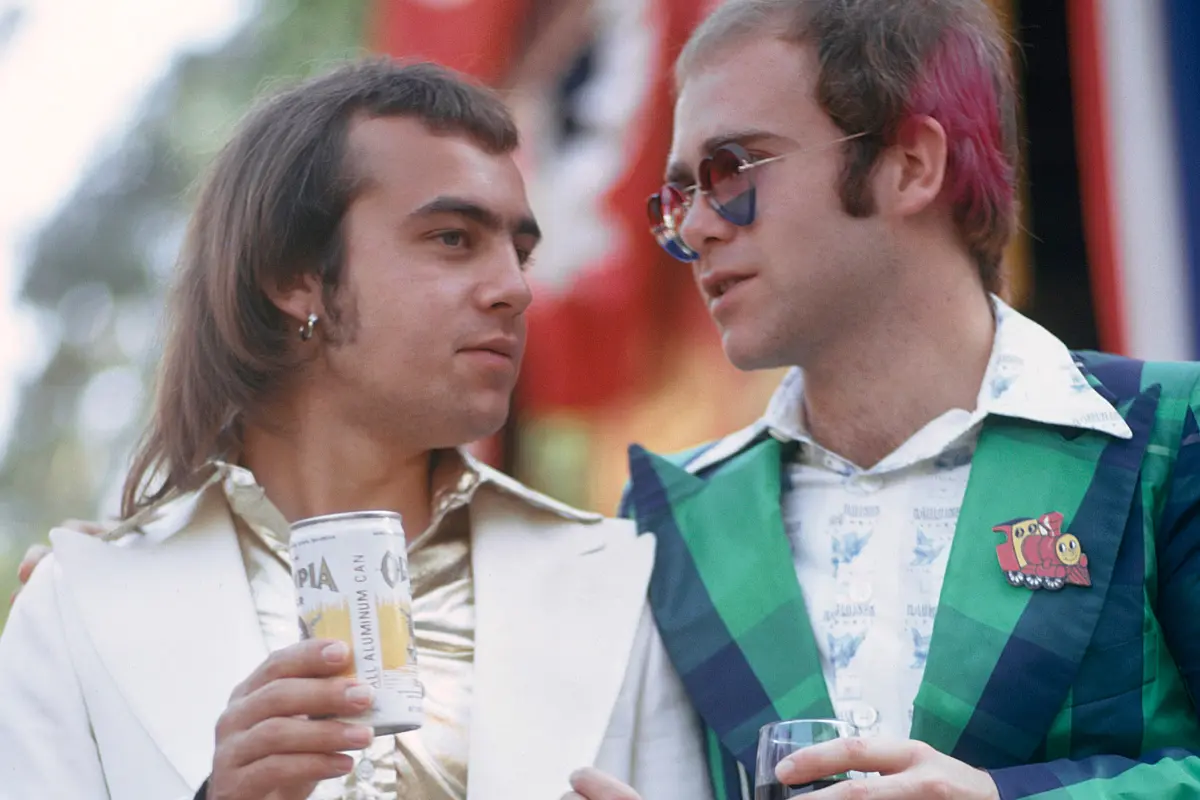
From the beginning, the rule was simple: Bernie writes all the words, Elton writes all the music. By the time they hit Elton’s self titled breakthrough album in 1970, they were so in sync that Taupin could hand over a finished lyric and Elton would usually have a full melody within an hour, a speed that helped them release an almost absurd fourteen albums together between 1970 and 1976, from Tumbleweed Connection to Captain Fantastic and the Brown Dirt Cowboy.Their Songwriters Hall of Fame citation points to that hyper-productive streak.
If that sounds exaggerated, the dramatized scene in the film Rocketman where Elton finishes Your Song while Bernie is brushing his teeth is not far off. Taupin has said the real writing of that song was almost that fast, and that Elton’s mother immediately singled it out, confirming that the pianist really could sit at the keyboard and conjure a classic in minutes once he had the right lyric in front of him—a detail close to how the real story behind Rocketman has been told.
Taupin himself is not a nine to five grinder. He has said that he mostly writes when Elton decides to make a record, at which point he may produce thirty or forty sets of lyrics and send them over for Elton to choose from, keeping some pieces deliberately more personal or dark. He has also admitted that his own favorite collaborations are often the deep cuts, citing stark later songs like Sacrifice, I Want Love and This Train Don’t Stop There Anymore rather than the ever present jukebox staples, a preference he has explained in interviews about his creative process.
The long partnership at a glance
| Era | Years | Highlights | Overall mood |
|---|---|---|---|
| Hungry staff writers | 1967 – 1969 | Ad in music press, envelope of lyrics, first songs on Empty Sky | Broke, obsessive, learning the craft |
| Imperial 70s run | 1970 – 1976 | Your Song, Rocket Man, Goodbye Yellow Brick Road, 14 albums | Creative frenzy, personal chaos |
| Cooling off | 1977 – 1979 | Post Blue Moves separation, side projects with other writers | Burnout, relocation, rehab |
| MTV and power ballads | 1980s – 1990s | I’m Still Standing, Nikita, Sacrifice, Candle in the Wind 1997 | Stadium pop, adult confessions |
| Late experiments | 2000s onward | The Captain and the Kid, The Union, film songs and awards | Reflective, genre hopping, legacy building |
Fame, excess and a surprisingly polite split
Once the hits started, they did not stop. On top of Your Song came a run that included Tiny Dancer, Levon, Rocket Man, Goodbye Yellow Brick Road, Bennie and the Jets and more, all written in that same words first, music later relay. The schedule of albums, tours and promotion was so punishing that by the mid 70s both men were numbing themselves with drink and drugs while watching Elton turn into a stadium filling machine that some writers compared to Beatle level dominance.
Instead of imploding in public like so many bands, they simply stepped away from each other after the dense, moody album Blue Moves. Taupin moved permanently to California and cleaned up his life, Elton announced a retirement from touring that did not stick, and for a couple of years they wrote with other people before quietly gravitating back. Ironically, the collaboration’s single biggest commercial moment would not come until 1997, when Taupin rewrote his 1973 Marilyn Monroe elegy Candle in the Wind into a Princess Diana tribute in roughly five to ten minutes, largely as a favor to Elton; released weeks after her death, that recording became one of the best selling physical singles in history, second only to Bing Crosby’s White Christmas, and a song he has admitted he can barely remember the words to.That uneasy relationship with his biggest hit still amuses him.
Distance, MTV and reinvention
The late 70s separation turned out to be less a divorce than a badly needed breather. Within a couple of years they were working together again on part of Elton’s albums, and by the early 80s Taupin was once more the main lyricist, feeding the machine that produced MTV era anthems like I’m Still Standing, I Guess That’s Why They Call It the Blues, Sad Songs and Nikita. Their lives, however, were now on different continents: Bernie the Brown Dirt Cowboy on a California ranch, Elton the sober but still flamboyant star commuting between studios and arenas.
In this period Taupin leaned harder into portraits of emotional damage that were sneakier than most power ballads. A song like I Want Love is basically a confession of romantic incompetence, and Sorry Seems to Be the Hardest Word is almost brutal in how little comfort it offers the person being apologized to. One reason their catalog ages so well is that Elton’s gospel tinged piano and falsetto sell these lyrics as tenderness while the words themselves often describe people who are broken, selfish or stuck.
What makes Taupin’s lyrics different
Unlike many of his 70s peers, Taupin rarely writes straight diary entries. He treats lyrics like short stories, full of small town people, faded starlets, drifters and lovers who never quite say what they mean. Elton’s melodies and chords give those sketches a huge romantic sheen, but if you listen past the choruses the world in those songs is full of loneliness, class anxiety and quiet desperation.
From childhood he was fixated on a romantic version of the American West he heard in country and folk songs, later saying those records made that mythic America feel more real than movie cowboys.That lifelong Western obsession runs straight into his lyrics. That obsession eventually turned into a real ranch, rodeo horses and a whole Brown Dirt Cowboy alter ego, and you can hear it in the dust, trains and open skies that run through so many Elton John deep cuts, from Tumbleweed Connection to the title track of Captain Fantastic and the Brown Dirt Cowboy.
From gnomes to Gershwin prizes: the late career encore
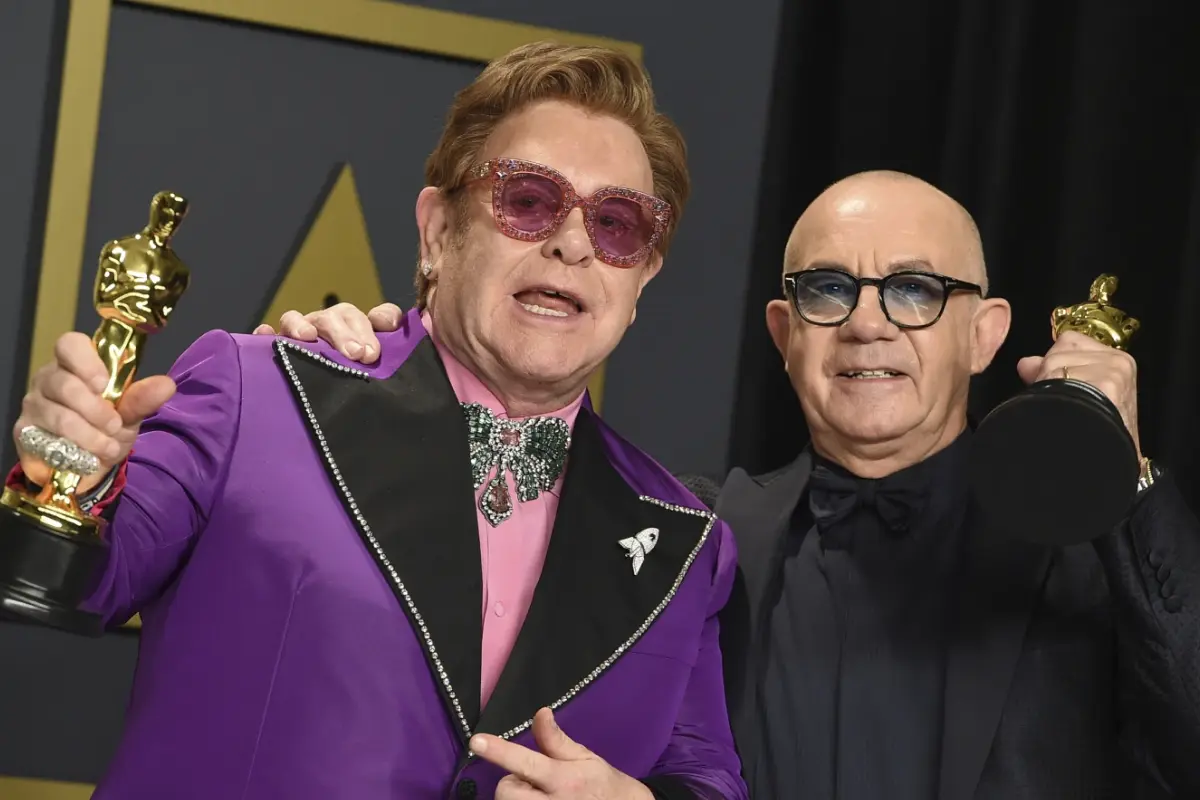
Anyone who thought the partnership effectively ended in the 70s has not been paying attention. Taupin has supplied lyrics for more than thirty Elton albums in total, including the autobiographical sequel The Captain and the Kid, the Leon Russell collaboration The Union, family films such as Gnomeo and Juliet and Sherlock Gnomes, and the Oscar winning song (I’m Gonna) Love Me Again from the biopic Rocketman, milestones that sit alongside a long list of credits in his career overview.
That Leon Russell project in particular says a lot about how John and Taupin see themselves. Leon Russell was the session wizard who played on records by the Beach Boys and Joe Cocker, wrote standards like A Song for You and spent most of his career making other stars sound better while remaining relatively unknown to casual listeners. By joining him on The Union, Elton and Bernie were saluting a mentor whose gospel country jazz palette had seeped into their work since the beginning.
The establishment eventually caught up with the scale of what the duo had done. In 2024 the Library of Congress awarded them the Gershwin Prize for Popular Song, citing their prolific catalog, more than five decades of collaboration and the influence of hits like Your Song, Tiny Dancer and Rocket Man, at the same time that Elton completed the rare EGOT sweep and Taupin entered the Rock and Roll Hall of Fame.
And yet the core working dynamic has not really changed. On Elton’s fiery duets album with Brandi Carlile, Taupin is back in the studio, co writing lyrics as Elton smashes iPads and headphones, snarls that lines are predictable and demands instant rewrites while he hammers at the piano, with Taupin acting as a calm, almost paternal fixer between takes. It is the same old game: Elton moves at the speed of instinct, Bernie shapes the words fast enough to keep up.
The secret grammar of a 50 plus year collaboration
Most songwriting teams burn bright and then fall out spectacularly. What keeps this one alive is that they almost never compete for the same space: Taupin hates the spotlight, Elton craves it; Taupin brings in stories and strange images, Elton translates them into piano fireworks and melodies people can hum while doing the dishes. They do not even need to like the same parts of the catalog to keep going.
In a world where songwriting camps cram six names onto a streaming hit, the idea of one lyricist and one composer meeting through a random ad and quietly out writing almost everyone else feels almost unbelievable. But walk into any bar where someone sits at a battered upright and sings Your Song, Tiny Dancer or Goodbye Yellow Brick Road, and you are hearing the same odd alchemy that began with a sealed envelope in 1967. For all the costumes and scandals, the most subversive thing Elton John ever did was to trust the same unseen writer for a lifetime, and to keep proving that two obsessives in separate rooms can still beat an army of co writers.