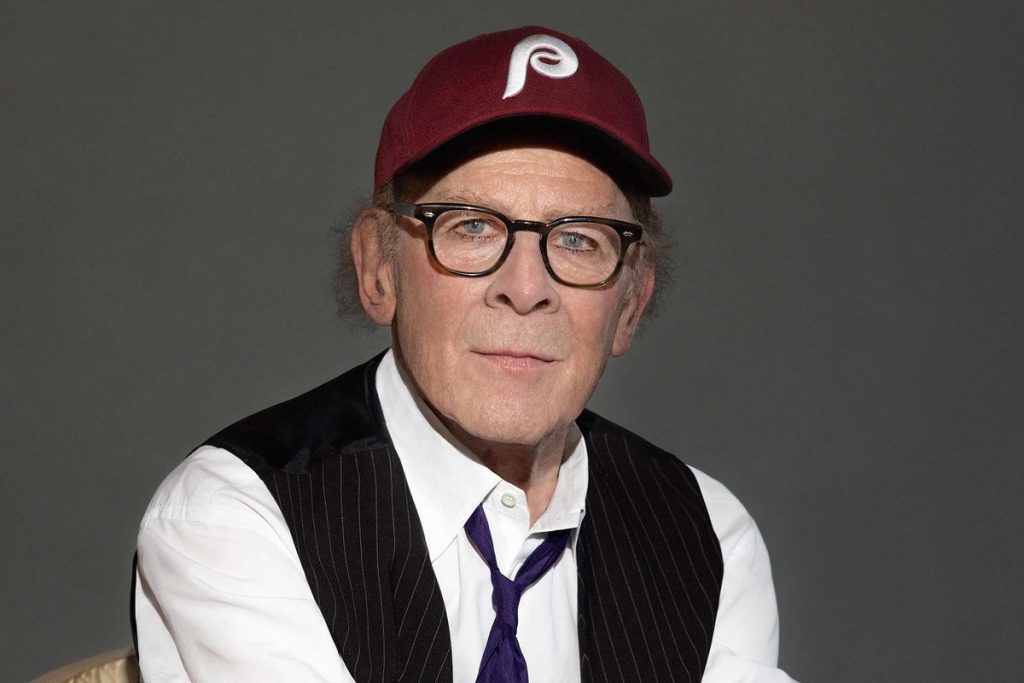
Art Garfunkel has spent the better part of seventy years declining to mix his music with his politics. At 84, in the middle of his first full-scale tour in seven years, he has changed his mind about staying quiet — and possibly about staying in the United States at all.
In a new interview with The Guardian, published Friday, the singer said flatly that he does not like the direction of the country. “I don’t like America’s position at all,” he said, adding: “I’m not aboard, and I’m thinking of leaving the country, frankly.”
He went on to list the things weighing on him — the climate, rising water, hunger — before turning to the presidency itself. Describing what he characterized as Donald Trump taking over Venezuela, Garfunkel asked whether those were “the new rules,” and called the situation shocking. The characterization of events in Venezuela is Garfunkel’s own; he offered it as a reason for his unease rather than as reporting.
He did not end there, though. “But Trump won’t last for ever,” he said. “So we’ve got to hope.”
The man who said music and politics don’t mix
What makes the remarks notable is not their content so much as their source. Garfunkel is, as Far Out Magazine noted in its write-up of the interview, famously liberal and famously reluctant to say so in public. Across Simon & Garfunkel’s catalogue and his own solo records, he has almost never used the platform.
The one clear exception came in 2016, when he and Paul Simon gave the Bernie Sanders campaign permission to use “America” in an advertisement. Even then, Garfunkel was uneasy about it. He told Variety at the time that he had “never wanted to gain an influence on the public through my songs, and then use it for my politics,” calling that approach “bait and switch.”
Ten years on, he has not reversed that principle exactly — he is talking to a newspaper, not writing a protest record. But a man who thought lending a song to a campaign was a step too far is now discussing leaving the country in a broadsheet interview, and that is a meaningful distance traveled.
A voice he nearly lost, and a tour he did not expect
The interview arrives in the middle of a comeback that Garfunkel himself did not see coming. He is out on the “What a Wonderful World” celebration concerts, his first full-scale run in seven years, with dates listed through the autumn on his official site and a UK leg in October taking in Watford, Manchester, Wolverhampton and London.
That he is singing at all is the more remarkable part. In 2010, vocal cord damage — the result of a freak choking incident involving lobster — left the nerves paralyzed and silenced the instrument he had been known for his entire life. It also killed a Simon & Garfunkel reunion tour that had been scheduled for later that year.
Speaking to People in June, he described the recovery as slow and frightening, and the return as a genuine surprise: “I’m singing as good as I ever was.” He framed the decision to tour in blunt terms. “I’m getting up in years. But I’m a singer. I’m good at it. I want to be known rather than fade away.” Elsewhere in the same interview he put it more simply still: “You can’t live on your past.”
There is a small inconsistency across the coverage worth flagging: the official tour announcement in April described a run of more than fifteen cities across the US and Europe, while People reported a launch on June 20 in Texas running through November 19. The dates on Garfunkel’s own site are the reliable guide.
The Paul Simon question, still open
Any Garfunkel interview now carries a second subject, and this one is no different. The estrangement between the two men was one of the longest-running feuds in popular music, and Garfunkel did a great deal of the damage himself. In a 2015 interview with The Telegraph he called Simon an idiot and a jerk, and suggested his former partner had a Napoleon complex. Simon, asked about a reunion by NPR the following year, ruled it out completely.
The thaw came later, and by Garfunkel’s own account it began by accident, with a chance encounter at New York’s Pierre hotel that led to a lunch arranged by Simon’s eldest son. He told Rolling Stone that he used the meeting to apologize for the 2015 remarks, and that it brought tears. “You must resolve difficulties so you can die easy,” he said.
Whether that reconciliation ever becomes music again is the question nobody has answered. Garfunkel has called it “a big question,” and said he would give it a try to see where it leads. Simon has said nothing to encourage the idea. Accounts of how much contact the two have had since differ between outlets, and neither man has confirmed anything resembling a plan.
For now the only firm commitment is the one on the tour schedule — a run of shows that takes him through the autumn, and, if he means what he told The Guardian, possibly toward a decision about where he wants to live when it ends.