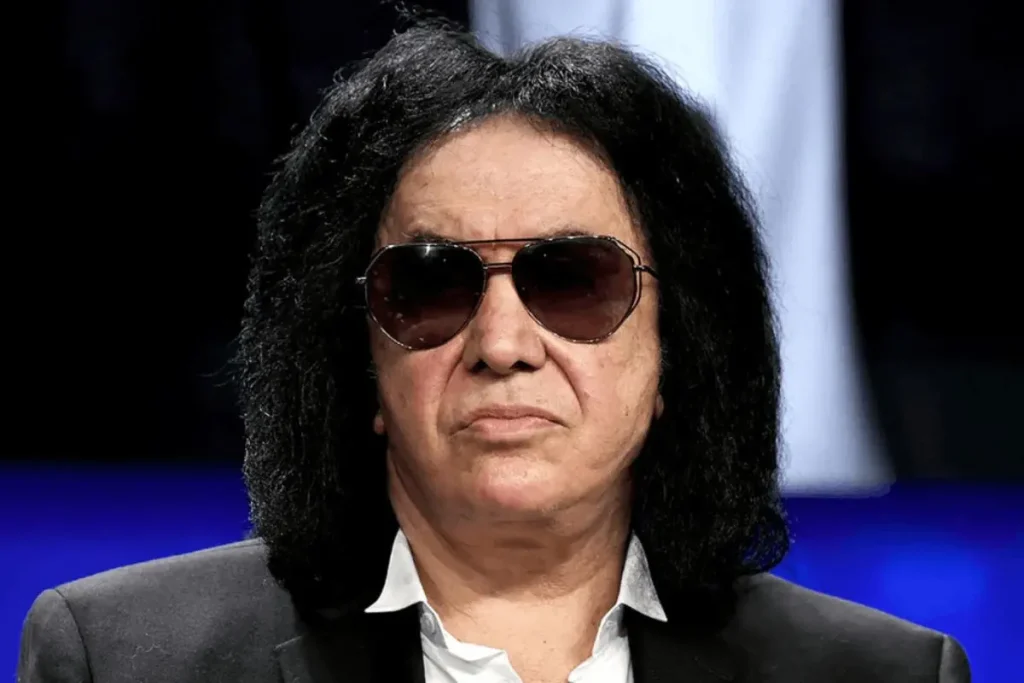
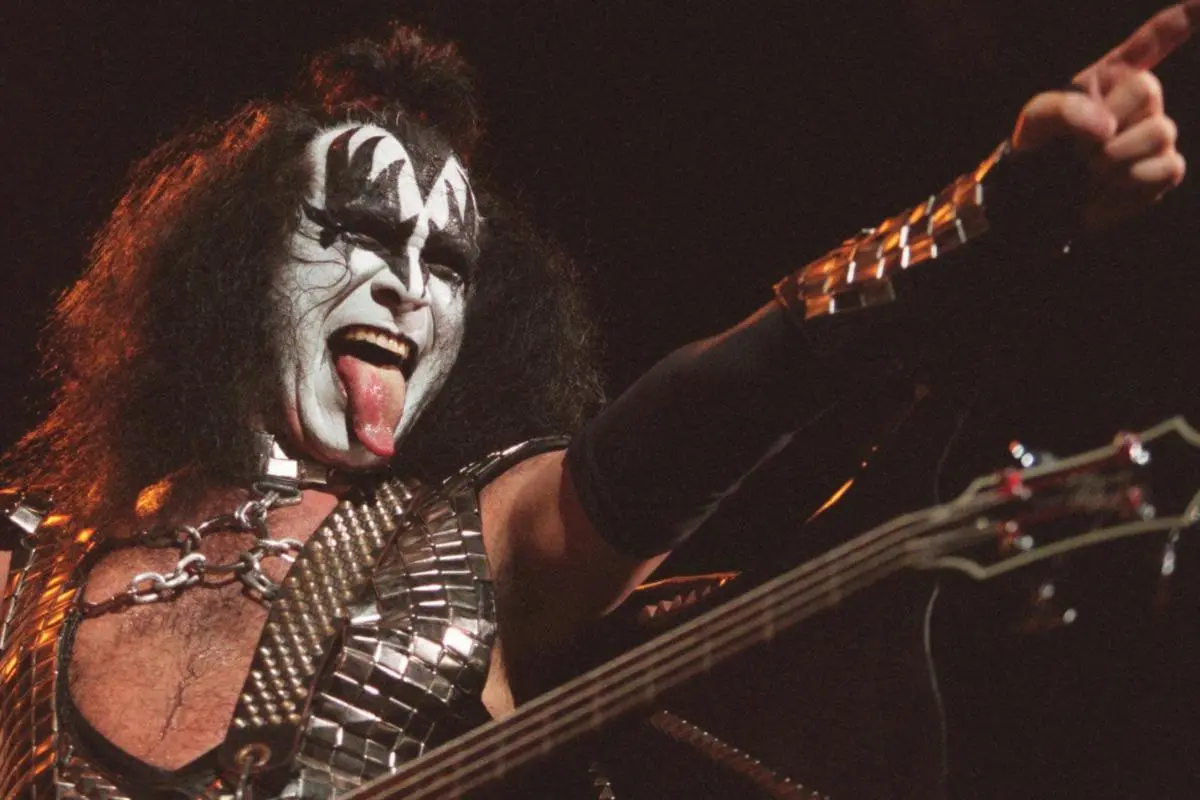
Gene Simmons helped sell the world a demon: blood, fire, platform boots, and a grin that said rock-and-roll rules are for other people. Yet one of the most subversive things he did in the 1970s was refuse the era’s favorite fuel. No booze. No drugs. Not even the “just a little” mythology that props up so many backstage legends.
Simmons has repeatedly tied that choice to a single, unglamorous reality: his mother, a Holocaust survivor, carried a history that made self-destruction feel like betrayal. In his memoir’s telling of their relationship, he describes a gut-level obligation not to add pain to a life already loaded with it.
“I’m her only child… I understood that I had no right to inflict pain on my mother. Life had already dealt her enough hardship.”
– Gene Simmons
The demon persona was a costume – the ethic was real
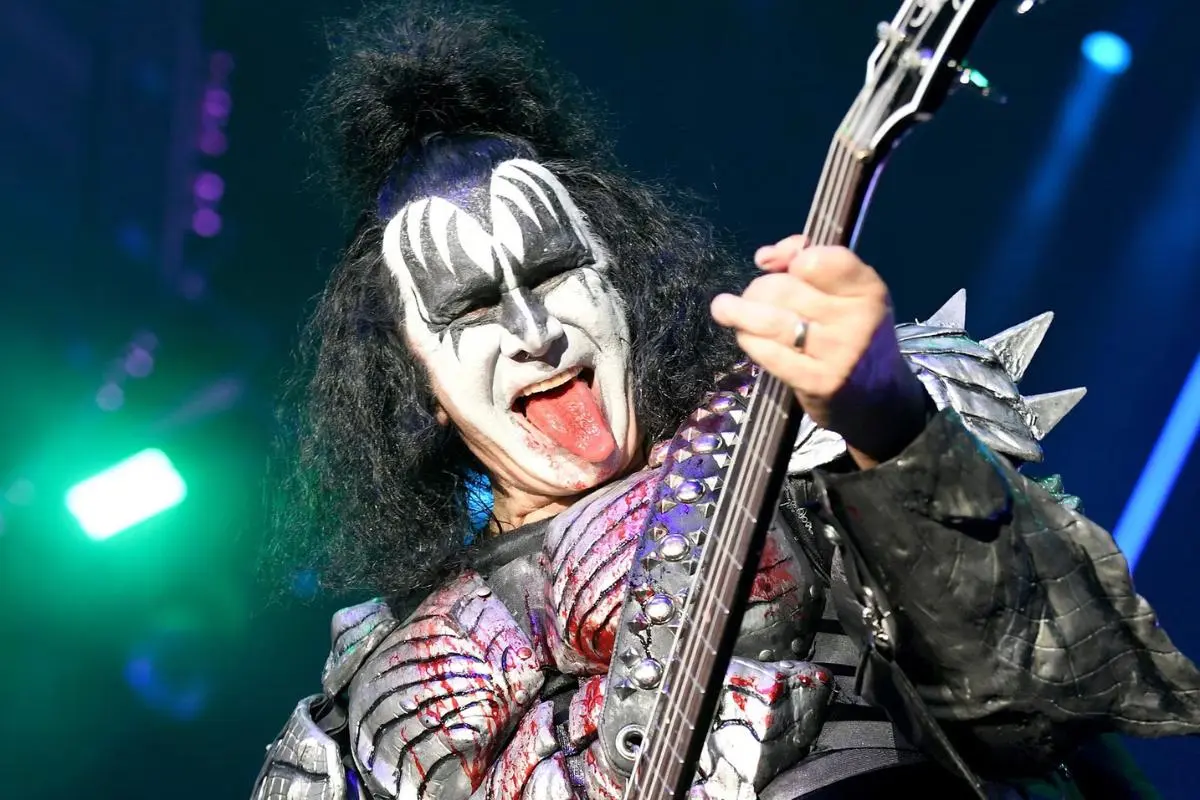
KISS mastered branding before most bands knew what branding was. Simmons’ “Demon” character was designed to be larger than life, and the band’s official home base leans into the idea that they built a spectacle machine on purpose, not by accident.
But that’s exactly why Simmons’ sobriety lands like a plot twist. The guy dressed as a monster, yet the personal rule he wouldn’t break was painfully human: don’t do anything that might send your mother back into fear.
Why his mother’s story hit differently than a typical cautionary tale
Lots of musicians claim they “saw what drugs did” and decided to stay clean. Simmons’ explanation is colder and sharper: when your parent has survived the systematic attempt to erase their existence, reckless indulgence stops looking rebellious and starts looking childish.
Simmons’ biography is widely summarized as: born Chaim Witz in Israel, later immigrating to the United States with his mother. That immigrant origin story matters because it frames success not as entitlement, but as repayment.
A quick reality check on the history behind the trauma
When Simmons refers to concentration camps and mass murder, he’s not borrowing drama – he’s pointing at documented history. Auschwitz, for example, functioned as both a concentration camp and an extermination center where victims were murdered at industrial scale.
More broadly, the Holocaust was the Nazi-led, state-sponsored persecution and murder of six million Jews, alongside other targeted groups, across Europe. If you grew up with that in the kitchen air, “partying too hard” isn’t a cute rock story. It’s a moral failure.
The famous “Rolling Stone interview” moment: mystique meets matzo-ball reality
Simmons has told a story that’s almost too perfect: the demon preparing for a serious music interview, jewelry and leather and hair at maximum height, only for his mother to show up with enough food to feed a small village and call him by his Hebrew name.
In his telling, the writer is labeled a “hungry boy,” everyone must eat, and the demon’s intimidation factor melts into a familiar family scene. Whether it happened exactly as fans picture it, the point is consistent with Simmons’ broader theme: under the greasepaint was a son carrying responsibility.
“She referred to me by my Hebrew name… and assured the writer that I was a good boy.”
– Gene Simmons (recounting the moment)
That contrast is the hook. Not “rock star refuses temptation,” but “rock star is still accountable to someone who has seen real evil.”
Sobriety as a competitive advantage (yes, really)
Here’s the edgy claim that makes older rock history more interesting: for many artists, substances weren’t just a vice – they were a productivity tax. If you want to last, tour, manage money, negotiate deals, and still perform, sobriety is less “virtue” and more “strategy.”
Simmons has long marketed himself as a workhorse businessman as much as a musician, and KISS’ longevity is difficult to separate from discipline. Even today, the band’s official channels still present KISS as an active, tightly managed brand rather than a nostalgia act running on fumes.
What staying sober protects in a touring band
- Consistency: shows start on time, vocals and playing hold up, fewer cancellations.
- Safety: fewer accidents on and offstage, fewer “insurance nightmare” moments.
- Decision-making: contracts, merchandising, publishing, and personnel choices require clarity.
- Reputation: you can be outrageous onstage without being unreliable offstage.
For KISS, reliability mattered because the show was complicated. When you’re spitting blood or breathing fire, your margin for error is already thin.
But didn’t KISS come from the era of excess?
Absolutely. KISS emerged in the same ecosystem that glamorized chemical chaos. Yet the band’s reach is measurable in the plainest, least romantic way: their streaming catalog still pulls listeners across generations.
And that’s where Simmons becomes a useful case study for music fans, not just KISS fans. He proves you can sell danger as theater while living like an adult behind the curtain.
The psychology of “don’t hurt my mother” as a life policy
Simmons’ quote about not inflicting pain on his mother is more than sentiment. It’s a code: if you’re the only child, the stakes of your choices are amplified. Addiction isn’t only self-harm; it becomes a second war your parent has to survive, emotionally, from the sidelines.
In interviews discussing his mother’s influence and his avoidance of drugs and alcohol, Simmons has spoken about her survival shaping his worldview and habits, including avoiding substances that could derail his life. That kind of motivation isn’t about fear of getting caught. It’s about refusing to become another story of loss.
“Mystique” is easy. Meaning is harder.
Plenty of artists are brilliant at presentation. Fewer have an internal boundary that holds under fame, money, and constant access. Simmons’ boundary was simple enough to remember at 3 a.m. in a hotel: don’t bring more suffering home.
What musicians (and fans) can learn from this story
This isn’t a moral lecture; it’s a practical blueprint. If you need a reason to stay steady, don’t rely on willpower. Build a reason that feels bigger than your cravings.
Steal these principles without stealing the face paint
| Principle | What it looks like in real life |
|---|---|
| Anchor to a person | Picture who pays the emotional bill if you fall apart. |
| Make the rule non-negotiable | Not “I’ll be careful,” but “I don’t do that.” |
| Separate art from self-destruction | Be intense in performance, boring in logistics. |
| Turn discipline into brand | Reliability becomes part of your professional identity. |
Fans can take something too: stop rewarding the myth that great music requires misery. Some of the greatest “dangerous” bands were dangerous mostly in marketing. The real flex is surviving your own decade.
Where the story lives now: memoir, archives, and the modern “Gene Simmons” narrative
The cleanest way to understand Simmons’ framing is to read how he tells it when he controls the narrative. His memoir is positioned as a personal account of life, business, and the KISS machine, and it’s where his mother’s impact is presented as foundational.
For readers who like receipts, the book’s publication details and cataloging across major book platforms make it easy to identify the exact edition being discussed in interviews and reviews.
Conclusion: the most rock-and-roll thing he did was not implode
Simmons made a career out of playing the villain, but his sobriety story is the opposite of demonic. It’s filial devotion sharpened into a lifelong policy: don’t waste the life your parent fought to keep.
In a genre that loves burning bright and dying young, he chose something more unsettling: control. The demon was theater. The discipline was the real identity.