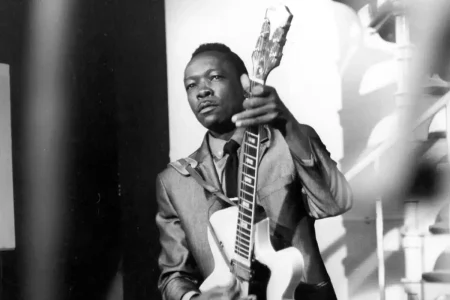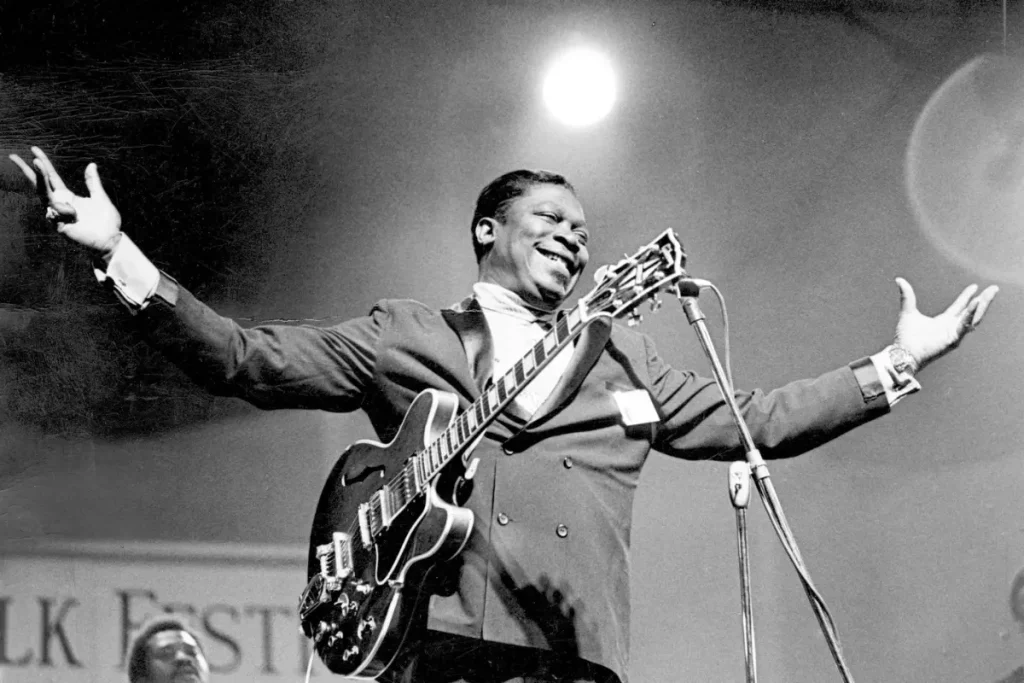
B.B. King didn’t just “tour a lot.” He engineered a life where the road was the default setting: show tonight, drive after, sleep when the wheels stop, repeat until the calendar taps out.
From the 1950s into the 1970s, the legend of King’s near-constant travel became part of his sound and his brand. The shocking numbers (hundreds of one-nighters, mountains of singles) are not trivia. They explain why his guitar feels like it’s speaking in complete sentences.
“That’s nothing. I mean, tell that to B.B. King and he’ll say, ‘I’ve been doing it for years.’”
Keith Richards, on mid-1960s nonstop touring (as quoted in mid-1960s nonstop touring)
The touring math that doesn’t add up (until you accept it was brutal)
King’s schedule is often summarized with a single statistic: roughly 300 days a year away from home, year after year. Even if you discount the folklore factor that grows around any icon, the broader reality is uncontested: B.B. King worked at a pace most modern artists would call unsafe.
The stories are consistent across biographies, museum materials, and industry profiles: constant one-nighters, constant short-haul drives, constant time zones and bad meals. He wasn’t doing “eras.” He was doing routes.
What a “one-nighter” really costs
A one-nighter is not just a gig. It’s a performance plus logistics: load-in, soundcheck, a set long enough to justify the drive, load-out, and then the drive to the next town.
When you read that King and his band played hundreds of one-nighters in a single year, you’re reading about a business model. The show was the paycheck, but the travel was the price of admission.
| Road-life factor | What it does to musicians | What it did to B.B.’s sound |
|---|---|---|
| Daily repetition | Tightens the band or breaks it | Ultra-controlled phrasing, no wasted notes |
| Changing rooms, changing audiences | Forces adaptability | Call-and-response instincts, vocal-like bends |
| Physical fatigue | Kills flashiness first | Economy, sustain, and drama over speed |
The studio wasn’t a retreat – it was another shift
King recorded constantly. The headline numbers thrown around (dozens of albums and hundreds of singles by the late 1960s) point to something important: he treated recording as part of the same work loop as touring.
In the 1950s and early 1960s, singles mattered. Blues and R&B artists often lived on frequent releases, radio play, and jukebox circulation. Recording wasn’t a precious, once-every-three-years event. It was inventory.
That pace also explains why B.B. King’s catalog can feel like an ecosystem: variations, returns, refinements. If you want to understand him, don’t chase a single “definitive album.” Follow the thread of a lick evolving under pressure, night after night.
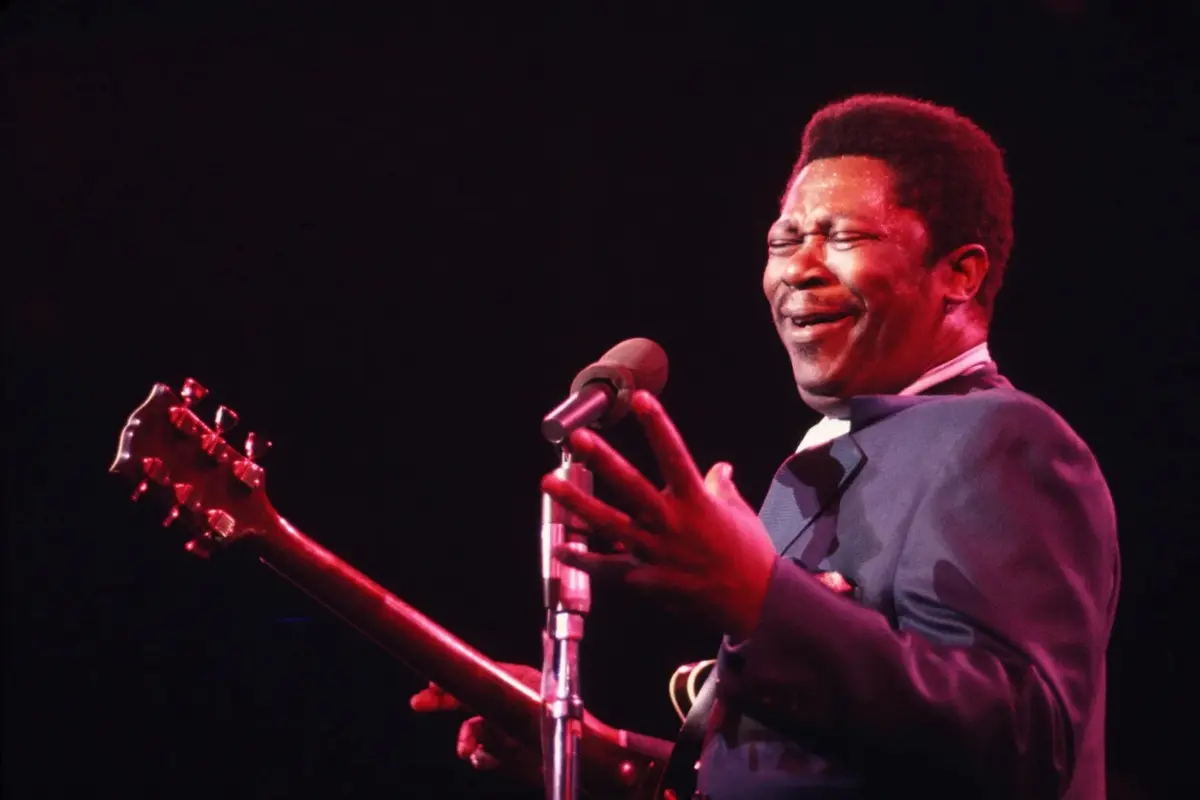
Why rock stars respected him: he made “hard work” sound elegant
Rock mythology loves excess: smashed guitars, trashed hotels, dramatic collapses. King’s myth is different and, frankly, more unsettling. His excess was labor. He didn’t burn out in a blaze. He just kept going.
Keith Richards’ comment lands because it flips the hierarchy. The Rolling Stones were the emblem of relentless 1960s touring, and even Richards points to King as the real veteran of the grind that defined relentless 1960s touring.
The provocative claim: B.B. King quietly invented the modern touring economy
Here’s the spicy take that holds up under scrutiny: the contemporary idea of a touring artist as a year-round enterprise looks less like a rock invention and more like a continuation of what blues and R&B road warriors were already doing.
King proved that a guitarist could become a durable brand through consistency, not scarcity. Today’s “touring is the main revenue” conversation feels new only if you ignore the artists who lived that reality decades ago.
“Lucille” and the illusion of a singing instrument
Critics loved describing King’s guitar as a voice because it’s the fastest way to explain what he did with vibrato, bends, and timing. But the deeper point is that he wasn’t playing “guitar hero” lines. He was delivering statements, pausing for reaction, then answering himself.
Mainstream profiles often highlight how his playing emphasized expressiveness over technical display, and how his phrasing influenced generations of guitarists. Biography.com notes his signature style and stature as a defining blues figure.
And the “Lucille” story matters because it frames his relationship with the instrument as personal and narrative-driven, not gear-driven. That mindset is why his solos still work on listeners who don’t care about pickups, amps, or pedals.
The late-career twist: still 300 days out, but not the same road
One of the most interesting details in accounts of King’s life is that the travel didn’t stop. The shape of it changed.
In earlier decades, the schedule was often a punishing chain of one-nighters. Later, King’s calendar could include longer runs, bigger venues, festivals, and more stable routing. The work remained relentless, but the infrastructure around him grew up.
Accounts centered on his enduring public presence underscore how he remained a revered, active figure deep into his later years; the legacy preserved by the B.B. King Museum reflects that long career arc across generations.
The archive move that deserves more attention: 8,000 recordings, donated
King wasn’t just a performer. He was a listener and a collector, and that may be the most underappreciated part of his musicianship. A deep player usually has deep ears.
Accounts of his donation of thousands of recordings to the University of Mississippi connect him directly to the long-term preservation of blues history. That donation helped seed and legitimize a research-oriented blues archive, shifting the blues from “folk memory” toward “documented scholarship.”
The Mississippi Encyclopedia’s entry on B.B. King places him firmly in the cultural and historical story of Mississippi music, reinforcing why an archival home there is symbolically and academically meaningful.
Why a collection of 33s, 45s, 78s (and even cylinders) is a power move
Physical formats tell you what people actually heard and how they heard it. A stack of 78s and 45s is a map of jukebox culture, radio taste, and regional distribution.
When a superstar donates that kind of personal library, it’s also a statement: the blues is not disposable entertainment. It’s history worthy of preservation, cataloging, and serious study.
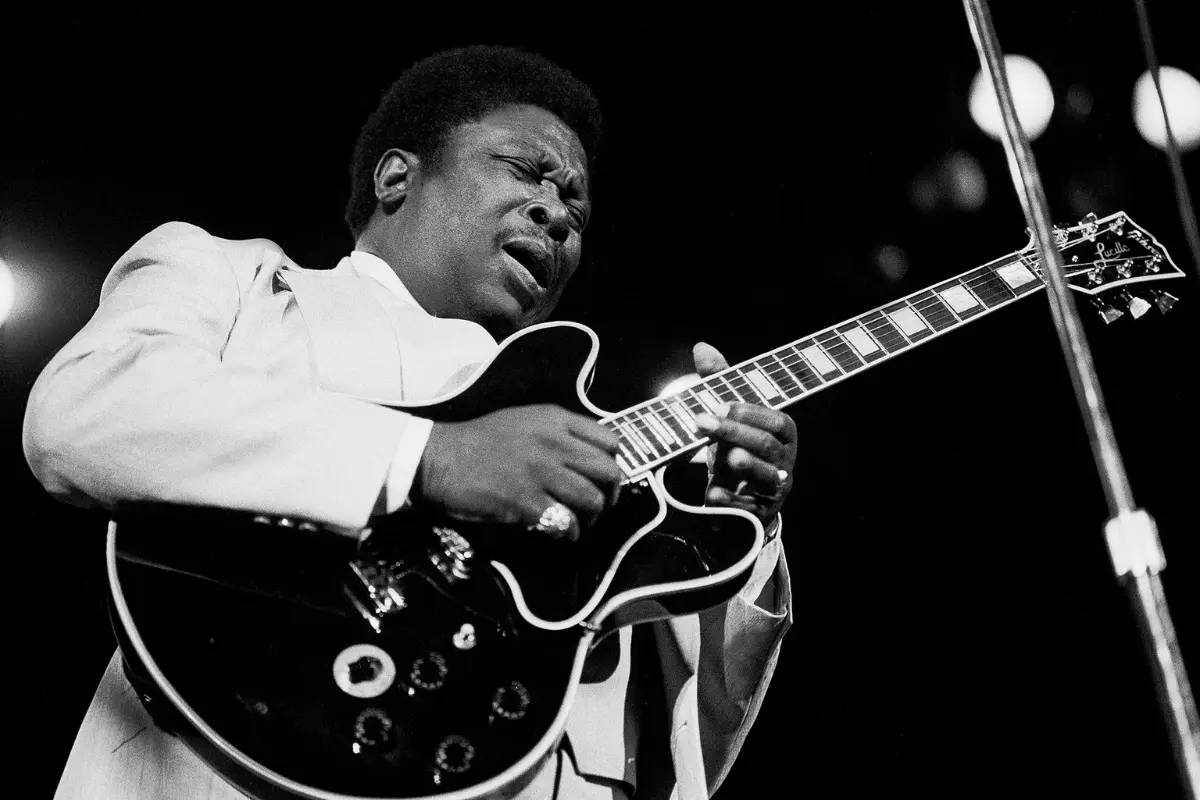
Humility as strategy: the soft skill that kept the machine running
It’s tempting to treat “humble” as a feel-good adjective that gets stapled onto famous people. But humility can be a practical touring skill.
If you are constantly moving through promoters, club owners, sidemen, bus drivers, hotel clerks, radio DJs, and audiences who do not owe you anything, arrogance becomes expensive. Humility keeps doors open, keeps bands together, and keeps the work flowing.
The B.B. King Museum highlights his life story and legacy in ways that emphasize both cultural impact and personal character, reinforcing why he is remembered as more than just a player as a Blues Hall of Fame inductee.
What musicians can steal from B.B. King (without destroying themselves)
1) Build a “signature sentence,” not a signature riff
King’s phrases feel like spoken language: start, tension, release, breath. Practice playing fewer notes, then make each one intentional.
2) Let vibrato do the heavy lifting
Vibrato is emotion on demand. King’s vibrato is so identifiable because it’s controlled, wide enough to sing, and timed to the groove.
3) Treat consistency like creativity
The road schedule wasn’t romantic, but it created mastery. You don’t need 300 days a year to learn the lesson: show up often enough that your best habits become automatic.
4) Archive your influences
Even if you’re not donating 8,000 records, keep track of what shaped you. Make playlists with liner-note-level detail, save interviews, and write down what you learn from each recording.
Conclusion: the scariest part is that he made it look easy
B.B. King’s greatness wasn’t built on mystique. It was built on mileage: physical, musical, and emotional miles that added up to a voice nobody else could fake.
If the modern music industry wants a model of longevity, it’s not always found in the newest hustle culture slogans. It’s sitting in B.B. King’s calendar, where the real headline was never the fame. It was the work.