
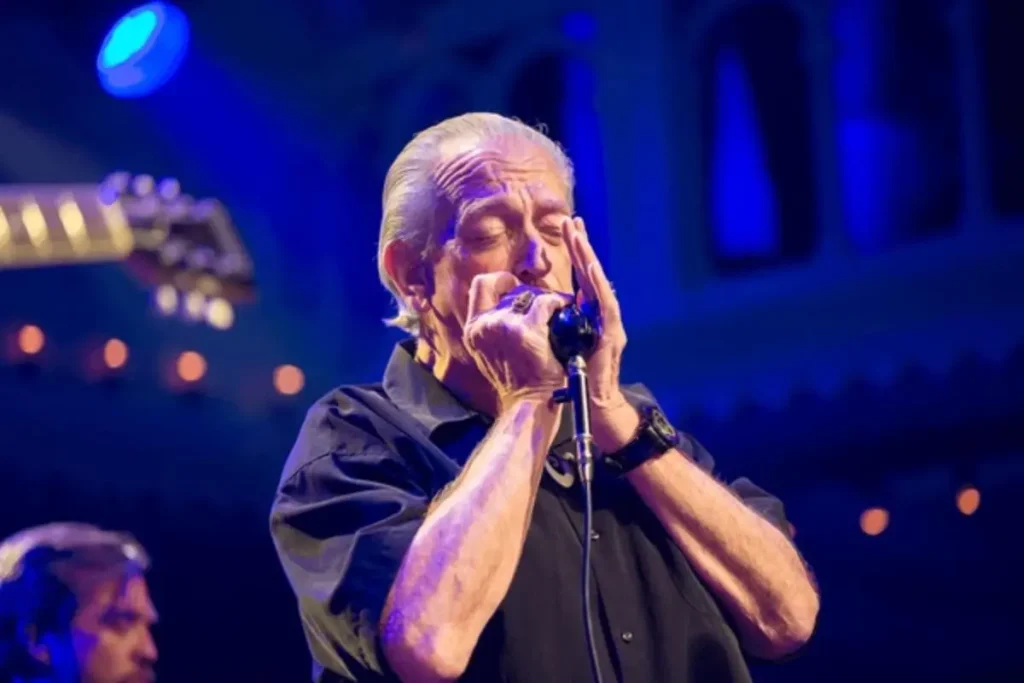
Some career “breaks” are carefully engineered: networking events, slick demos, a manager with a Rolodex. Charlie Musselwhite’s most famous break was messier, more human, and way more Chicago: a teenage blues obsessive, a waitress friend named Mary, and Muddy Waters insisting the kid get onstage.
Musselwhite told the story in an interview with Blues Harp Info, describing how he hung around South and West Side clubs as “this crazy white kid” who requested tunes but never asked to sit in. He could drink like the grown men, he was big enough to pass, and he was content just being near his heroes until Mary spoke up: “you oughta hear Charlie play harmonica!”
Chicago blues wasn’t polite, and it wasn’t supposed to be
In the classic Chicago scene, authenticity was not a philosophy class. It was a nightly stress test, delivered at volume, with everybody watching your hands and listening for the lie in your tone.
That’s part of what makes Musselwhite’s memory so potent. He wasn’t trying to “break into” the culture with a plan. He was trying not to overstep, which is a surprising detail in an era where young players are coached to self-promote constantly.
Chicago itself helped create that trial-by-fire world. The city’s electric blues lineage, shaped by postwar migration and hard club work, elevated bandleaders like Muddy Waters into true scene-makers who could hire, fire, and anoint talent in a single set. Chess Records, the label most associated with Waters’ classic sides, still summarizes him as the father of modern Chicago blues, a status built as much in clubs as on records.
The Musselwhite move that sounds passive – but was actually smart
When Musselwhite says he never asked to sit in, it can sound timid. But there’s another reading: he was doing fieldwork. Hanging around, listening, learning repertoire, learning etiquette, and learning how the rhythm section breathes together.
That kind of apprenticeship matters in blues because so much of the language is microtiming and touch. You can’t memorize it off a page, and you can’t fake it at jam-session speed without getting exposed.
Even Musselwhite’s detail about already knowing “how to drink liquor like the men in these clubs” is revealing. It is not a moral flex; it’s an admission that adult spaces came with adult expectations and temptations, and he was navigating them early. His official biography foregrounds the broader arc: raised in the South, drawn into the blues as a young man, and ultimately identified as one of the essential modern blues harmonica voices.
Mary the waitress: the underrated gatekeeper
Blues history loves lone geniuses. The truth is more social: scenes run on connectors. In Musselwhite’s telling, Mary is the connector with the courage to say something out loud that Charlie wouldn’t say himself.
“Muddy insisted I sit in and from then on as long as I knew Muddy if I came to a club he was playing he always called me up to sit in.”
– Charlie Musselwhite, quoted in Blues Harp Info
It is easy to miss how radical this is. One sentence from a waitress rewired the social map: suddenly the “crazy white kid” is no longer a harmless superfan. He is a player being publicly vouched for in front of the most important credibility machine in the room: Muddy Waters’ bandstand.
Why Muddy’s invitation was a career accelerant
Muddy Waters wasn’t just a star; he was a standard. When someone like that calls you up, your playing gets heard by the people who matter: other bandleaders, club owners, sidemen who recommend sidemen.
Musselwhite describes the result plainly: musicians heard him with Muddy and started offering gigs around Chicago. That’s the old economy of live music – not follower counts, but witnesses.
It also speaks to Muddy’s role as a cultivator. The Blues Hall of Fame profile notes Waters’ towering importance to the genre’s development and legacy, which includes the ecosystem of musicians around him.
The uncomfortable (but real) question: can a white kid “belong” in the blues?
This story pokes a nerve because it touches race, access, and cultural ownership. Musselwhite is candid that the musicians saw him first as an oddity: a white teenager haunting Black blues clubs.
Here’s the provocative claim: the blues is not a “membership” – it’s a practice, and the bandstand is the ballot box. You don’t get voted in by writing a think piece. You get voted in when the people who built the language decide you speak it truthfully.
That does not erase history or power differences. It does suggest something bracing: in the best blues rooms, identity is examined through sound. Musselwhite’s long career, including major awards and cross-generational collaborations, indicates that many listeners and peers heard something real in his approach. BMI, for example, highlights his recognition with multiple Blues Music Awards and his stature as a harmonica master.

What Musselwhite’s playing says about apprenticeship
Musselwhite’s tone is often described as vocal and conversational, an approach that fits the Chicago tradition: the harmonica isn’t just a solo instrument, it’s a second lead singer arguing with the first.
That sensibility isn’t accidental. It comes from standing close enough to the bandstand to internalize phrasing, dynamics, and how the harp can weave with guitar fills without stepping on the lyric.
For harmonica players who want to study his lineage, BlueHarmonica profiles Musselwhite as a major modern blues harp figure and points to his stylistic roots in classic Chicago and West Coast approaches.
A quick, practical breakdown: why that first sit-in mattered musically
| On paper | In a Chicago club | Why it changed his life |
|---|---|---|
| “I can play harmonica.” | You survive a tune with Muddy Waters watching. | Instant credibility that no demo provides. |
| You know blues standards. | You follow band cues, keys, endings, and tempo shifts. | Bandleaders hire people who make the band feel safe. |
| You have chops. | Your tone fits the room and doesn’t sound like a tourist. | Audience and musicians treat you differently overnight. |
| You want gigs. | Other musicians hear you in the highest-stakes setting. | Word-of-mouth bookings start immediately. |
Edgy lesson #1: waiting to be “ready” is often just fear with good manners
Musselwhite’s humility is admirable. But his story also exposes a trap: if Mary hadn’t spoken up, he believes he might never have asserted himself.
Blues culture can be unforgiving, but it’s also strangely fair: if you can deliver when called, you pass. If you can’t, you learn fast. The only non-starter is refusing the test forever.
Edgy lesson #2: your biggest career break might come from the “non-important” person
Managers, producers, famous musicians – those are the obvious power nodes. Mary wasn’t famous; she was present. She heard him play in an apartment, and she understood what the room needed to know.
In many music scenes, the real gatekeepers are bartenders, sound engineers, hosts, waitstaff, and regulars. They see who shows up, who respects the room, and who actually has something to say when the instruments come out.
How to apply this story if you’re a harmonica player today
1) Learn the “sit-in survival kit”
Make yourself useful fast: know common blues forms (12-bar, minor blues, quick change), typical turnarounds, and how to end cleanly. You don’t need flash; you need reliability.
2) Build tone before speed
Chicago harp is as much about weight as notes. Work on breath control, hand effects, and dynamics so your sound sits in a band, not on top of it.
3) Earn your invitation by being part of the room
Musselwhite did the unglamorous work: he showed up constantly, listened, and socialized without demanding attention. That kind of consistency still matters, even in the social media era.
4) When the moment comes, say yes
If a bandleader calls you up, treat it like a job interview and a jam at the same time. Play fewer notes, lock with the groove, and leave space for the vocal.

Where to hear the “career after the bandstand”
If you want to trace the long runway that followed that Chicago night, Musselwhite’s discography and live work are the evidence. His ongoing visibility as a touring artist with a deep discography is well documented.
For live context, archival concert listings and recordings help show how blues players sharpen their craft onstage over decades. Wolfgang’s maintains performance archives that include pages for Musselwhite.
If you want a broader lens on how Chicago blues remains a living ecosystem rather than a museum piece, resources like the Chicago Blues Guide document venues, players, and the continuing scene.
Conclusion: one sentence, one sit-in, one new life
Charlie Musselwhite’s Muddy Waters moment is more than a charming anecdote. It’s a blueprint for how blues careers actually ignite: proximity, patience, community, and then a sudden public test you didn’t schedule.
Mary’s shout from the floor didn’t just get a teenager onstage. It turned fandom into work, and work into a career – the kind built the old way, with witnesses and sweat, under club lights that make liars look pale.


