
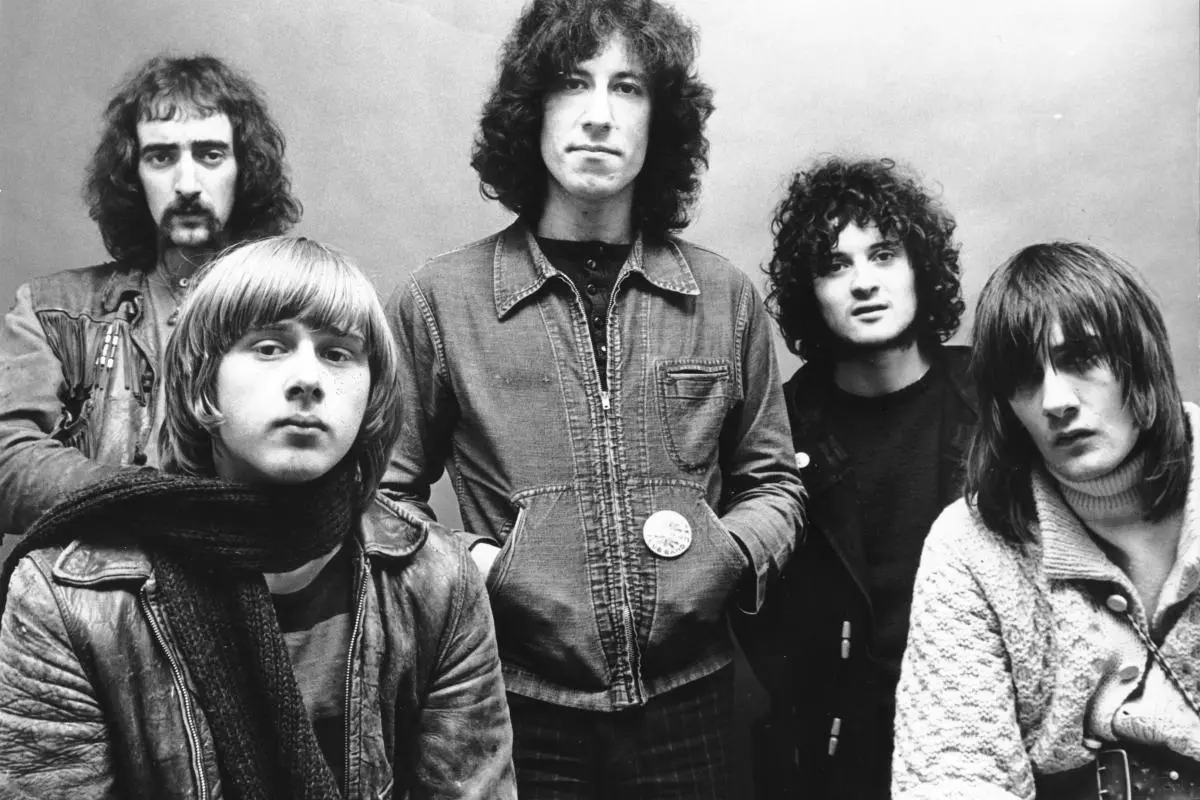
On 24 February 1968, Fleetwood Mac released Fleetwood Mac (often tagged later as Peter Green’s Fleetwood Mac) and accidentally set fire to the rulebook. It was a debut packed with tough blues covers, sharp originals, and a startling sonic identity that peaked at No.4 on the UK album chart and lingered there for 37 weeks.
What made it more than “another British blues record” was the leader’s inner contradiction. Peter Green could be ambitious enough to leave John Mayall’s Bluesbreakers after a single album cycle, yet humble enough to name his new band after the rhythm section he admired most: drummer Mick Fleetwood and bassist John McVie.
The band name was a mission statement, not a vanity plate
Green’s decision to call the group Fleetwood Mac is often told as a quirky origin story, but it also telegraphed how he wanted the music to work. Instead of building a guitarist-as-emperor project, he built a band that advertised groove and reliability on the front door.
That was bold in an era when British blues was increasingly a competitive sport. Some players pushed the “guitar hero” idea toward speed, volume, and longer solos, but Green’s star move was the opposite: restraint, space, and a voice-like guitar sound that made each note feel inevitable.
“Playing fast is something I used to do with John Mayall when things weren’t going very well. But it isn’t any good. I like to play slowly and feel every note.” – Peter Green, quoted discussing his preference for slow, felt phrasing.
What exactly was on the 1968 debut?
The debut is a hybrid: traditional blues material alongside new writing from Green and Jeremy Spencer. That mix mattered, because it showed the band wasn’t cosplaying Chicago blues – it was using the blues as a platform for personality.
Blues covers: the “proof of work”
British blues audiences could be purists, and a debut had to demonstrate credibility. Fleetwood Mac did that with hard, direct performances that sound like a working band, not a studio experiment.
The covers aren’t filler. They’re a way of hearing the band’s internal hierarchy: the rhythm section sits deep and steady, while the guitars talk on top – one voice cutting (Spencer), one voice weeping (Green).
Green and Spencer originals: where the future leaks in
The originals are where Fleetwood Mac stops being a club-ready blues outfit and starts becoming a songwriting band. Green’s early writing already shows his signature tension: toughness on the outside, vulnerability underneath.
Even when the arrangements are simple, the emotions are not. Green’s gift was making a blues framework carry complicated feelings without turning the music into melodrama.
The UK chart impact: a blues album that actually moved units
It’s easy to forget how commercially competitive the late 1960s were in the UK. A blues-rooted debut reaching No.4 is a reminder that Fleetwood Mac were not a cult act at the start – they were a mainstream force inside their scene.
The 37-week chart run is even more revealing. It suggests the album didn’t just spike on hype; it stayed because listeners treated it like a record to live with, not just a document of a hot new band.
Green’s central tension: independence vs fragility
Green’s story is often flattened into tragedy, but the more interesting angle is the push-pull inside him: the will to lead versus discomfort with being the center of attention. Leaving Mayall was an independence move, yet naming the band after Fleetwood and McVie was almost an act of hiding in plain sight.
Later accounts of Green’s life highlight mental health struggles and the personal cost of sudden success. But even on the debut, you can hear a psychological signature: the guitar doesn’t posture. It confesses.
Feel and tone: the anti-olympics of guitar playing
Here’s the provocative claim: Peter Green helped make “tone” a serious musical value in rock guitar, not just an engineering detail. Plenty of players had good tone, but Green’s phrasing made tone feel like the main message.
That’s why Green remains a musician’s musician. In obituaries and retrospectives, the emphasis keeps returning to his expressiveness and his unique sound, not the usual scoreboard stats of speed and complexity; even discussions of the band’s early era often orbit the breakthrough atmosphere of “Albatross” and the spacious, melodic sensibility behind it.
The ‘Greeny’ myth and why it matters
Part of the tone conversation inevitably circles around Green’s famed 1959 Gibson Les Paul Standard, nicknamed “Greeny,” associated with an out-of-phase middle position sound that became iconic, a detail frequently revisited in remembrances of Green as a blues guitar icon and Fleetwood Mac co-founder. But the bigger truth is uncomfortable for gear obsessives: you can’t buy Green’s feel.
His slow vibrato, his patience before resolving a phrase, and his willingness to let silence hang are techniques, yes – but they’re also temperament. That’s why his playing can sound almost vocal, as if the guitar is breathing between words.
Jeremy Spencer: the wild card in the early lineup
Jeremy Spencer’s role is sometimes treated as secondary to Green’s legend, but the debut makes it clear the band was a two-guitar personality collision. Spencer brought a love of early electric blues and rock’n’roll stylings that sharpened the band’s contrast and widened its audience.
This dual-frontman approach also protected Green. Sharing lead duties reduced the “all eyes on the genius” pressure that can crush a sensitive leader, especially in the late-60s British press machine.
From the debut to the hits: how Green widened the blues
The debut is the doorway, but the argument for Green as an innovator becomes obvious when you follow the band into its hit run. Fleetwood Mac’s early successes weren’t just blues replications; they were stylistic expansions and mood pieces.
| Song | What it proved | Why it mattered |
|---|---|---|
| “Albatross” | Blues band can do atmosphere | A UK No.1 instrumental that made restraint commercially viable, and a signature early-era hit often cited when summing up Green’s impact. |
| “Man of the World” | Pop single can be existential | Green’s melancholy became a selling point, not a liability. |
| “Oh Well” | Riff rock can still feel dangerous | Hard-edged, strange, and catchy without sanding off the edges. |
Notice what isn’t on that list: “fastest solo,” “most notes,” “biggest stack of amps.” Green’s revolution was emotional engineering – the ability to make a band hit harder by playing less.
Why the debut still matters to listeners (and guitarists)
For casual fans who met Fleetwood Mac later through the Buckingham-Nicks era, the 1968 debut can feel like a different band. In truth, it’s the foundation: a group learning how to make a tight rhythm section, two contrasting guitar voices, and a leader with an uneasy relationship to fame all coexist.
For guitarists, the debut is a clinic in prioritizing impact over flash. If you want to steal something useful from Peter Green, steal this: commit to one great note and make it count.
Try this “Green mindset” practice (no fancy gear required)
- Slow down on purpose: play a 12-bar blues solo at half-speed and hold notes longer than you think you should.
- Vibrato as punctuation: add vibrato only at the end of a phrase, not on every sustained note.
- Leave air: after a lick, force a one-beat silence. Let the band speak back.
- Chase a singing tone: roll your guitar tone control back slightly and pick closer to the neck for roundness.
Conclusion: the debut that made subtlety sound rebellious
Fleetwood Mac’s 1968 debut didn’t just introduce a band; it introduced a philosophy. In a culture drifting toward virtuoso competition, Peter Green argued for feel, tone, and human vulnerability as the real power tools.
The chart success proved listeners were ready for that kind of honesty. And the music itself still whispers the same dare: if you can make one note hurt, you don’t need a thousand to be heard.


