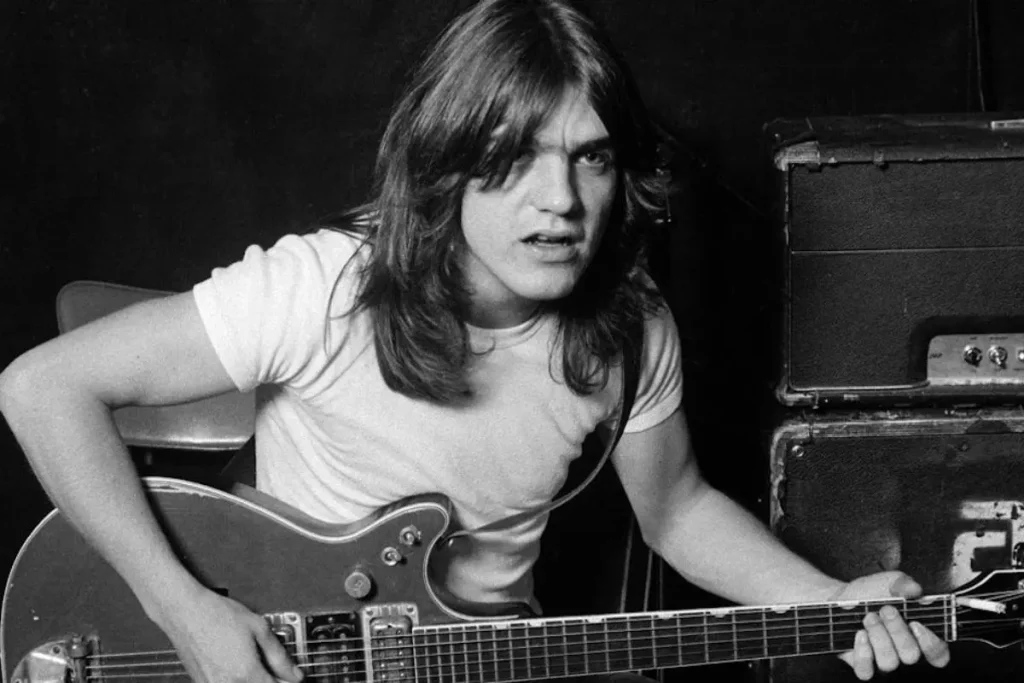
Picture Angus Young in 1972: no schoolboy uniform, no massive stacks, no world tours. Just a skinny 17 year old in Sydney, clutching a battered SG and trying to blow the doors off local halls with a band almost no one remembers – Kantuckee.
For older rock fans who lived through the 70s, that lost period is where the AC/DC story really starts. It is the messy, noisy prequel that explains how a shy kid turned into one of hard rock’s most dangerous guitarists.
The paper trail is thin, the recordings are basically non-existent, and the memories are blurred by volume and time. But put the available evidence together and a compelling picture of Angus circa 1972 begins to emerge.
Angus in 1972 – still a kid, already lethal
Angus McKinnon Young was born in Glasgow in 1955 and emigrated with his family to Sydney as a child, soaking up rock and roll on a different continent from where he started life. By his early teens he was already obsessed with guitar, woodshedding on cheap instruments and copying heroes like Chuck Berry.
He dropped out of school in his mid teens and poured his energy into playing, first in loose local groups and then in what most sources agree was his first real band: a Sydney outfit called Kantuckee. These were not glamorous times – we are talking youth clubs, dances and low-rent halls, not arenas.
By 1972 he had one crucial advantage over the average schoolboy guitarist: a real Gibson SG bought second hand around 1970, with a slim neck he would later say he played until the wood literally started to rot. That guitar, more than any costume or lighting rig, was the seed of the AC/DC sound.
Kantuckee – the local band almost everyone missed
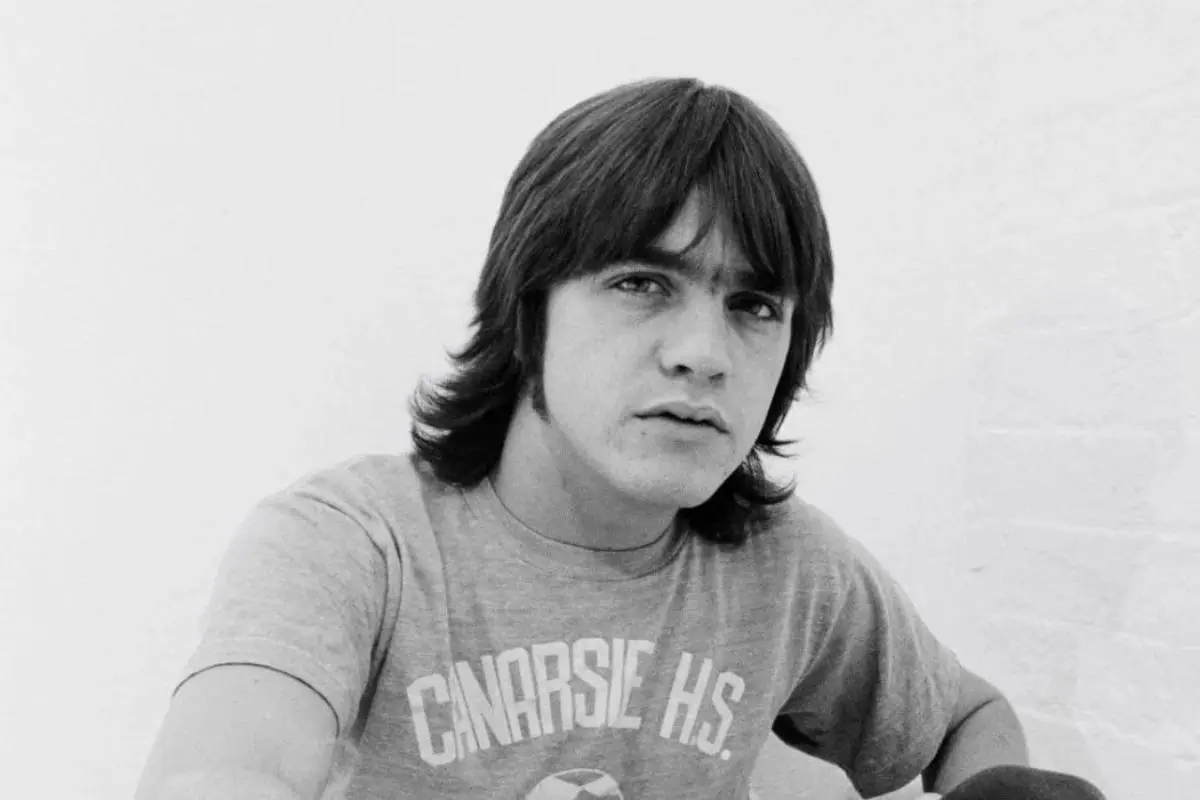
Fan compiled band trees and early AC/DC FAQs usually place Kantuckee’s existence roughly between 1971 and 1973, just before the Young brothers formed AC/DC. That puts Angus at about 16 to 18 years old, playing loud rock on school nights while most kids were still worrying about exams.
One of the few reasonably consistent details we have is the lineup: vocalist Bob McGlynn, Angus on guitar, Jon Stevens on bass and Trevor James on drums. After a short run, Kantuckee splintered and re-emerged under the name Tantrum, with Mark Sneddon joining on vocals and guitar alongside the same rhythm section.
Descriptions of those bands vary, but several accounts describe them as raw, noisy and too wild for some of the polite functions they were booked to play. That is entirely believable for a teenage Angus who was already turning small PAs into weapons rather than background music.
To put those hazy years in context, here is a simple timeline based on what we can piece together:
| Year | Angus’s age | Band / activity |
|---|---|---|
| 1971 | 16 | Playing guitar in local band Kantuckee around Sydney |
| 1972 | 17 | Kantuckee gigging small halls and dances, sharpening Angus’s style |
| 1973 | 18 | Kantuckee mutates into Tantrum, then Angus links up with Malcolm to form AC/DC |
Stagecraft lessons in school halls and church basements
Several non English biographies recall Angus playing early gigs in cafes and even churches, where the band were so loud and chaotic that audiences sometimes bailed out rather than stick around. That sounds more like proto punk behavior than the slick arena act AC/DC later became.
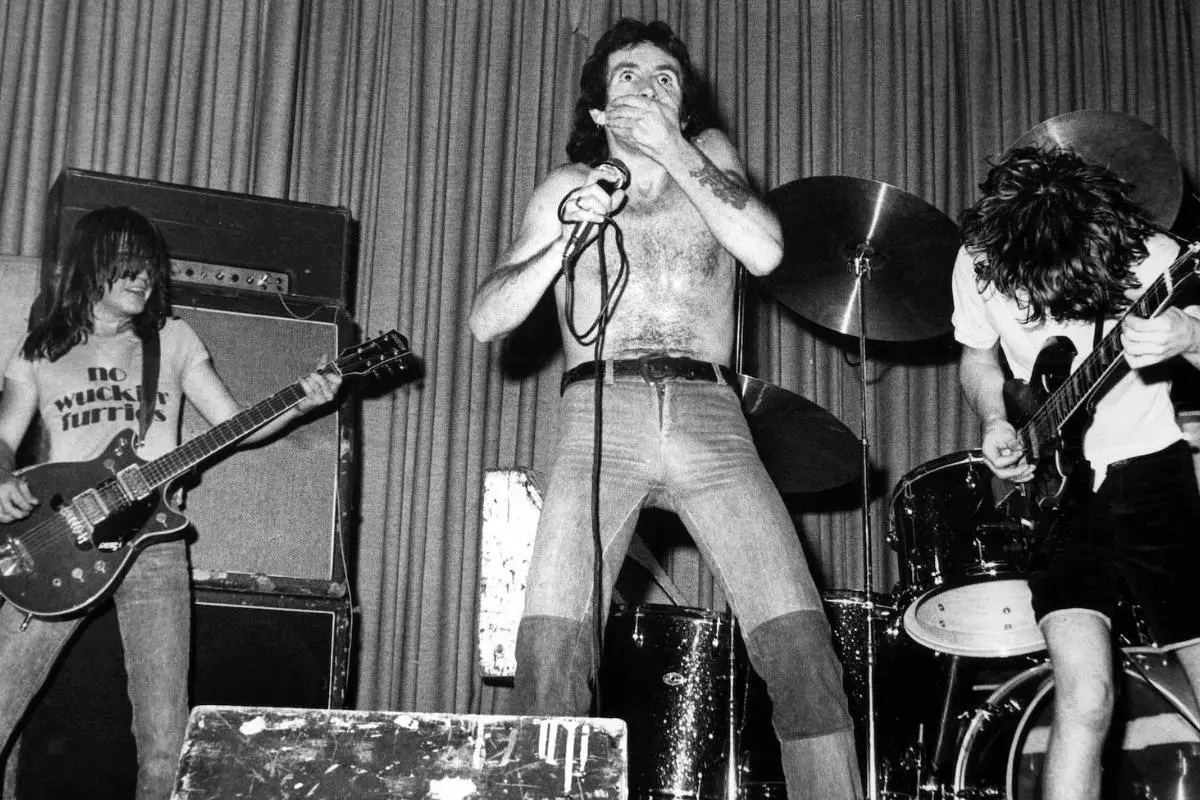
One oft repeated story has Angus tripping over his guitar cable during a Tantrum show, crashing to the floor but never stopping the solo, tangled up and still ripping licks as the crowd went nuts. Whether every detail is accurate hardly matters – what it tells you is that his manic onstage persona was already forming in those pre AC/DC nights.
By then he was experimenting with visual identity too. Before settling on the iconic school uniform, he reportedly tried everything from superhero spoofs to animal costumes, long before rock bands were being branded like products. The stage was never just about notes for him, even in the Kantuckee period.
So when you see footage of the young Angus tearing across a stage in the mid 70s, remember he had already spent years learning how to weaponise accidents, volume and sheer nerve in tiny rooms where there was nowhere to hide.
What Angus was really playing in Kantuckee
Gear wise, the core of the 1972 Angus sound was that early SG and whatever loud amp he could get his hands on. Contemporary interviews and later tributes agree that he bought a late 60s SG second hand, loved its thin neck and played it so hard that sweat warped the wood.
There is little evidence he leaned on pedals at that point; the blueprint for his tone was a cranked amp delivering overdrive rather than modern, saturated distortion. In other words, that classic AC/DC grind is more about pushed tubes and right hand attack than about high gain fuzz boxes, exactly the kind of crunchy sound some educators still use as the textbook example of overdrive.
Put cruder rooms and questionable power supplies into that equation and you can imagine the sonic picture in 1972: sharp, bright chords, lots of midrange, and a young guitarist testing how far he could push feedback without losing control. For an audience used to country covers and safe pop, that would have felt extreme.
If you want to chase that pre fame feel at home, think less about boutique hardware and more about attitude. A simple SG style guitar, a loud but not insanely driven amp, and the courage to dig into every chord will get you closer to Kantuckee than a rack full of digital presets ever will.
From Kantuckee to Tantrum to AC/DC
Swedish retrospectives on Angus’s career describe Kantuckee splitting and effectively morphing into Tantrum, with Angus staying on guitar while the band briefly tried to level up. It did not last long, but that shuffle from one name to another marks the end of his purely local band days.
Around the same time, older brother Malcolm was leaving his own group and plotting something more serious. Within months the brothers had pulled in a rhythm section and singer, and by 1973 they were using the name AC/DC, with 18 year old Angus finally plugged into a band that matched his ambition. Contemporary biographical notes underline how quickly that transition happened.
Ironically, the first commercially released document of Angus and Malcolm together did not come from AC/DC at all, but from a studio only side project run by their brother George and songwriter partner Harry Vanda, the Marcus Hook Roll Band. Their album Tales of Old Grand Daddy, recorded in Sydney in mid 1973 and soaked in bourbon, was billed in later press material as the first thing the Young brothers did before AC/DC.
So you have this strange split: on one side, the undocumented chaos of Kantuckee and Tantrum; on the other, a hazy but officially released studio snapshot of the same teenager learning how to work in a professional room. Together, they form the missing bridge between hobby band and globe conquering hard rock machine.
Why those Kantuckee years still matter
Listen to a track like Thunderstruck and it is tempting to imagine Angus arrived fully formed, picking out unbroken streams of notes like it was nothing. The reality is more interesting: that seamless, brutal simplicity was forged in half empty halls where a teenager had to keep bored, half drunk punters from walking out.
Seen from that angle, Kantuckee is not just a trivia answer about Angus’s first band. It is the laboratory where he proved that a few brutally focused riffs, slammed through a simple rig at antisocial volume, could move people more than any fancy harmony work. Measured purely in sweat per audience member, those nights were probably heavier than most modern “rock” festivals.
For guitarists, the lesson from 1972 Angus is not about chasing a museum correct rig or note perfect transcriptions. It is about putting yourself in noisy, imperfect situations, playing with real humans, and learning to survive every cable tangle and missed note with attitude rather than apology – exactly what he carried into AC/DC.
We may never hear a clean live recording of Kantuckee, and that is probably part of the charm. The mystery around that era keeps Angus slightly dangerous, reminding us that before the business, the branding and the greatest hits compilations, there was just a kid, an SG and a band loud enough to clear a church.