Some songs race to the top of the chart because they are catchy. Lauren Daigle’s “Thank God I Do” did that, but it also did something harder: it arrived like a hand on your shoulder in a dark room. The track, released as a single and later anchored on her self-titled album, has become one of those rare modern hits people use, privately, like a coping tool. It is not hype, it is function.
The cultural moment matters too. Listeners are worn out by constant urgency, hot takes, and performative confidence. “Thank God I Do” stands out by admitting weakness without turning it into a brand, and that honesty is exactly why it is resonating.
What “Thank God I Do” actually says (and why it lands)
Daigle’s central thesis is simple: when your inner life is collapsing, your own strength is not a reliable foundation. The lyric leans into dependence, not as defeat, but as realism. Instead of the usual self-help script, the song offers a spiritual one: you can be held, even when you cannot hold yourself together.
One line does most of the heavy lifting: “I don’t know where I’d be without You.”
It is not clever; it is blunt. That bluntness is the point.
“I don’t know where I’d be without You.” – Lauren Daigle, “Thank God I Do”
There is also a subtle emotional move in the chorus. She is not celebrating a solved problem; she is celebrating a companion in the middle of it. The relief comes from presence, not outcome, and that is why people in grief, anxiety, addiction recovery, or long burnout hear it as “for them.”
The sound: a pop ballad with church DNA
Musically, “Thank God I Do” is a slow-build ballad that behaves like a classic standard. The arrangement is restrained, leaving space for breath and for the lyric to stay legible. That is an old-school trick, and it works on older listeners who grew up on vocal-first records.
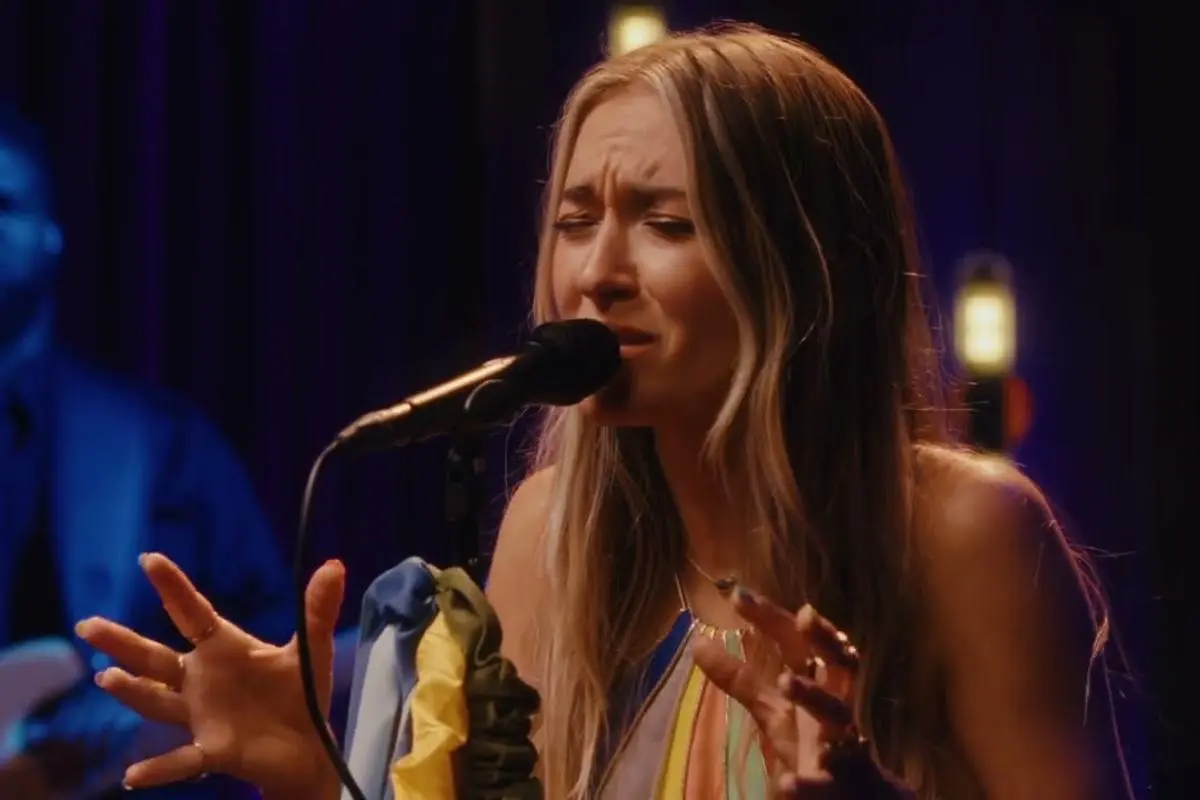
Daigle’s vocal performance is the engine. She sings with a controlled rasp that feels conversational, then opens into a bigger, brighter tone on the hook. The effect is intimacy first, catharsis second, which mirrors the emotional journey of the lyric.
Why the production choice is strategic
- Wide dynamic range: the song gives you room to feel tension before it releases.
- Minimal clutter: fewer hooks means the hook hits harder.
- Timeless tempo: it avoids trend-chasing, so it plays well next to older ballads.
So, did it really go #1?
In Christian radio and Christian chart ecosystems, “Thank God I Do” became a major chart-topper, including reaching No. 1 on the Hot Christian Songs chart, as summarized in widely referenced discography entries.
That kind of performance matters because Christian-adjacent hits often live in a niche. Daigle’s breakthrough has been her ability to move between church space and mainstream space without sanding off her message. It is one reason her releases trigger outsized public debate.

The “lifeline” effect: why people use this song like medicine
Let’s be provocative: a lot of inspirational pop is basically motivational wallpaper. “Thank God I Do” is not wallpaper. It is more like a ritual, a repeatable phrase you can borrow when your own words are gone.
Streaming culture intensifies that. People do not just “like” a song anymore; they loop it, build sleep playlists, and use it to regulate mood. The track’s steady pulse and gentle lift make it particularly loop-friendly, which helps explain its long tail – a dynamic Daigle discussed during her recent album-cycle interviews.
Common listener scenarios where it hits hardest
- After loss: grief makes decision-making and meaning feel impossible, so “presence” is the only promise you can tolerate.
- During anxiety spirals: the lyric gives your mind a single sentence to hold.
- In recovery: dependence is re-framed as survival, not shame.
- In faith fatigue: it is devotional without being preachy, which lowers defenses.
Daigle’s tightrope: spiritual specificity without the sales pitch
Daigle’s career has been shaped by a real tension: some audiences want explicit “church words,” others want universal language. “Thank God I Do” threads the needle by being unmistakably theistic while keeping the emotional access point human: fear, fragility, relief.
In interviews around the album cycle, Daigle has framed her newer work as more personally vulnerable and less boxed-in by genre expectations – a vulnerability that also comes through in the official “Thank God I Do” music video.
Why older listeners (50s-90s music fans) are embracing it
If you grew up with Carole King, Elton John, Fleetwood Mac, or the big-voiced adult contemporary era, you were trained to listen to songs where the vocal tells the story. “Thank God I Do” is built on that tradition. It is not afraid of being slow, sincere, and melodic.
There is also a lyrical maturity here. The song is not about winning. It is about endurance. That is a theme that hits harder with age, because life has had more chances to knock you down.
A quick lyric-to-impact map
| Song element | What it communicates | Why it comforts |
|---|---|---|
| Confessional tone | “I’m not OK sometimes” | Permission to be honest |
| Dependence on God | Strength is borrowed | Less pressure to perform |
| Slow build chorus | Hope arrives gradually | Matches real recovery timelines |
| Vocal grit then lift | Pain to relief | Feels embodied and believable |
The video and the “quiet testimony” economy
The official music video leans into simplicity, reinforcing that the song is not trying to distract you. It is trying to sit with you. In a world of maximal visuals, that restraint reads as confidence.
This is also where modern faith music has evolved. Testimony is no longer only a stage speech; it is also a three-minute piece of content people share when they cannot explain themselves. That is not trivial. It is social care in miniature.
Pushback and the cultural argument the song provokes
Here is the edgy truth: the message of “Thank God I Do” is offensive to a culture that worships self-sufficiency. The song does not flatter the listener with “you’ve got this.” It suggests you might not have it, and that admitting that could save you.
That is why the track triggers two opposite reactions. Some hear freedom; others hear weakness. But the chart success suggests a lot of people are tired of pretending they are fine.
If the song resonates with you: a practical way to use it
This is not therapy, but music can be part of your care plan. If “Thank God I Do” feels like a lifeline, try using it intentionally rather than only when you are crashing.
A simple 3-step listening ritual
- First listen: do not sing along. Notice which line hits your body hardest.
- Second listen: speak that one line out loud after the chorus, like a response.
- Third listen: send the song to one trusted person with a plain message: “This is where I’m at.”
If you are in a crisis or feel unsafe, music is not enough. Contact local emergency services or a trusted professional. The song can be a bridge, but it should not be the whole road.
Where it fits in Daigle’s bigger story
Daigle has been positioned as one of the rare Christian artists with crossover pull, and “Thank God I Do” supports that reputation by being both doctrinally clear and musically mainstream. Label infrastructure and distribution matter here, but the bigger driver is the consistency of her vocal identity and lyrical focus, reinforced by the way song background notes frame its message and momentum.
It also helps that the song is easy to find and share across platforms. Whether listeners land on it via radio, YouTube, or streaming, the entry point is frictionless, helped by the fact that the lyrics are widely available for quick searching and sharing.
Conclusion: comfort that does not lie to you
“Thank God I Do” is not just a hit because it sounds good. It is a hit because it tells the truth in a way that is singable: you might be more fragile than you admit, and you might still be held. For listeners who feel lost, that is not entertainment. That is a lifeline.