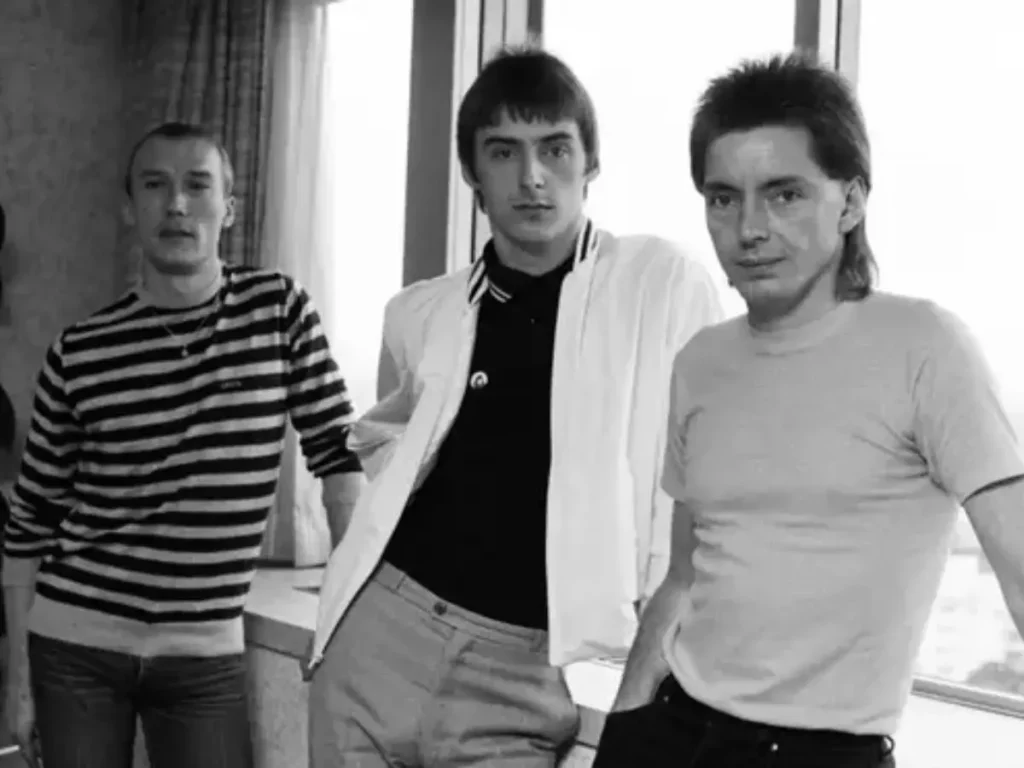
Freeze The Jam in 1982 and you catch a band at the exact moment brilliance and burnout collide. The suits are sharper, the grooves are funkier, the crowds are bigger, and Paul Weller is already plotting the group’s demise.
For many fans who grew up on the lean aggression of In the City and All Mod Cons, this last phase still feels like betrayal. For others, it is the thrilling bridge between classic Jam and the more overt soul of the Style Council. Either way, circa 1982 is where The Jam become truly complicated.
From Woking mods to chart domination
The Jam started in Woking in the early 1970s, three working class kids channeling The Who, Motown and first wave rock and roll into something faster and angrier. By the end of 1981 they had released six studio albums in five years and racked up a remarkable run of UK Top 40 singles, becoming the sharpest face of the late 70s mod revival.
They were not punk outsiders by this point but a national institution. Weller had become the voice of disillusioned British youth, Bruce Foxton’s basslines punched holes through radio speakers, and Rick Buckler’s tight, marching grooves turned three-minute songs into rallying cries. Going into 1982, The Jam were arguably the most important guitar band in Britain.
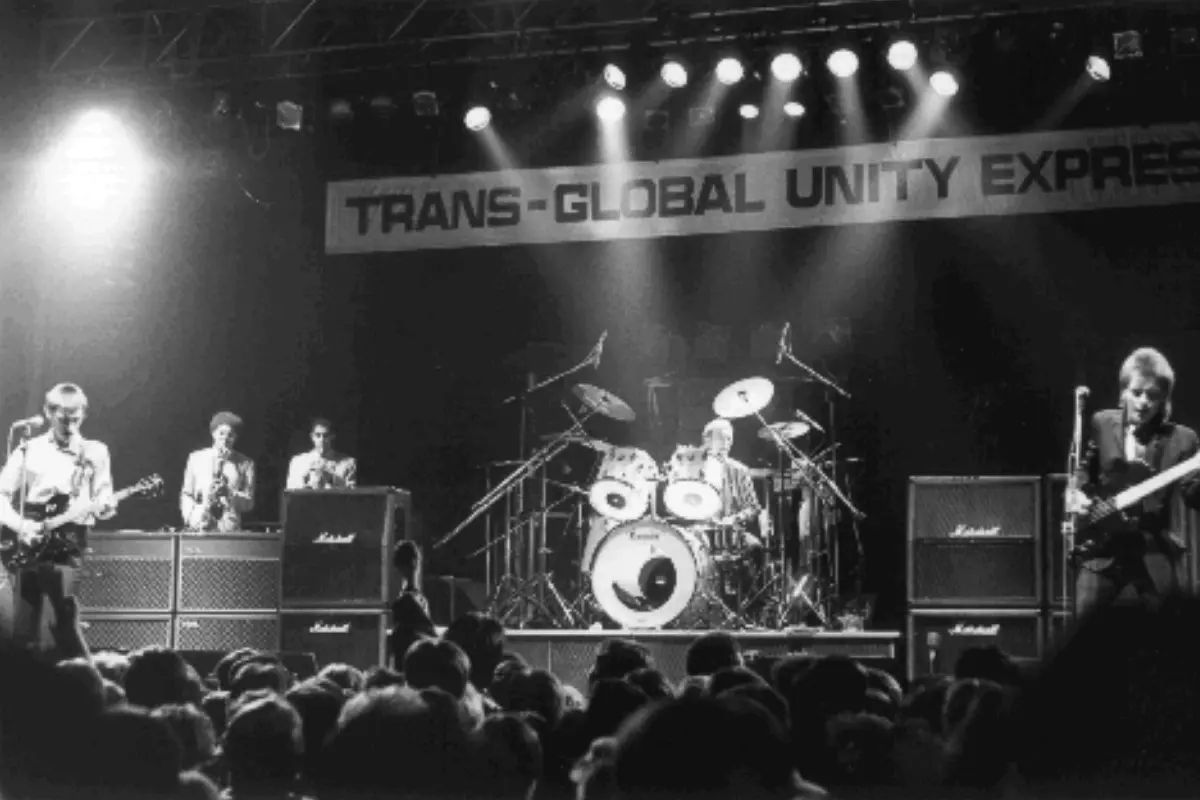
1982 starts with The Gift and a No.1 soul stomp
In March 1982 The Jam released their sixth and final studio album, The Gift, which went straight to No.1 on the UK albums chart and stayed in the Top 100 for 25 weeks. It was still recognisably Jam – concise songs, social detail, guitar bite – but soaked in Northern soul, funk basslines and brass arrangements.
Those influences explode on the album’s flagship single, Town Called Malice, paired as a double A side with Precious. Driven by a pumping bass, handclaps and organ that nod openly to mid 60s Motown, the single debuted at No.1 in February 1982 and stayed there for three weeks, cementing The Jam as a pop as well as cult phenomenon.
Town Called Malice: Motown groove, suburban despair
Town Called Malice is where Weller’s politics, storytelling and love of soul finally lock together. The lyric sketches dole queues and dead-end streets, but the music dances like a Saturday night at Wigan Casino. Foxton’s bass is busy and melodic, Buckler’s snare is almost military, and Weller slashes bright, upstroke chords that would define British mod guitar for a generation.
It is also the sound of a band stretching the punk template as far as it will go. The Jam were no longer just blasting out three-chord rants about the dole office; they were writing working class pop symphonies that could sit comfortably between Abba and Madness on mainstream radio playlists.
The Gift’s soul experiments: inspired leap or wrong turn
Outside the hits, The Gift is a restless record. Tracks like Precious and Trans Global Express lean hard into funk rhythms, wah wah guitar and brass stabs, while Running on the Spot and Ghosts offer anxious, melodic reflections on stasis and regret. One critic later called the album a cranky, inspired, unexpected farewell that already pointed toward the smoother, soul-infused sound Weller would chase with the Style Council.
Not everyone heard it as inspired. Some retrospective reviews argue that The Jam abandoned what they were great at – ferocious, tightly wound guitar pop – in favour of trying to be a straight up soul band, a move described as a classic case of white English rockers overreaching into black American styles they only half understood.
A year defined by risk
Those criticisms are not entirely unfair. The Planner’s Dream Goes Wrong, with its cod calypso sway, and the slight Foxton instrumental Circus feel like sketches compared to the discipline of earlier albums. Yet the same record gives you Carnation and Ghosts, two of Weller’s most haunting songs, and a title track that turns mod romanticism into something almost psychedelic.
In 1982, then, The Jam were not playing safe. They were trying to smuggle Curtis Mayfield, Northern soul and jazz inflections into the UK charts using a three piece rock band as the delivery system. Sometimes it soars, sometimes it stumbles, but it never sounds like a group content to coast.
Singles blitz: ballads, soul covers and the last number one
After Town Called Malice, the band doubled down on singles that underlined Weller’s soul obsession. The lush, string soaked The Bitterest Pill (I Ever Had to Swallow) arrived in September 1982 and climbed to No.2 on the UK singles chart, where it stubbornly remained without ever quite reaching the top. It still gave The Jam yet another major hit with a song that owed more to 60s blue eyed soul than to punk.
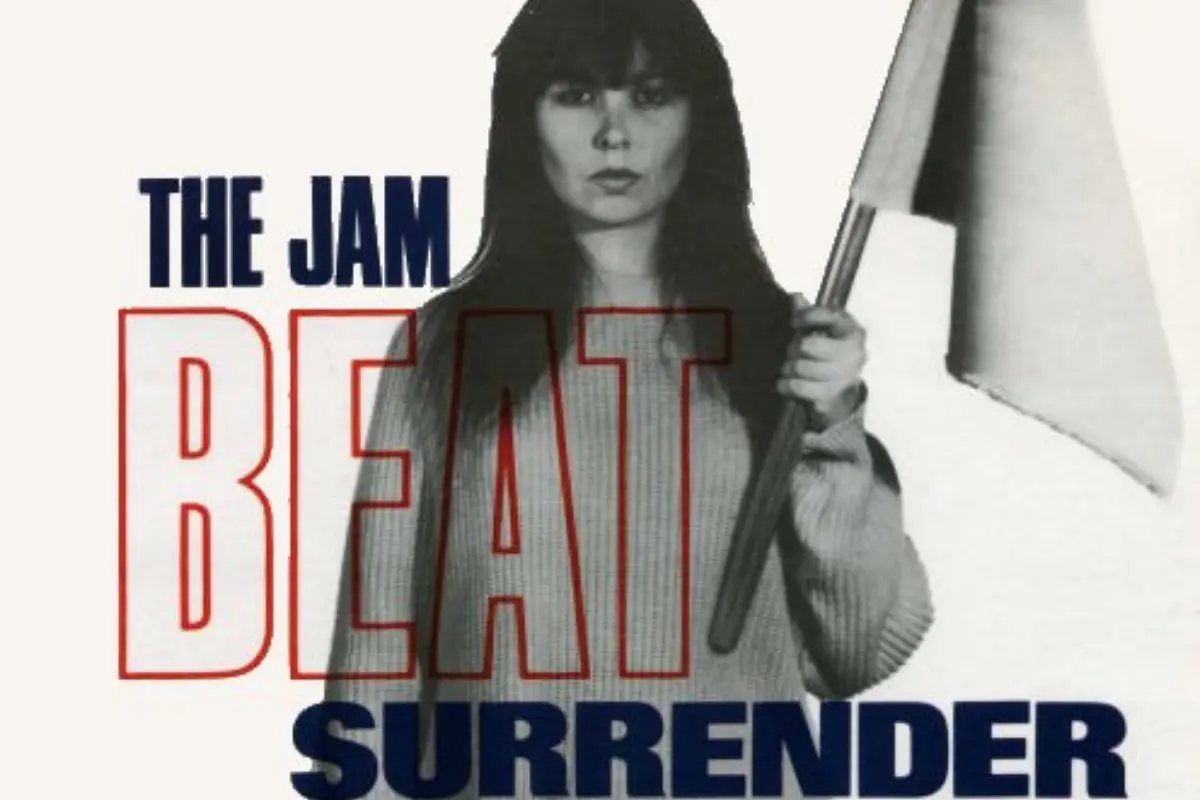
Then came Beat Surrender in late November, a brassy, upbeat call to arms released just weeks before the band’s final shows. It entered the UK singles chart at No.1 in early December, becoming The Jam’s fourth and last chart topping single, and it sounds almost like Weller is writing his own epitaph: c’mon boy, c’mon girl, succumb unto the beat surrender.
Beat Surrender and the road not taken
The basic 7 inch of Beat Surrender was backed with Shopping, but the double single and 12 inch expanded into a mini manifesto of Weller’s new tastes, adding covers of Curtis Mayfield’s Move On Up, the Chi Lites’ Stoned Out Of My Mind and Edwin Starr’s War, as detailed in Beat Surrender single discographies. For anyone paying attention, it was obvious that his heart was now in 70s soul and politically charged R and B.
Weller had even written another song in 1982, A Solid Bond in Your Heart, which was at one point earmarked to be The Jam’s farewell single before he held it back and later issued it with the Style Council instead. A later profile of his work noted that decision as a clear sign that his creative future lay beyond the trio, no matter how big they still were.
The farewell tour: Wembley, Brighton and a furious goodbye
In October 1982 Weller issued a handwritten statement announcing that The Jam would split at the end of the year, explaining to fans that he felt the group had achieved all it could and that he wanted them to finish with dignity rather than end up old and embarrassing. The band embarked on a farewell tour that included five sold out nights at Wembley Arena and concluded with a final show at Brighton Centre on 11 December, with setlists that leaned on The Gift alongside All Mod Cons and earlier favourites.
First hand accounts describe that Brighton gig as overcrowded and edgy, with an atmosphere closer to a football derby than a polite rock concert. One archive of Jam gigs recalls Weller in a red polka dot shirt, breaking multiple strings in the opening songs, the band tearing through Start, It’s Too Bad and Beat Surrender as if trying to empty the tank in a single night.
- The band at their commercial peak – No.1 single and album in the same season.
- A set that jumped from In the City era aggression to the funk of Precious and the soul stomp of Town Called Malice.
- A crowd that knew this really was the end and reacted with a mix of devotion, anger and disbelief.
The sound of 1982 Jam: guitars, bass and drums
Sonically, 1982 Jam is dominated by Paul Weller’s Rickenbacker 330s, particularly a battered Jetglo model that appears in videos and was taken out on the Trans Global Express tour promoting The Gift. Rickenbacker enthusiasts have tracked that guitar’s history in obsessive detail, noting its customised black scratchplate and its battered state by the time it appeared on later box set artwork.
Weller’s choice of the 330 was not just cosmetic. A later profile of the model points out how its bright, chiming attack helped define everything from mid period Who to The Jam’s Setting Sons and Sound Affects era, and even notes that Weller effectively hung up his Rickenbackers when he split the band, gifting one guitar to Steve Cradock and another to Noel Gallagher.
| Role | Typical 1982 setup and feel |
|---|---|
| Paul Weller – guitar, vocals | Rickenbacker style jangle through loud British amps, tight chord stabs, occasional wah wah on tracks like Precious, and more cleans to suit the soul inflected material. |
| Bruce Foxton – bass, backing vocals | Picked, aggressive lines that cut through the mix, often playing countermelodies rather than simple roots, locking hard with the kick to drive Town Called Malice and Beat Surrender. |
| Rick Buckler – drums | Dry, disciplined snare sound with almost militaristic snare rolls and cymbal crashes, giving the new funk and soul ideas a hard, British edge instead of a laid back groove. |
Why Weller walked away – and why 1982 still stings
Looking back, Weller has been blunt about the split. In a 2008 interview he insisted he was right to end The Jam when he did, dismissing the idea of a reunion as cabaret and saying he had no interest in spending his life in the same set up playing old hits. That attitude is precisely what some longtime fans still resent him for.
The manner of the breakup was as stark as the timing. A later obituary for Rick Buckler noted that The Jam had scored 18 consecutive UK Top 40 singles before Weller disbanded the group in 1982 without consulting his bandmates, leaving Foxton and Buckler to readjust while he moved on to the Style Council. With Buckler’s death decades later, the Brighton farewell now feels truly final.
So what did The Jam circa 1982 really represent
Circa 1982, The Jam are a paradox. They are a brutally tight rock trio at the absolute height of their powers, a band brave enough to push Motown, funk and jazz into the UK charts, and a volatile partnership seconds away from imploding. That tension is baked into every groove of The Gift and every bar of Town Called Malice.
If you hear 1982 Jam as the beginning of the end, you are not wrong. If you hear it as the daring first step toward the Style Council and Weller’s later solo work, you are not wrong either. The smart move is to accept the contradiction, turn the volume up, and let that final year’s mix of sharp suits, soul experiments and righteous noise speak for itself.