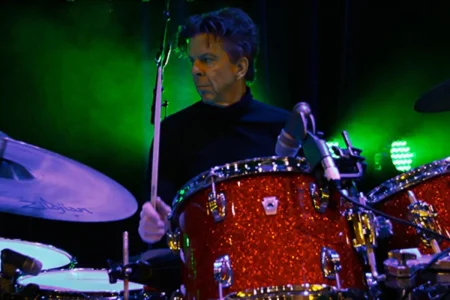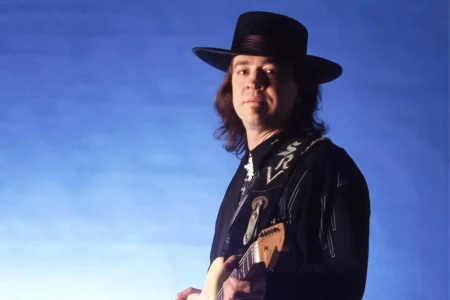

Rock history loves a “chosen one” story: the genius strolls into town, finds the perfect band, and destiny does the rest. The truth is usually messier, funnier, and way more instructive. One of the best examples comes from Joe Sublett and Chris Layton recalling the moment Stevie Ray Vaughan needed a drummer and took a chance on a not-quite-blues guy who was willing to learn fast. Their memories, preserved in Texas Flood: The Inside Story of Stevie Ray Vaughan, are less about romance and more about how great rhythm sections are engineered in real time.
Sublett’s story has everything: a referral, a skills test, and Layton in a back room with headphones, drilling Albert Collins’s “Frosty” like his rent depended on it. It also carries a provocative lesson musicians hate admitting: Stevie did not simply “need the best blues drummer.” He needed the right student, the right personality, and a drummer who could lock to his right hand like a second engine. That’s not a vibe – it’s a design spec.
The scene: Austin, auditions, and a guitarist who already knew what he wanted
By the time this drummer hunt happened, SRV was already developing a reputation in Austin for intensity and discipline that didn’t always match the party mythology. The gig economy around clubs could be brutal: if you didn’t show up, someone else took your spot; if you couldn’t hang, you got quietly replaced. In that world, “Do you want the job?” often meant “Can you survive my tempo, my volume, and my expectations?”
Layton’s recollection makes the band’s early chemistry feel almost inevitable, but it wasn’t luck. He and Stevie realized they shared deep non-blues listening habits: Stevie Wonder, James Brown, Earth, Wind & Fire, and obsession-level love for Donny Hathaway Live.
The edgy claim: SRV’s “blues purity” gets overstated
Here’s the part that irritates gatekeepers: Stevie’s leap wasn’t just reviving blues guitar; it was smuggling funk discipline and R&B phrasing into a blues framework, then turning the amp up until nobody argued. Layton says Stevie found it attractive that he wasn’t a dyed-in-the-wool blues player and that Stevie yearned to be more than “just another blues guitar player.”
That does not make Stevie “less blues.” It makes him historically accurate: the blues has always evolved by stealing from whatever was loudest, freshest, and most danceable. The most “traditional” move possible is to break tradition.

Joe Sublett’s referral: why the messenger mattered
Sublett’s role in the story is more than name-dropping. In musician ecosystems, the recommender is part of the audition. When Sublett tells Stevie, “No, but he’s a good musician, and he can learn,” he’s not excusing a weakness. He’s selling a trait that matters more in high-pressure bands: adaptability.
“He asked if he was a blues drummer, and I said, ‘No, but he’s a good musician, and he can learn.’” – Joe Sublett, Texas Flood: The Inside Story of Stevie Ray Vaughan
That line is basically a manifesto for bandleaders. Genre expertise is useful; learning speed is lethal. A lot of “authentic” players carry habits that are hard to edit, especially when the leader wants a specific feel night after night.
The headphone test: “Frosty” and the art of the quick turnaround
Sublett describes walking Stevie into the apartment and finding Layton in the back room, headphones on, playing Albert Collins’s “Frosty.” Stevie wasn’t just impressed by the playing; he clocked the dedication and even the DIY wiring that made the practice setup work.
It’s easy to laugh at the wires, but this is the real audition: not the song, the attitude. Layton didn’t wait to be hired to start behaving like the drummer. He started woodshedding immediately, and he chose a tune that communicated, “I know the Texas lineage, and I’m willing to earn it.”
What “Frosty” signals to a Texas bandleader
Even if you don’t know the exact setlist politics of the time, “Frosty” screams sharp accents, tight stops, and that cold, clipped swagger Albert Collins fans expect. Practicing it says you’re not just learning a shuffle; you’re learning a regional language. And you’re learning it under time pressure, which is what touring really is.
“Play what I want you to play”: the uncomfortable truth about great leaders
Sublett remembers Stevie basically telling Layton, “If you play what I want you to play, I’ll give you a shot.” That can sound authoritarian until you remember what the job was: building a synchronized rhythm machine around a guitarist whose right hand drove the entire band.
“If you play what I want you to play, I’ll give you a shot.” – Stevie Ray Vaughan (recounted by Joe Sublett), Texas Flood
There’s also a practical reason Stevie preferred a drummer he could shape: Stevie played drums himself and could demonstrate shuffles and feels directly. Sublett notes Stevie had dealt with drummers who were set in their ways and got offended when he made suggestions.
This is a leadership pattern that shows up in many elite bands: the leader doesn’t just want chops; they want controllable chemistry. If that sounds harsh, consider the alternative: a rhythm section constantly arguing about “what the blues is” while the audience walks to the bar.
In sync with my right hand: the “engine coupling” concept
The most revealing part of Sublett’s recollection is Stevie’s obsession with synchronization. He wanted a drummer who could play in sync with his right hand, then build everything beyond that.
Think of it like coupling two motors. When the guitarist’s attack and the drummer’s backbeat agree on micro-timing, the groove feels inevitable. When they disagree, you get that subtle drag that no amount of volume can hide.
Practical takeaway for drummers
- Study the leader’s right hand as much as you study their chord changes.
- Match articulation: if the guitar pick is biting, your snare needs definition; if the guitar is round, don’t over-crack.
- Play the same subdivision religion: straight vs swung is obvious; the real fight is where the “and” sits.
Why shared influences mattered (and why it wasn’t “just blues”)
Layton says the next day they realized they had the same musical influences and were both “flipped out” over Donny Hathaway Live. That detail should change how you hear Double Trouble.
If you listen to James Brown’s band or classic EWF, the lesson isn’t fills. It’s role clarity: the drummer is a time architect, the bass is a hook machine, and the ensemble is allergic to slop. That mindset fits SRV’s music because Stevie’s phrasing is so rhythm-forward it practically demands funk-level discipline, even on slow blues.

A quick influence map (why SRV’s band felt different)
| Influence | What it teaches a drummer | How it shows up with SRV |
|---|---|---|
| James Brown | Locking parts, relentless pocket | Groove-first shuffles; tight band hits |
| Stevie Wonder | Songcraft, dynamic motion | Contrast between verses and solos |
| Earth, Wind & Fire | Precision, ensemble drive | Big stops, clean transitions, stamina |
| Donny Hathaway (Live) | Emotional pacing, live dynamics | Slow blues that builds without rushing |
Soap Creek and the “Are you gonna join our goddamn band?” moment
Layton describes seeing them at Soap Creek with the previous drummer back in the seat but unreliable due to a “bad speed problem.” He recounts the chaos of being invited to sit in, then the drummer disappearing, and Lou Ann pushing the decision with a blunt line that deserves to be framed in every rehearsal room.
“Are you gonna join our goddamn band or not?” – Lou Ann (recounted by Chris Layton), Texas Flood
That’s the unglamorous side of legendary bands: they often form because someone dependable finally says yes. Talent is scarce, but reliability is rarer than guitar heroes want to admit.
What the official record confirms (and why the story matters)
We don’t need mythology to validate Layton’s significance. Chris Layton is widely credited as the drummer for Double Trouble on core releases and tours, and his name is permanently tied to the band’s defining era.
Stevie’s larger legacy is also recognized institutionally. The Blues Hall of Fame inducted Stevie Ray Vaughan, a signal that his impact is measured beyond fan forums and guitar shops.
And while this article is about a band’s birth, it’s impossible to ignore how abruptly the story ended. The NTSB’s accident report documents the fatal helicopter crash that killed Stevie Ray Vaughan and others, grounding the legend in hard reality.
“Good musician, can learn”: the blueprint for building a killer band
If you’re a bandleader, Sublett’s pitch should haunt you. Hiring purely for stylistic authenticity is a trap when your real need is alignment, humility, and growth. The best bands often prefer a player who can be molded rather than a player who arrives convinced they are already finished.
A practical checklist for auditioning a drummer (SRV-style)
- Feel over vocabulary: Can they make your riffs feel bigger with fewer notes?
- Responsiveness: Do they adjust immediately when you ask for a different shuffle?
- Listening habits: Do they reference artists outside the genre, or only imitate genre clichés?
- Work ethic proof: Did they show up having learned something specific since your last conversation?
- Ego temperature: Do they treat suggestions like insults, or like free coaching?
Conclusion: the “right drummer” wasn’t born, he was built
The most interesting thing about this origin story isn’t the headphone rig or the backstage drama. It’s the idea that Stevie Ray Vaughan, a player worshipped for raw soul, approached band-building like a craftsman: define the feel, choose someone teachable, and demand synchronization. Sublett and Layton’s memories show how greatness often starts as a practical decision made under pressure, then becomes history when the groove finally locks.