
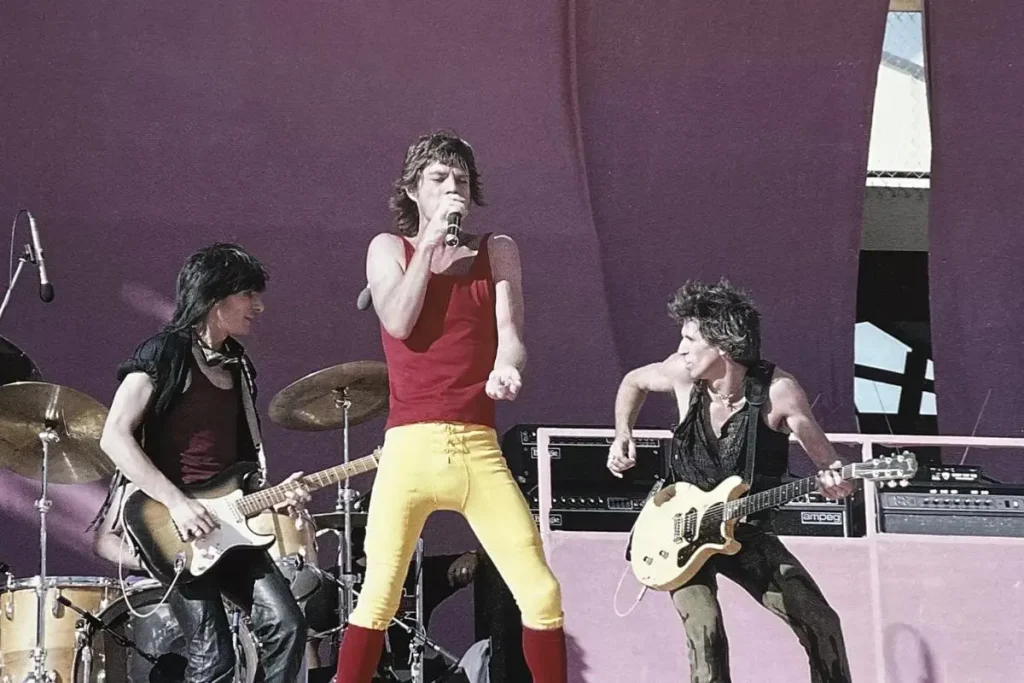
Picture this: California sun blazing, the concrete bowl of the Los Angeles Memorial Coliseum shimmering, and a sea of fans that stretches to the horizon. Out strides Mick Jagger, wired like a prizefighter, staring down close to 100,000 people who have been drinking, smoking and shouting since morning.
That was the scene in October 1981, when the Rolling Stones brought their Tattoo You juggernaut to Los Angeles for two massive daytime shows. The Coliseum itself later pegged the crowd at roughly 94,000 per night, while eyewitnesses happily rounded it up to “a hundred thousand” when they told the story later.
Setting the stage: the Stones go supersized
By 1981 the Stones were no longer just a band touring an album. They were a mobile industry. The American Tour 1981 hit 50 U.S. stadium and arena dates, drew roughly 2.5 million fans, and grossed around 50 million dollars in tickets, making it the highest earning tour of the year and a template for stadium rock economics.
Unlike the gritty club dates of the 60s, this tour was engineered for scale. Designer Kazuhide Yamazaki built a bright, cartoonish stage with giant cut outs of a guitar, car and record, splashed in primary colors so it popped in afternoon sunlight instead of hiding in darkness. It was rock music reimagined as roadside Americana billboard – loud, garish and impossible to ignore.
Know Your Instrument’s own look at the tour’s rain soaked Halloween stop in Dallas shows the same formula at work: big outdoor stadium, tens of thousands in the elements, and the band leaning on Tattoo You anthems like “Start Me Up” and “Waiting on a Friend” to punch through the weather. By the time the Stones reached Los Angeles, they were running a brutally efficient stadium machine.
The Coliseum: a 90,000 seat pressure cooker
The Los Angeles Memorial Coliseum was built for Olympic spectacle and NFL crowds, not for one British rock band and its traveling circus. In the early 80s its football capacity sat just over 92,000 seats, with floor and end zone standing room pushing concert attendance into the mid 90,000s. It was one of the few American venues that could credibly host a rock show that felt like a small city gathering for the afternoon.
In a retrospective on the stadium’s first century, the Los Angeles Times singled out October 9 and 11, 1981 with a brutally simple note in the music section: “The Rolling Stones (Prince gets booed off the stage).” That parenthetical has haunted the legend of these shows almost as much as the photographs of Jagger sprinting the length of the field.
The Coliseum’s own timeline records the Stones’ stop as two Tattoo You dates with opening support from The J. Geils Band, George Thorogood and a then little known Prince, played to a crowd of about 94,000 per show, with Prince repeatedly booed and pelted by the audience. One fan on Concert Archives remembered “92,000 attendees” and open drug dealing in the stands that felt more like a lawless festival than a regulated stadium event.
| Date | Estimated crowd | Notable drama |
|---|---|---|
| October 9, 1981 | Low to mid 90,000s | Prince booed off stage, crowd surging in daytime heat |
| October 11, 1981 | Similar numbers | Prince returns, finishes set, hostility simmering but contained |
Prince vs the Stones crowd: a brutal culture clash
Prince was on the verge of releasing Controversy, a record that fused funk, new wave and explicit sexuality into something closer to a political statement than a rock album. Days before it hit stores, he walked onto the Coliseum stage in a trench coat, bikini briefs and high heeled boots, facing what reviewers later estimated as roughly 90,000 mostly white classic rock fans and an undercurrent of outright hostility.
According to the Coliseum timeline, Jagger personally invited Prince to open the shows because he liked the early records. What looked enlightened on paper crashed hard in the real world. As Pitchfork later argued, the reaction to his sexually androgynous image and genre bending sound exposed an ugly seam of racism and homophobia that still ran straight through stadium rock culture in 1981.
Dez Dickerson, Prince’s guitarist, recalled that the crowd fixated less on the music and more on those infamous bikini briefs, with objects and insults coming from the stands until Prince cut the first day’s set short in disgust. MusicRadar’s reporting adds that he flew back to Minneapolis swearing never to open for the Stones again, only to be talked into returning for the second show, where he gutted out the full set in the face of more abuse and left visibly shaken.
On the Stones’ side there was not much sympathy. The fan site Time Is On Our Side quotes a 1983 Keith Richards interview where he sneers that Prince was “a prince who thinks he is a king already,” and a laughing Mick Jagger telling Prince that he himself had taken “thousands of bottles and cans” over the years and that it was simply part of the job at that level. It is a cold lesson in stadium politics: the headliner owns the fortress, and anyone else walks in at their own risk.
Mick Jagger vs 100,000: a frontman masterclass
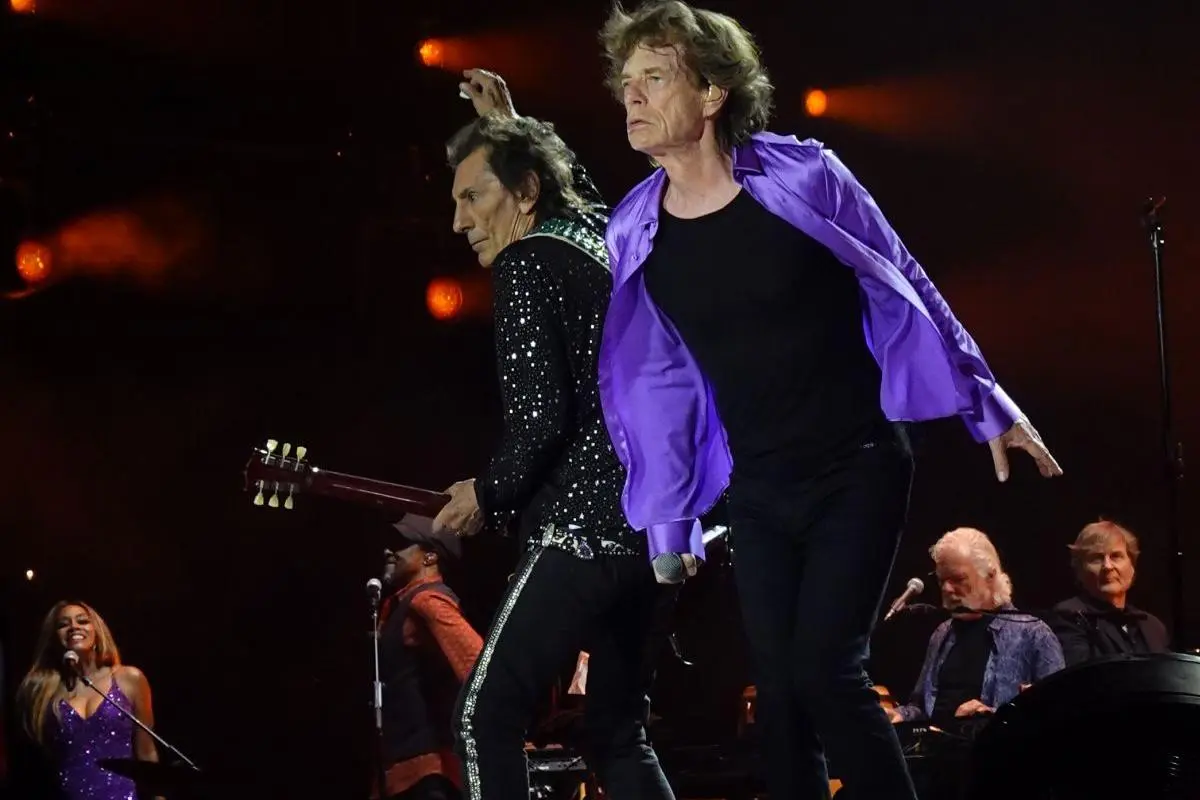
Strip away the side drama and the core of those L.A. shows is Jagger versus an almost unmanageable crowd size. The set list mixed fresh Tattoo You material like “Start Me Up,” “Hang Fire” and “Little T&A” with warhorses “Under My Thumb,” “Beast of Burden,” “Brown Sugar” and “Jumpin’ Jack Flash,” sequenced like a long, rising threat. Daylight robbed him of moody lighting, so he leaned on movement and color instead.
Decades of blues apprenticeship meant the Stones understood groove at an almost primitive level, something Know Your Instrument has tracked from their 60s Chess Records obsessions through to their later arena dominance. In the Coliseum, that history translated into a relentless backbeat from Charlie Watts and Bill Wyman, with Jagger barking and preening over the top while the crowd responded less like an audience and more like weather.
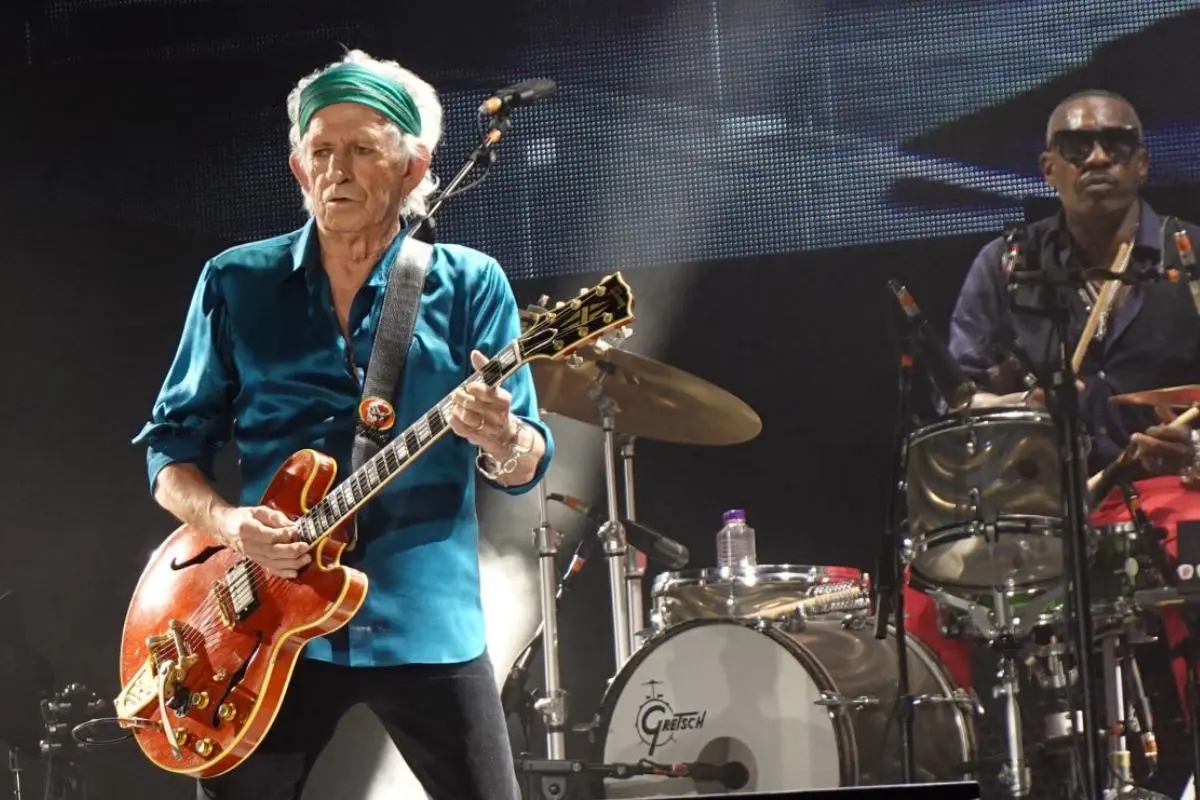
Sonically, the tour revolved around Keith Richards’ open G tuned Telecasters, especially the battered five string “Micawber” that Fender credits as his go to weapon on riff driven songs like “Brown Sugar” and “Honky Tonk Women.” In a stadium that size, those clipped, chiming chords were less about subtlety and more about carving jagged lines of rhythm through the echoing concrete.
It was not subtle, and it was not meant to be. Jagger sprinted the ramps, waved giant banners, and leaned into every exaggerated hip wiggle that conservative critics had loathed since 1964. From the cheap seats, the show was all shapes and silhouettes: a leaping singer, twin guitarists weaving parts, and inflatable Americana scenery looming over a field full of bodies.
Big business, bigger crowds
If Altamont showed how badly a “free” counterculture festival could implode, the 1981 Coliseum shows were its cynical, professionalized mirror image. Know Your Instrument’s deep dive on the Altamont disaster details how the Stones once trusted Hell’s Angels with security and watched a fan get stabbed to death in front of the stage. Twelve years later in Los Angeles, there were real security plans, corporate money and a clear hierarchy, but the sense of danger had simply been repackaged rather than erased.
The American Tour 1981 is widely cited as an early milestone in rock sponsorship, with cologne brand Jovan paying a reported multi million dollar fee for exclusive rights to tie its name to the tour and appear on roughly two million tickets. The Washington Post covered it as a marketing experiment as much as a music event, noting how Jovan hoped to make its fragrance “hip by association” with the Stones’ travelling behemoth.
In other words, when Jagger walked onto the Coliseum stage to face that ocean of humanity, he was not just fronting a band. He was the animated logo of the most profitable rock tour on earth, selling records, cologne and the idea that stadium rock could be a safe long term investment instead of a chaotic 60s accident.
Why those 1981 L.A. shows still matter
Seen from today, the Los Angeles Coliseum concerts sit at a twisted crossroads. On one hand you have Mick Jagger proving that a rock frontman can command almost 100,000 people in broad daylight without hiding behind lasers or backing tracks. On the other you have a visionary opening act run off the field by a crowd that could not handle a Black, gender bending funk star on their turf.
The shows cemented the Stones’ transition from dangerous outsiders into stadium institution, complete with corporate partners and record breaking grosses. Yet the Prince episode exposed how conservative and vicious that same stadium rock audience could be when confronted with someone genuinely new.
For older fans who lived through the 60s, it is tempting to see those Coliseum dates as the moment the rebel band finally joined the establishment. But listen closely to the bootlegs and you still hear something uncomfortably alive: Jagger baiting an enormous crowd, Richards and Wood slashing through open G riffs, and an atmosphere that feels one bad decision away from turning ugly again.
Call it the paradox of 1981. The Los Angeles Coliseum gave the Stones proof that they could scale their chaos to six figures and still walk away richer and more powerful than ever. It also left a scar on Prince that pushed him to build his own stadium empire on 1999 and Purple Rain rather than ever open for anyone again. Between them, those two artists turned one brutally hot Los Angeles weekend into a turning point for what big time rock performance could be – and what it was willing to crush along the way.


