
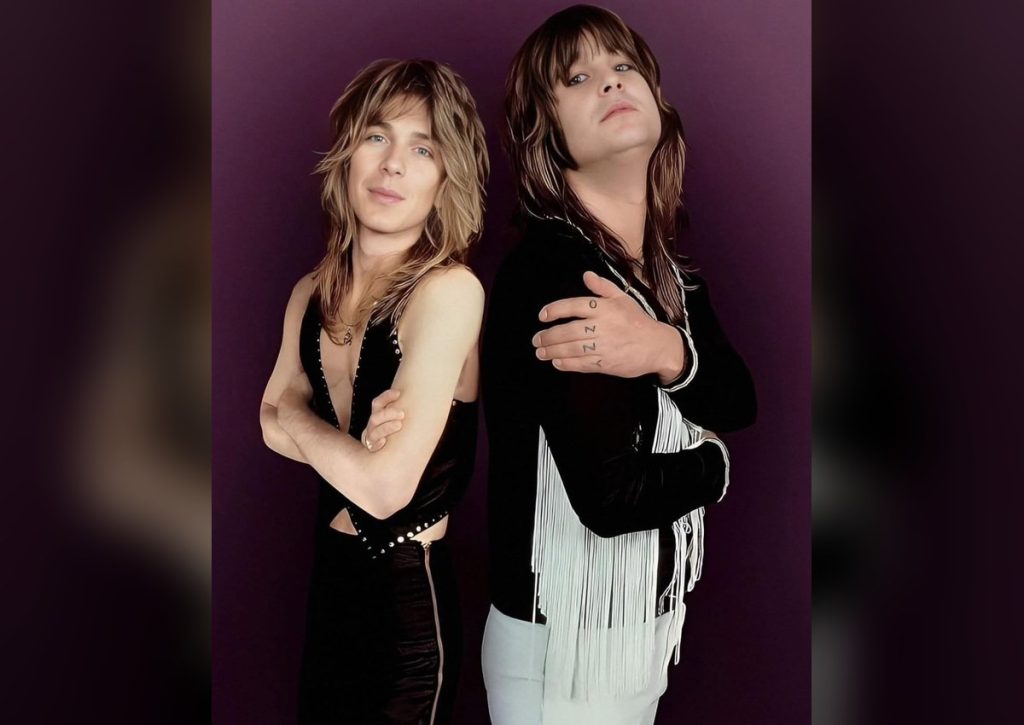
The most consequential audition in heavy metal history lasted about as long as it takes to tune up. In late 1979, a slight, soft-spoken guitar teacher from North Hollywood plugged a Gibson Les Paul into a tiny practice amp in a Los Angeles studio, began warming up — and got the job before he ever played a song.
The reluctant candidate
Randy Rhoads wasn’t chasing the gig. He had a life, and by guitar-hero standards a strikingly wholesome one: teaching by day at Musonia, the music school his mother Delores ran, where he was known as a patient, methodical instructor — and playing nights with Quiet Riot, the band he’d co-founded as a teenager. Quiet Riot were Sunset Strip royalty without a kingdom: huge draws in the LA clubs, big in Japan, and unable to land an American record deal to save their lives.
So when word went around that Ozzy Osbourne was auditioning guitarists, Rhoads was lukewarm. Ozzy was the recently fired Black Sabbath singer, widely written off as a drunk with no future, trying to assemble a new band before flying home to England. It took relentless phone calls from bassist Dana Strum to talk Rhoads into showing up at all — reportedly just before his final Quiet Riot show, with nothing to lose and no great expectations.
He turned up with the Les Paul and a practice amp and started limbering up: scales, trills, fragments of the classical figures he drilled at Musonia. That was as far as the audition got.
“It’s never gonna work”
The famous twist is that the man doing the hiring was barely conscious for it. Ozzy later admitted he was heavily drunk that day, and by his own account his first impression of the polite young teacher was pure doubt — “I thought, it’s never gonna work,” he recalled. The warm-up settled it anyway. Rhoads, for his part, said he never actually met Ozzy during the audition at all: it was Strum who emerged from the control room to tell the bewildered guitarist he had the job.
Think about that from Rhoads’ side of the glass. He was 22, had never made an album that mattered outside Japan, and had just been hired — off a warm-up — by a voice from the control room, on behalf of a rock star he hadn’t laid eyes on. Within two years, that accidental partnership had produced Blizzard of Ozz and Diary of a Madman, two albums that permanently rewired what heavy metal guitar could be.
Why the partnership worked
What Ozzy got was not just a shredder — the Strip was full of those. Rhoads was a trained teacher with serious classical leanings, and he brought a composer’s discipline to songs that might otherwise have been mere riff vehicles. Listen to the architecture of “I Don’t Know” and the rest of Blizzard of Ozz: layered rhythm tracks, harmonised lines, solos built like set pieces with beginnings, middles and ends. That’s the Musonia classroom as much as the Sunset Strip — and it never stopped. Even at the peak of the tours, Rhoads famously spent days off seeking out local classical guitar teachers in whatever town the bus stopped in, taking lessons while the rest of the touring party slept off the night before.
And what Rhoads got was a singer who believed in him completely. Ozzy — written off after Sabbath, drinking through one of the lowest stretches of his life — spent the next four decades crediting Rhoads with saving his career, and the affection was clearly mutual. Teacher and frontman, the meticulous student of music and the force of nature: each covered exactly what the other lacked, and you can hear the trust in every bar they cut together.
Two albums, then silence
Rhoads died in March 1982, aged 25, in a senseless light-aircraft crash on a tour stop — and the catalogue stops at two studio albums, a posthumous live record, and a legend that has only grown. Ozzy’s Tribute album later gave the world the live document; the Rock and Roll Hall of Fame eventually recognised him with a Musical Excellence induction; and generations of players have worn out those two records learning what he did.
There’s a final irony his old bandmates would appreciate: Quiet Riot, the band that couldn’t get arrested in America with Rhoads in it, rebuilt themselves and took Metal Health to number one on the Billboard album chart in 1983 — the first metal album ever to do it — partly on momentum from covering his absence. Everything Rhoads touched seemed to detonate, even after he’d left the room.
But the audition is the part of the story worth keeping closest, because it’s the purest argument for substance over theatre rock has ever produced. No showcase, no image, no networking — a quiet guitar teacher, a practice amp, and a warm-up so good it ended the search on the spot. He didn’t need a song, a setlist, or even the man in the room.
The warm-up was enough.


