Long before he was the Prince of Darkness, John Michael Osbourne was a Birmingham teenager with a criminal record, a string of miserable jobs, and — by the confident assessment of nearly everyone around him — no future at all. The strangest thing about Ozzy’s rise isn’t how far he travelled. It’s how precisely the grim years supplied everything the legend would later run on.
Aston, and the ways out
Ozzy grew up in a cramped terrace in Aston, one of six children in a family where money was a permanent emergency — a childhood hard enough that he later spoke of it with more flinch than nostalgia. School offered nothing; undiagnosed dyslexia saw to that. So at fifteen he went to work, and the CV he assembled reads like a Victorian cautionary tale: plumber’s mate, toolmaking factory, car-horn tester, and — most famously — a slaughterhouse, killing animals for a butcher. He stuck the slaughterhouse longer than anything else. He liked telling people about it, then and forever; it was the first role he ever found that made other people flinch instead of him.
The other way out was crime, and Ozzy was comically bad at it. In 1966 he broke into a clothes shop near his home intending to steal sweaters — wearing fingerless gloves, by his own telling, which rather defeated the point of gloves. He was caught, convicted, and fined £40 he did not have.
Six weeks in Winson Green
What happened next became one of the foundation stones of the Osbourne story. His father, John Senior — a toolmaker who worked nights his whole life — refused to pay the fine. It wasn’t cruelty; it was a deliberate, brutal lesson, and it worked. Unable to pay, the teenage Ozzy was sent to Winson Green prison, where he served six weeks of a three-month sentence in one of Britain’s bleakest Victorian jails.
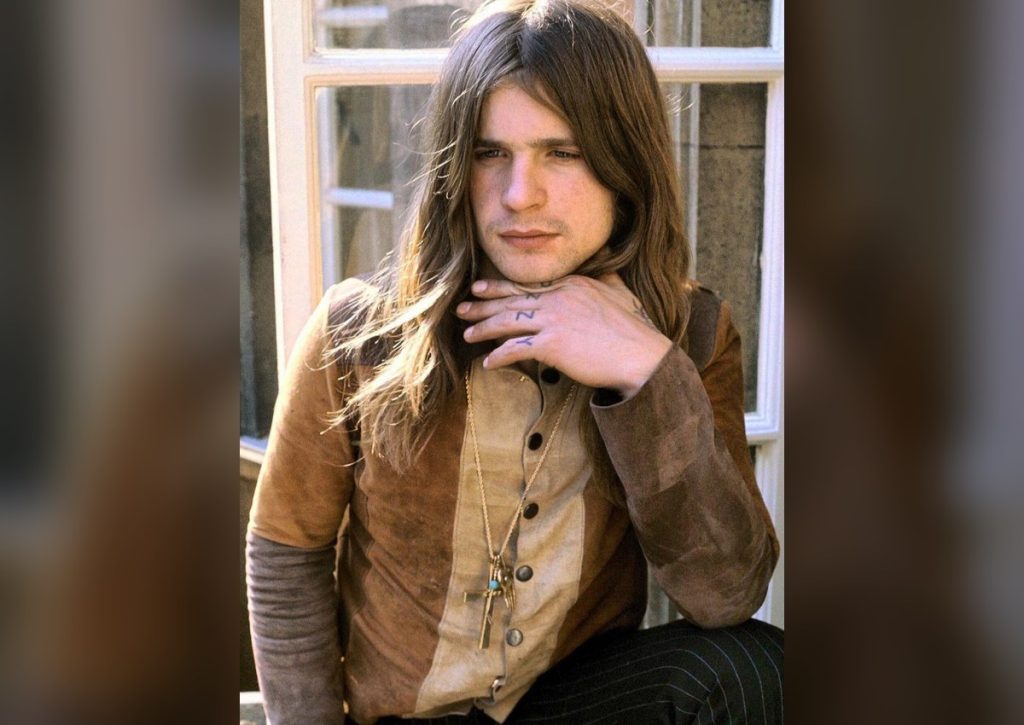
He came out with two things. The first was a lifelong certainty that he was never going back. The second was self-inflicted: using a sewing needle and graphite, he had tattooed O-Z-Z-Y across the knuckles of his own left hand — the do-it-yourself branding of a kid with nothing, which sixty years of photographs would turn into one of the most famous hands in rock.
Years later, long after the world had decided he was rock’s great cartoon madman, Ozzy still talked about those jobs with the specificity of a man who had never quite left them. He could describe the slaughterhouse work in detail nobody asked for, and did, cheerfully, on chat shows for fifty years. The stories were funny the way his best songs were heavy — because underneath sat something absolutely real: a kid who had seen exactly what a life without an escape hatch looked like, up close, eight hours a day.
The advert that changed everything
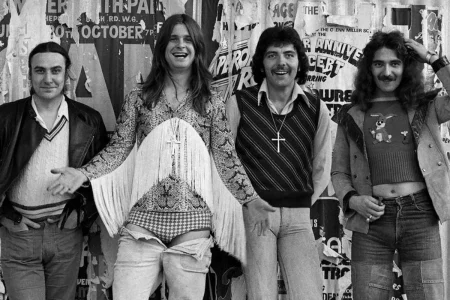
The escape route, when it finally appeared, was almost absurdly modest: a card in a music-shop window reading “Ozzy Zig Needs Gig”, placed by a young man whose entire qualification was owning his own PA speaker. It found its way to two other Aston lads, Tony Iommi and Bill Ward — Iommi, who knew Ozzy from school, was reportedly unconvinced the kid could sing at all — and, with Geezer Butler, the four began grinding through blues covers in working men’s clubs.
Nobody involved mistook it for destiny. What they had was the same thing Ozzy’s jobs had given him: no alternative worth having. Aston’s factories were the future on offer; the band was the only door that led anywhere else, and they leaned on it together until it gave. When the four renamed themselves Black Sabbath and started writing about doom instead of love, the sound came straight out of the world that made them — heavy industry, hard luck, and horror films, sung by a voice that had spent years shouting over machinery.
Why the bad years mattered
It’s become fashionable to tell rock origin stories as inevitabilities. Ozzy’s was the opposite, and he knew it better than anyone. The slaughterhouse taught him showmanship’s first rule — that people cannot look away from the grisly — decades before a certain bat learned it the hard way. Prison gave him the fear that kept him moving and the knuckle tattoo that became a logo. Even his father’s refusal to pay the fine, harsh as it was, handed him the exact story he would spend a lifetime retelling: nobody was coming to save him.
And the man who emerged was never quite the demon the posters sold. Behind the theatre stood a working-class grafter who married young, held his first family together badly but tried, and treated every stage like a factory shift he was grateful to have. Audiences sensed it; it’s why they forgave him everything.
Every legend needs an origin. Ozzy’s wasn’t a crossroads deal or a lightning strike. It was a slaughterhouse in Digbeth, a botched burglary, six weeks in Winson Green, and a hand-poked tattoo — the least mystical apprenticeship in rock history, served by the man who would make darkness itself a career.