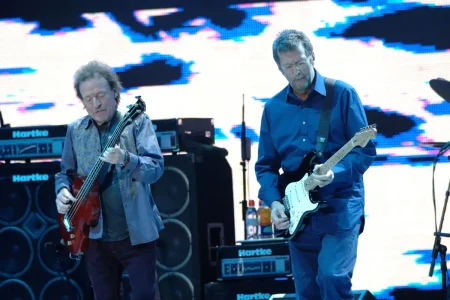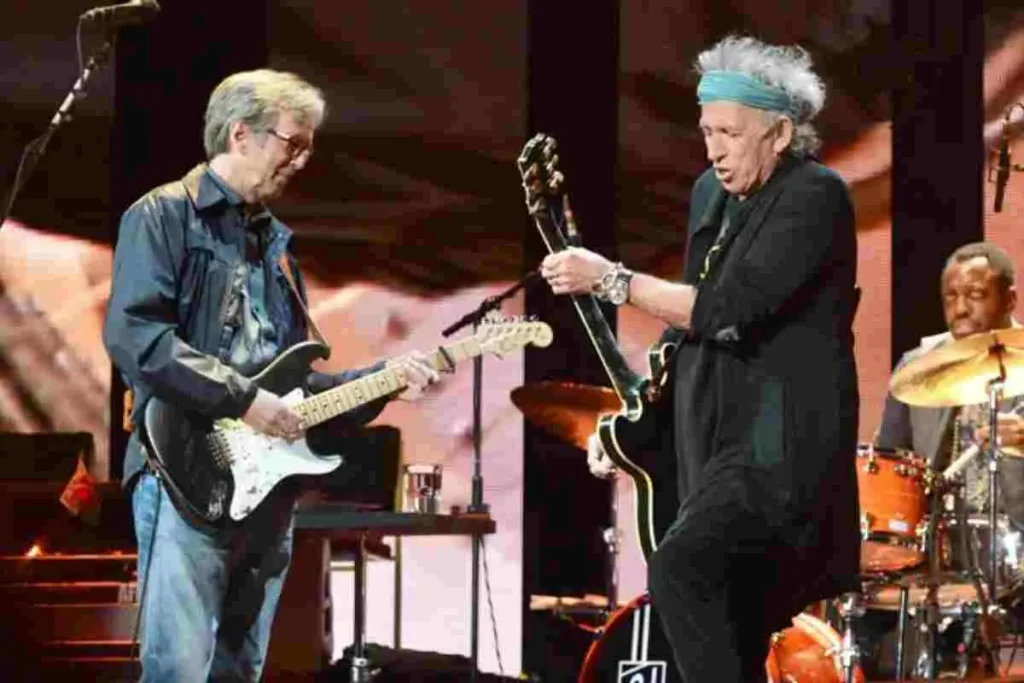
There are “special guest” moments, and then there are history rewrites. On April 13, 2013, during Eric Clapton’s Crossroads Guitar Festival at Madison Square Garden, Keith Richards stepped onstage and the room instantly understood: this was not a polite cameo. It was a collision of two distinct guitar worldviews, welded together by a scruffy, ancient blues standard called “Key to the Highway.”
The internet loves to argue about who’s “the better guitarist.” Clapton has the polish, the vocabulary, the immaculate time. Richards has the swagger, the danger, the rhythm that feels like it might break apart and then somehow gets stronger. Put them on the same stage, on the same song, and the debate becomes irrelevant because you’re watching the two main branches of British blues-rock meet at the root.
Crossroads Guitar Festival: not just a guitar flex
Crossroads is often described as a guitar summit, but it’s better understood as Clapton’s way of turning obsession into purpose. The festival is tied to his philanthropy through the Crossroads Centre, a treatment facility he founded in Antigua, which is the event’s spiritual engine as much as the amps and celebrity drop-ins.
By 2013, Crossroads had matured into a carefully curated marathon with a deep bench of players spanning blues, rock, jazz, country, and roots. Even if you came for fireworks, you stayed because the festival format forces something rare: musicians listening, reacting, and building moments in real time, not just doing greatest-hits autopilot.
Why “Key to the Highway” is the perfect ambush song
“Key to the Highway” sits in that sweet spot where a tune is famous but still feels like a jam. It’s a blues standard most closely associated with Big Bill Broonzy and later electrified for rock audiences through Derek and the Dominos’ Layla and Other Assorted Love Songs era, where Clapton treated it like a living organism instead of a museum piece – with the song’s long life reinforced by how the recording world continues to celebrate blues and live performance in major industry awards.
That matters because the song doesn’t demand perfection. It rewards feel. It’s a road song, a leaving song, a shrug-and-smile song, and it’s built for two guitarists to circle each other without stepping on toes.
“If I don’t go, baby, you know I’m gonna have to carry you.”
Traditional lyric popularized in multiple recordings of “Key to the Highway.”
April 13, 2013: the moment the Garden leaned forward
When Richards walked out at MSG, the surprise wasn’t simply that a Rolling Stone was there. It was which Stone, and how naturally he fit the Crossroads vibe. A festival rundown that spotlighted Richards joining Clapton on “Key to the Highway” captured why the pairing landed as one of the day’s headline jolts.
Video of the performance captures what audience members still describe as that specific roar: part recognition, part disbelief. Richards doesn’t arrive like a guest star waiting for his spotlight cue. He arrives like someone strolling into a neighborhood bar, hearing the band play a blues in the right key, and deciding it’s his song too – as you can see in the onstage “Key to the Highway” performance footage from Crossroads 2013.
The guitar psychology: lead player meets rhythm emperor
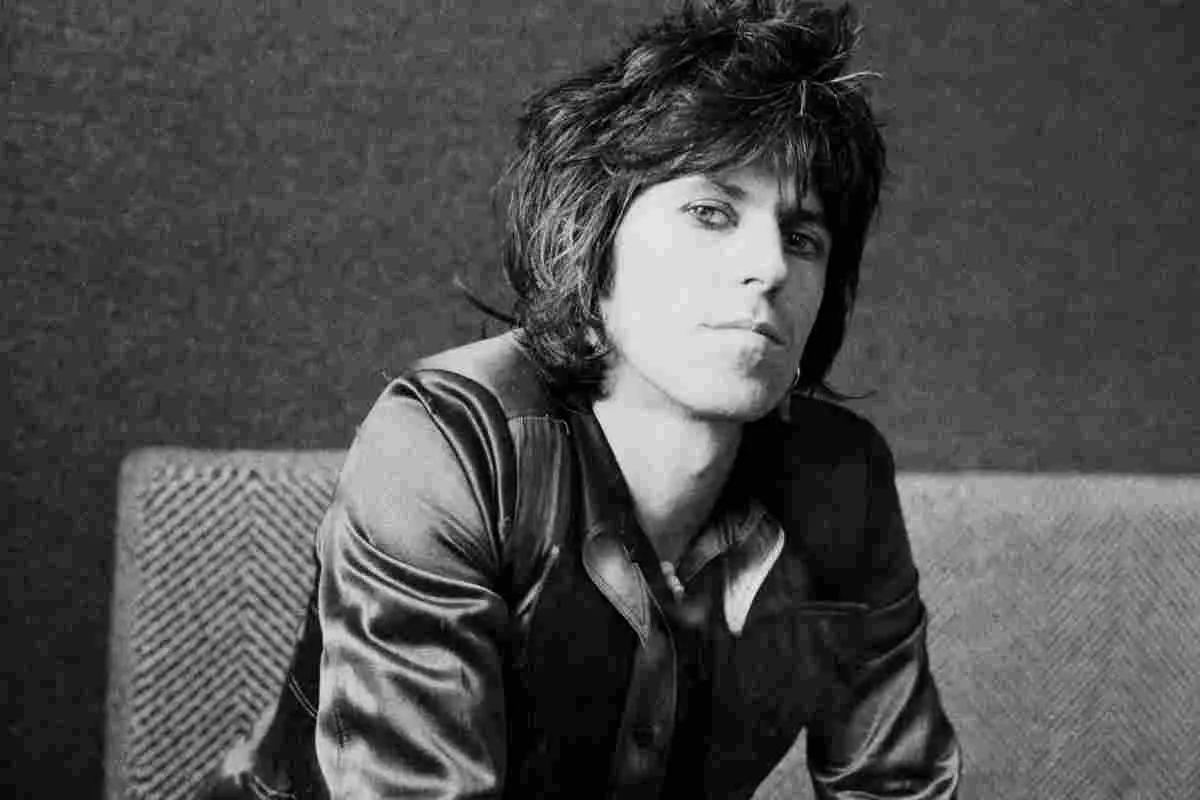
Clapton’s approach is conversational, with clean phrasing and a tone that tends to sit “on top” of the band. Richards, by contrast, is a rhythm guitarist who treats rhythm like architecture, building riffs that make everyone else sound bolder. Even when he plays fills, they feel like part of the groove’s skeleton rather than a soloist’s commentary.
That’s why this pairing was so satisfying. Clapton could paint lines and bends over the changes, while Richards could push the pocket and keep the song from turning into a polite blues recital. In other words, Clapton supplied the diction; Richards supplied the accent.
What you can actually listen for (even if you’re not a guitarist)
- Call-and-response: the guitars don’t compete; they trade short statements.
- Space: neither player fills every second, which lets the band’s pulse stay audible.
- Dynamic restraint: it stays loose and human, not “arena-blues” bombast.
Why Richards showing up mattered beyond the song
Clapton and Richards are both British blues disciples, but they represent different outcomes of that obsession. Clapton’s legacy is often tied to virtuosity and refinement. Richards’ legacy is tied to the riff, the idea that a song can be driven by a single rhythmic identity more than harmonic complexity.
So when Richards joins Clapton at a festival that celebrates guitar craft, it’s a quiet provocation: craft isn’t only technique. Craft can be groove, touch, timing, and attitude. The performance suggests that Crossroads isn’t merely a hall of fame talent show. It’s a reminder that guitar greatness comes in different dialects.
The larger Crossroads 2013 context (and why MSG was a smart choice)
Crossroads 2013 took place at Madison Square Garden, a venue with enough history to make almost any guest appearance feel mythic. Media coverage and official communications around the event positioned it as a major, multi-artist celebration with blockbuster appeal while still rooted in Clapton’s charitable mission – something echoed by the official Eric Clapton site’s Crossroads-era announcements and updates.
And Crossroads 2013 wasn’t only a live moment. It was documented and released later as an official package, reinforcing that these appearances weren’t rumors or half-remembered bootlegs. The festival’s 2013 release put a stamp on the event as part of Clapton’s official live canon, aligning with the broader Crossroads Guitar Festival history and release trail.
Quick timeline: how this performance traveled after the lights went down
| Stage of the moment | What happened |
|---|---|
| Live at MSG | Richards joins Clapton for “Key to the Highway” during Crossroads Guitar Festival. |
| Immediate afterlife | Fan-shot and official clips spread, with the performance becoming a headline “you had to see it” highlight on the Crossroads Guitar Festival’s official home online. |
| Official documentation | The festival is released as an official live product, extending the moment beyond the arena and living on in the event’s widely cited “Key to the Highway” highlight write-up. |
Edgy take: the performance quietly insults guitar snobbery
Here’s the spicy truth: “Key to the Highway” at Crossroads 2013 is a rebuttal to the internet’s most tedious guitar discourse. If your definition of greatness is speed, complexity, or how many modes someone knows, Richards has always been an uncomfortable problem.
But on this stage, with Clapton right beside him, Richards doesn’t look like the “limited” player critics caricature. He looks like what he’s always been: a musician who understands that rhythm is power. And Clapton, to his credit, doesn’t try to dominate the frame. He plays like someone who knows blues is bigger than anyone’s ego.
How to rewatch it like a musician (even if you’re rusty)
If you want to get more out of the clip, watch it twice. First time, take in the vibe and the crowd reaction. Second time, focus on their hands and how often they’re not playing.
- Notice the starts and stops: blues phrasing is as much about endings as beginnings.
- Track the groove: Richards lives in the downstroke and the pocket, not the flourish.
- Listen for agreement: the best moments happen when both guitars land on a shared idea.
Conclusion: a blues standard, an arena, and two lifetimes of swagger
April 13, 2013 wasn’t just another “all-star jam.” Keith Richards joining Eric Clapton for “Key to the Highway” at Crossroads Guitar Festival turned a familiar song into a statement about what guitar music is really made of: personality, time feel, and the courage to leave some air in the room.
If you ever needed proof that the blues is still the key to the highway, this was it.
Check the video below: