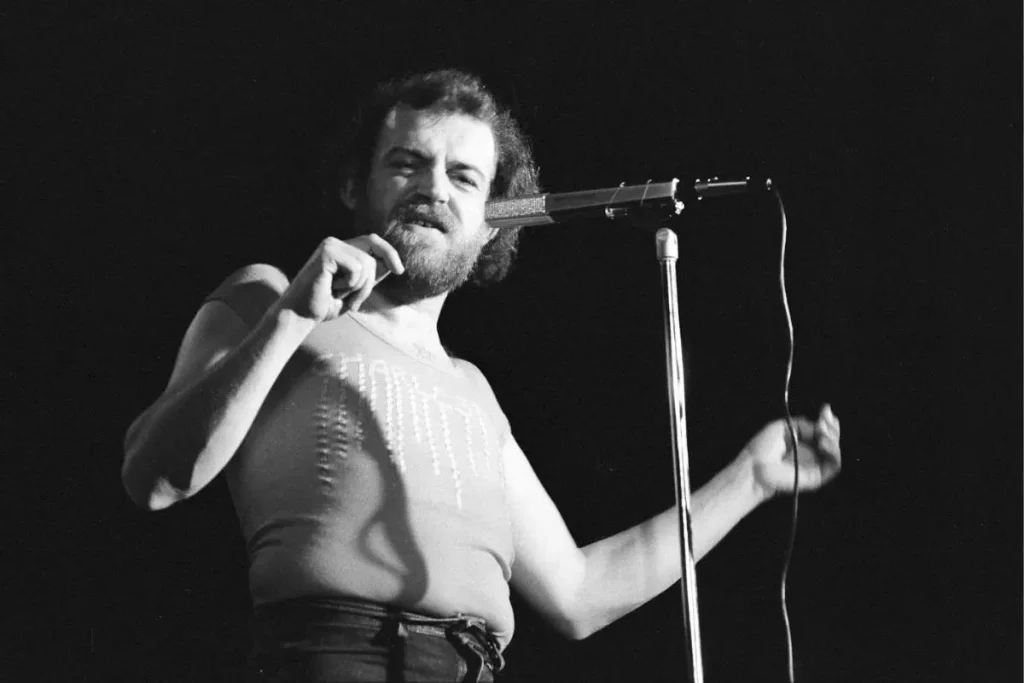
Joe Cocker’s story is the kind rock music loves to pretend it still makes – a working-class kid from Sheffield who sang like he’d lived three lifetimes, then dragged pristine pop songs into the mud and made them shine. Born 20 May 1944 and gone on 22 December 2014, Cocker didn’t win hearts by being neat, fashionable, or technically “correct.” He won by sounding real.
He was also a chronic restarter: bands formed, dissolved, rebuilt, renamed. If that sounds flaky, consider the alternative: many singers find a lane early and spend decades circling the same safe block. Cocker kept tearing up the map until he found a voice and a presentation strong enough to survive the world’s biggest stages.
Influences: why Cocker sounded like a bar fight and a prayer
Cocker’s early heroes sat closer to rhythm and blues and skiffle than to the polite end of British pop. He absorbed the emotional directness of Ray Charles, the informal punch of Lonnie Donegan’s skiffle boom, and the narrative swagger of early rock and roll.
Part of the fascination is that he wasn’t trying to be a smooth crooner. He sang like someone trying to win an argument with the universe – gritty timbre, hard consonants, sudden leaps, and a phrasing style that made melodies feel like conversations.
“He was a lovely northern lad who I loved a lot and, like many people, I loved his singing… it was just mind-blowing, totally turned the song into a soul anthem and I was forever grateful to him for doing that.” – Paul McCartney
McCartney’s tribute is a reminder that Cocker’s greatest trick was not simply “covering” songs. It was re-authoring them emotionally, in a way the original writers could recognize as truthful and powerful – something widely noted in career overviews of his interpretive style.
From a 12-year-old stage kid to a working gas fitter
Cocker started performing young, reportedly debuting around age 12, which is early enough to learn a brutal lesson: audiences do not care how old you are, only whether you move them. Like many British musicians of his era, he also had to keep a day job. The practical grind mattered, because it made his later stage persona feel less like a costume and more like the grown-up version of a working man who refused to stay quiet.
It is tempting to romanticize the “tradesman turned star” arc, but it also explains the urgency in his delivery. Cocker sang as if music was not just a dream – it was the exit.
Vance Arnold and the Avengers: a name that reveals the hustle
In 1961 he formed Vance Arnold and the Avengers, a pub-gigging unit with a name built for attention. “Vance Arnold” came from a pop-cultural mashup: Elvis Presley’s Jailhouse Rock
character plus country star Eddy Arnold, a wink that also functioned as branding.
The setlist leaned heavily on covers, including Chuck Berry and Ray Charles numbers. That mattered: Cocker’s apprenticeship was learning how to sell a song that already had a history, then making it feel immediate again.
The Decca single that didn’t explode (and why that’s useful)
Cocker’s 1964 Decca release – a cover of the Beatles’ “I’ll Cry Instead” – did not become his breakthrough. That kind of early flop can either soften an artist into compromise or sharpen them into something stranger and stronger. In Cocker’s case, it fed restlessness: more lineups, more bands, and a growing sense that he needed an identity bigger than “good singer in a good local group.”
Joe Cocker’s Blues Band: chasing originality through constant change
After dissolving earlier setups, Cocker formed Joe Cocker’s Blues Band, one more turn in the cycle. Seen cynically, the constant re-forming looks unstable. Seen generously, it is the behavior of an artist refusing to settle for a version of himself that felt secondhand.
This is an underrated part of his legacy: before the fame, Cocker was already doing the hardest work – figuring out what kind of intensity he could deliver consistently, night after night, without faking it.
1968: “With a Little Help from My Friends” as a hostile takeover
In 1968, Joe Cocker finally hit the commercial nerve with “With a Little Help from My Friends.” The Beatles’ original is genial and slightly mischievous. Cocker’s version is different – slower, heavier, and built like a sermon that’s about to turn into a riot.
One reason the performance still lands is structural: the arrangement leaves room for Cocker to stretch phrases and create tension, then slam into the chorus with full-body conviction. The result is not “better” than the Beatles – it is a different emotional machine entirely.
Song histories and credits for Cocker’s hit recording are widely documented, reflecting how the track quickly became one of the defining cover versions in rock.
How to hear the transformation (a quick listening checklist)
- Tempo and weight: slower pace, bigger gravity, more space between lines.
- Vocal grain: rasp used as a feature, not a flaw, especially on sustained notes.
- Dynamics: quiet-to-loud arcs feel physical, like a body leaning into the mic.
- Interpretation: he sings friendship like a survival pact, not a cute idea.
Woodstock: the moment his whole aesthetic made sense
Woodstock is where Joe Cocker’s public image and his musical approach locked together: messy, soulful, explosive, unpretending. Festival mythology can be overcooked, but it is fair to say his appearance at Woodstock helped cement him as an international force rather than a UK curiosity.
If you want to understand why Cocker mattered, watch a performance rather than reading a review. The body language, the involuntary-looking gestures, the way he “conducts” his own voice – it all communicates that he’s not acting out emotion. He’s trying to contain it.

Touring, burnout, and the cost of being “all-in”
After his breakthrough, Cocker toured aggressively for years. The industry loves to reward an artist’s first big success by exhausting them, and Cocker’s career shows how relentless touring can become both a blessing and a slow-motion threat.
On the positive side, the road hardened his bandleading and stagecraft. On the negative side, it can push a singer toward survival behaviors that are not sustainable. It is one reason his story often carries a cautionary edge: intensity sells, but it also takes interest.
Edgy claim: Joe Cocker didn’t “cover” songs – he exposed them
Here’s the provocative take: Joe Cocker is one of the few major rock voices who made covering other artists feel more honest than writing your own material. Not because songwriting is overrated, but because his gift was emotional translation. He found the dramatic truth inside a tune and made it audible.
That approach also explains why his versions can make the originals feel suddenly polite. When Cocker got hold of a well-known song, he didn’t polish it. He interrogated it. And if the lyric couldn’t survive the interrogation, he moved on.
Why his “soul-rock” approach still matters to singers
| Lesson | What Cocker did | Try this at home |
|---|---|---|
| Make phrasing personal | Stretched lines like speech, not metronome duty | Speak the lyric first, then sing it with the same intent |
| Use rasp with purpose | Texture became emotional punctuation | Back off volume, keep support, let grit be occasional not constant |
| Own the arrangement | Turned pop structure into a slow-burn crescendo | Experiment with tempo and key until the lyric feels believable |
Later career highlights: awards, enduring songs, and public memory
Cocker remained a durable touring and recording artist for decades, with a catalog that goes far beyond the Beatles cover. His career is also marked by high-profile collaborations and major recognitions, including Grammy recognition associated with his recorded work.
For listeners who only know the headline tracks, it is worth exploring his broader discography era-by-era. Even when production trends changed, the central appeal stayed consistent: a voice that sounded lived-in, and interpretations that refused to be background music.
Death and legacy: why he still feels dangerous in a safe era
Joe Cocker died in 2014 at age 70, widely reported by major outlets and framed as the passing of a singularly gritty British voice that bridged rock and soul.
The more interesting legacy point is this: Cocker’s best recordings are not “classic rock wallpaper.” They are reminders that mainstream music once made room for singers who were rough around the edges, who looked unglamorous, and who sounded like a human being fighting their way through a song.
And in an age where so much music is tuned, aligned, and smoothed into sameness, Joe Cocker remains the argument for letting a voice be strange, imperfect, and unforgettable.
Quick starter playlist: five tracks that show the range
- “With a Little Help from My Friends” – the defining transformation
- “Feelin’ Alright” – swagger and grit (a signature Cocker vehicle)
- “The Letter” – compression, urgency, and bite
- “You Are So Beautiful” – restraint, intimacy, and space
- “Up Where We Belong” (with Jennifer Warnes) – big pop drama with a weathered vocal center
Conclusion: Joe Cocker’s journey from Sheffield pub stages and day jobs to global acclaim is more than a biography. It is proof that interpretation can be an art as daring as songwriting, and that a singer’s “flaws” can become the very things that make music feel alive.