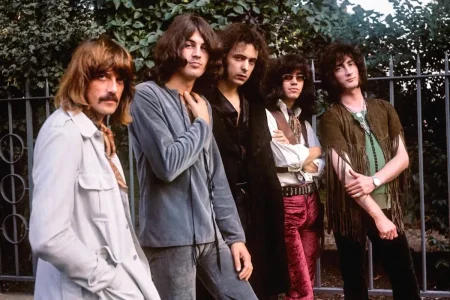
Some rock songs are born from heartbreak, politics, or a riff that shows up in a dream. “Smoke on the Water” came from something more blunt: a building on fire, a lake full of reflected flames, and a band suddenly homeless with a mobile studio parked outside.
The legend is famously simple: in 1971, the Montreux Casino in Switzerland burned down after an audience member fired a flare gun during a Frank Zappa and the Mothers of Invention show. Deep Purple were due to start recording Machine Head there, but instead of packing up and going home, they wrote one of the most recognizable guitar riffs in history.
“Smoke on the water, fire in the sky.” – Ian Gillan, lyrics to “Smoke on the Water” (Deep Purple)
What actually happened at the Montreux Casino fire?
The casino was being used as a concert hall during the Montreux Jazz Festival season. On the night of 4 December 1971, Frank Zappa and the Mothers of Invention were onstage when someone in the crowd discharged a flare gun that ignited the venue, triggering a fast-moving blaze.
Whatever your tolerance for rock chaos, a flare gun indoors is the purest form of “main character energy” imaginable. It is also an obvious recipe for catastrophe in a packed hall where heat, smoke, and panic spread faster than security can react.
One detail that matters: despite the scale of the fire, the evacuation was successful and the story is typically remembered as a disaster without mass casualties. The “everyone got out” part is easy to lose under the riff mythology, but it is the moral center of the whole episode.
“Funky Claude was running in and out” is not a metaphor
Deep Purple’s lyric reads like a news report, because it basically is one. “Funky Claude” refers to Claude Nobs, founder of the Montreux Jazz Festival, who helped people escape as smoke filled the building.
That line is one reason the song still hits decades later. It refuses the usual rock habit of turning everything into vague symbolism. Instead it names names, places the band in the crowd, and makes the disaster feel close enough to smell.
Why Deep Purple were in Montreux in the first place
Deep Purple traveled to Montreux with the Rolling Stones’ Mobile Studio because they planned to record Machine Head at the casino, using the venue as a makeshift studio space. When the casino burned, their booking evaporated overnight and their whole plan collapsed.
This is where the story gets edgy in a very unglamorous way: major albums are often held together with logistics, not inspiration. A band can have riffs, songs, and talent, but if the room is gone and the tape machine has nowhere to roll, you are just unemployed musicians with expensive gear.
From catastrophe to concept: how “Smoke on the Water” was written
Rather than treat the fire as a sign from the universe to quit, Deep Purple turned it into a narrative. The lyrics track the night in Montreux: arriving to record, watching the blaze across Lake Geneva, and scrambling for an alternate location.
The event is so directly documented in the song that it has become the default source for many listeners. And yes, the title is literal: smoke drifted out over Lake Geneva, producing the now-iconic image of “smoke on the water.”
There is also a crafty artistic move here: the band transformed an external crisis into a self-mythologizing origin story. The hook isn’t “we suffered.” The hook is “we were there,” which is why it feels cinematic rather than confessional.
The hard part people skip: recording Machine Head after the casino burned
After losing the casino, the band ended up recording at alternate sites in Montreux, including using the mobile studio setup under less-than-ideal conditions. The legend of rock triumph often skips the reality: cold hallways, improvised soundproofing, noise complaints, and the pressure of a schedule that does not care about your bad luck.
If you want the practical takeaway, it is this: constraints do not just “spark creativity.” They force decisions. Deep Purple didn’t have the luxury of endless options, so they committed to sounds, takes, and performances that feel urgent because they were urgent.
Why that riff is so unavoidable (and why it still works)
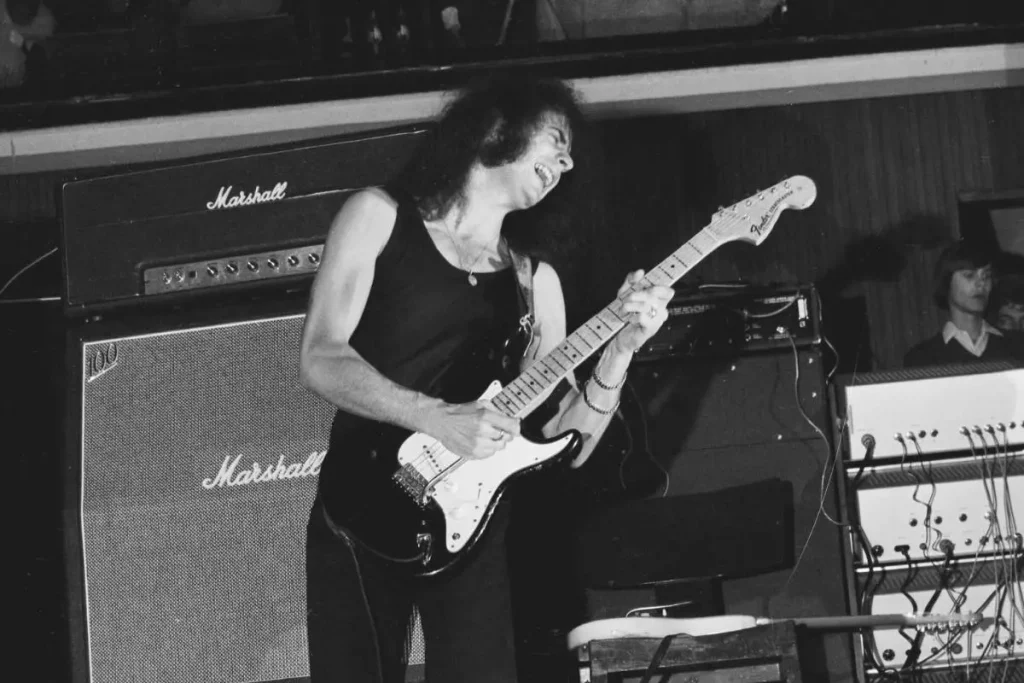
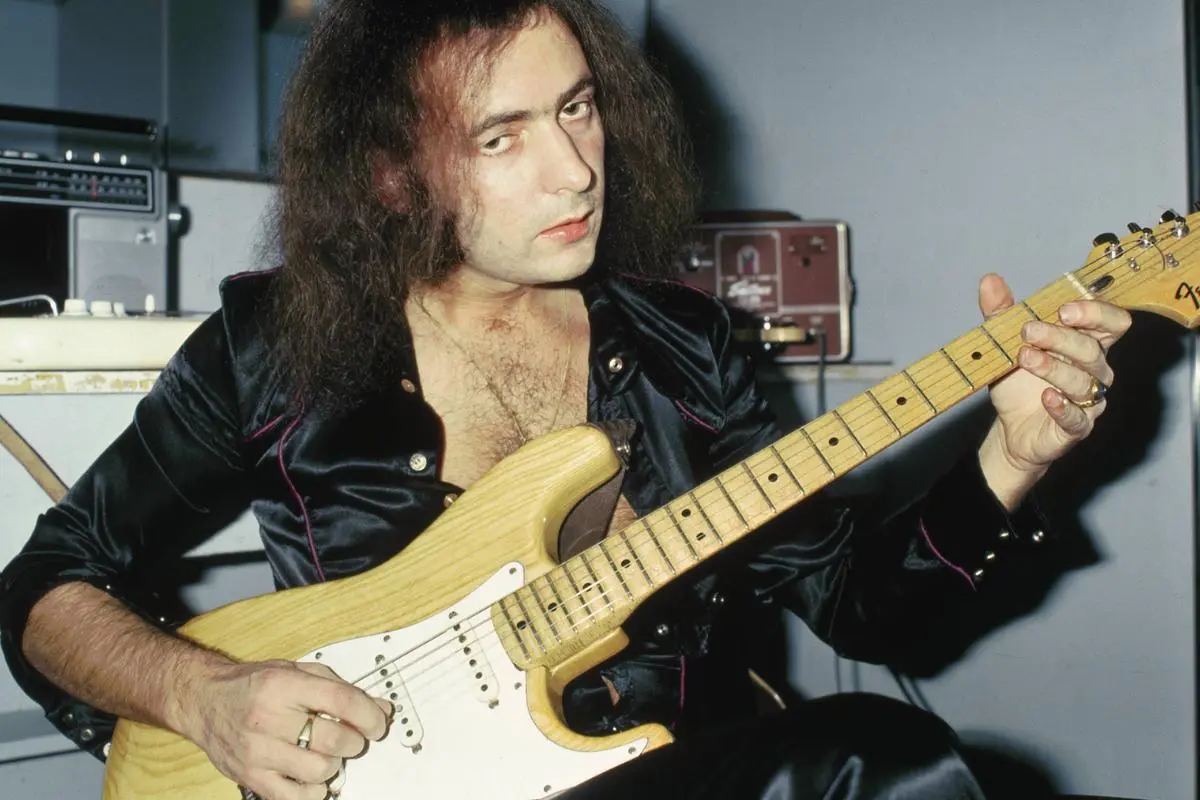
Let’s talk about the part every guitarist learns, sometimes against their will. Ritchie Blackmore’s riff is essentially a four-note shape moved in parallel, with a rhythm that is easy for beginners and satisfying for pros. It is minimal, but it is not dumb. It sits in a sweet spot where the contour is memorable, yet the tone and timing still matter.
Rolling Stone’s canonization of “Smoke on the Water” reflects its status not just as a hit but as a piece of shared musical vocabulary.
And the “forbidden riff” jokes exist for a reason: it is one of the few guitar lines that is instantly identifiable even when played badly. Most riffs collapse when you take away tone and swagger. This one survives on shape alone, like a logo.
Quick breakdown: what makes the riff stick?
- Singable intervals – it feels like a chant, not an exercise.
- Space – the rests are part of the hook.
- Heavy without speed – it sounds massive at a walking pace.
- Band arrangement – guitar, bass, and organ lock into the same idea, reinforcing the motif.
Separating myth from reality: common misconceptions
Rock history loves a clean story, but the clean story often gets sanded down. Here are the big myths that float around this one, and what is safer to say.
| Myth | Better reality |
|---|---|
| Deep Purple were recording inside the casino when it burned. | They were scheduled to record there; the fire happened the night before their planned session setup. |
| The song was written “years later” as nostalgia. | It was a near-immediate reaction to the event and the chaos around the derailed recording plan. |
| It’s just a riff song with throwaway lyrics. | The lyrics are unusually specific, naming people and the place, which is part of its lasting power. |
Frank Zappa’s role: accidental catalyst, not punchline
It is tempting to treat the Zappa part as trivia, but it matters. The fire happened during his show, and for years the incident has followed the event like a shadow. Zappa, who spent his career mocking irresponsibility and laziness, ended up unwillingly cast as the backdrop for one of hard rock’s biggest moments.
The story is not “Zappa caused it.” The story is that live music, packed venues, and one reckless second can rewrite multiple careers at once. Deep Purple got a classic. Zappa’s show became the night rock literally burned.
Montreux: the location that became part of the song’s instrument panel
Montreux isn’t just scenery here. The town’s relationship to live recording and performance is deep, and the Montreux Jazz Festival has long documented performances and music history at a serious archival level.
That makes “Smoke on the Water” feel like a postcard from a real place, not a generic rock setting. When Gillan sings “We all came out to Montreux,” the lyric lands because Montreux actually is the kind of place musicians travel to like pilgrims.
Why this story still matters to musicians (and not just classic rock fans)
There is a reason “Smoke on the Water” gets taught in lessons, cited in documentaries, and argued about in forums. It captures a rare combo: a globally famous riff plus a documented real-world origin that is easy to retell.
For working musicians, it is also a brutally practical parable. Plans fail. Venues disappear. Gear breaks. The bands that last are not the ones who never get hit. They are the ones who can turn disruption into output without romanticizing the damage.
Actionable takeaways for players and producers
- Document your chaos. Keep notes, voice memos, photos. Today’s disaster can become tomorrow’s lyric sheet.
- Design for mobility. Deep Purple literally had a mobile studio plan. Your version might be a laptop rig and a grab-and-go mic kit.
- Write with concrete details. Place names and real actions can make a song feel cinematic fast.
- Commit under constraints. Deadlines are painful, but they often deliver character.
Conclusion: the greatest “happy accident” in hard rock, with teeth
The Montreux Casino fire is a reminder that rock’s most famous moments are sometimes born from reckless stupidity rather than noble suffering. A flare gun turned a venue into an inferno, ruined a recording plan, and could have ended far worse.
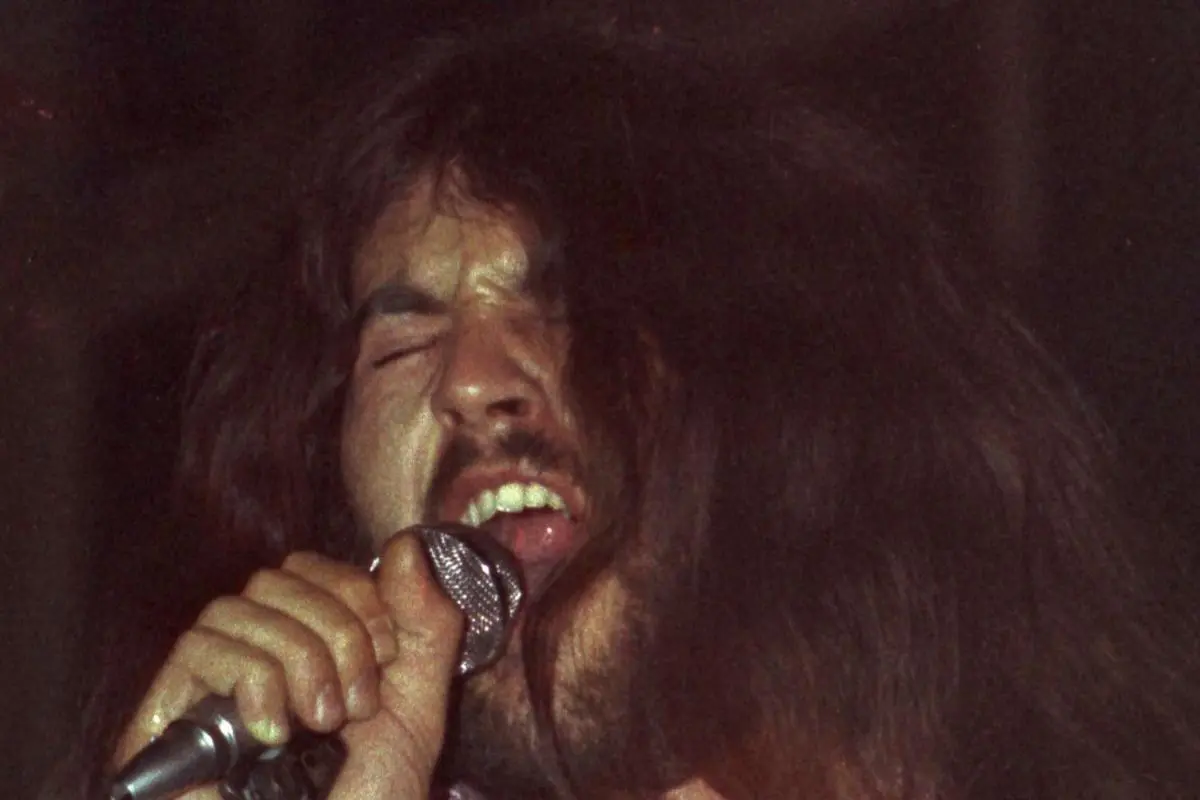
Instead, Deep Purple captured the scene in a riff and a report, and “Smoke on the Water” became the rare song that sounds like history while also shaping it.