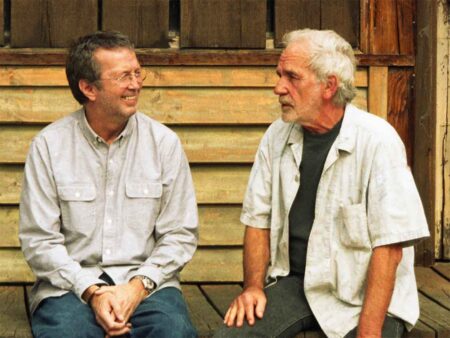
JJ Cale, the blues he “couldn’t” play, and why that matters to you
J.J. Cale once shrugged, “We were just trying to play the blues and didn’t know how,” and later joked that his guitar style was “full of mistakes” from trying to imitate other players. That casual confession is one of the most honest statements about how real musical style is born.
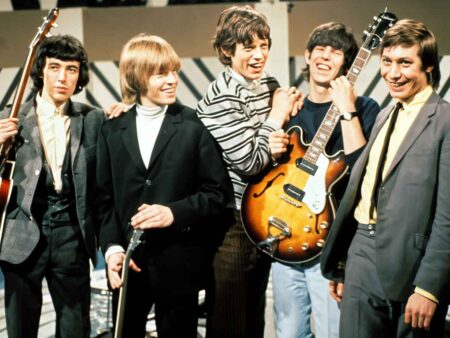
If you love the music of the 50s through the 90s, you already know this in your bones. The Rolling Stones, the Yardbirds, the Tulsa crowd around Cale and Leon Russell – none of them copied American blues correctly. They got it just wrong enough to create something new.
This article is about that sweet spot: the place where your failed attempts to sound like your heroes quietly turn into your voice.
When you do not really know how to play the blues
Cale grew up in Oklahoma, picking up guitar and sound engineering at the same time, hacking together a home studio while he was still living with his parents. His early idols were Clarence “Gatemouth” Brown, Chet Atkins, Les Paul, Chuck Berry and the usual run of blues and rockabilly records. He tried to copy them and missed. Over and over.
Out of those misses came a feel that became the so-called Tulsa sound – a lazy shuffle that mixed blues, country, rock and roll, rockabilly and a hint of swamp pop. Cale was not playing Chicago blues “properly.” He was a kid from oil country filtering Black blues records through honky-tonks, Western swing bands and Sunday-morning gospel.
If that sounds familiar, it should. It is exactly what the British bands were doing at the same time, half a world away.
The Brits got it wrong too: Stones, Yardbirds & misread Chicago
Early Rolling Stones sets were basically cover-band nights built out of Willie Dixon, Slim Harpo and Chuck Berry tunes. They went to Chess Records in Chicago like pilgrims, cutting tracks such as “2120 South Michigan Avenue” in the same rooms where Muddy Waters and Howlin’ Wolf had recorded. They wanted to be a straight Chicago blues band.
They failed. Thankfully.
The accents, the skiffle and music-hall baggage, the cheap British amps, the sheer volume – all of that warped the source material. “Little Red Rooster” might have started as a Howlin’ Wolf tune, but the Stones turned it into a chart-topping UK single and a prototype for British blues-rock. That is not “authentic” Chicago by any sane measure. It is something else entirely.
The Yardbirds were even more blatant. Their early repertoire was a roll call of Chicago standards: “Smokestack Lightning,” “Good Morning Little School Girl,” “I Wish You Would,” “Rollin’ and Tumblin’,” “I’m a Man,” and more, with Eric Clapton trying to channel his heroes bar by bar. Their live album Five Live Yardbirds is basically a night of American blues and R&B covers played by wired London kids in a Marquee club haze.
They were not copying the records perfectly. They were speeding them up, stretching solos, hammering a “rave up” double-time section until the wheels nearly came off. Out of that technical inaccuracy came psychedelic rock, early hard rock, and the launch pads for Led Zeppelin and beyond.
The point is cruel but simple: rock history is one long story of people trying to imitate Black American blues records and failing in interesting ways.

The Tulsa sound: cowboy blues by accident
Back in Oklahoma, the same thing was happening under different neon. Tulsa players were soaking up race records on the radio and learning directly from local Black bluesmen, but they were also steeped in country dances, Western swing and church music. When that crowd – Cale, Leon Russell, Roger Tillison, Elvin Bishop and others – plugged in, what came out was not Chicago, not Nashville, and not New Orleans. It was a laid-back hybrid with a shuffling pulse and plenty of space.
Oklahoma Music Trail describes Cale’s style as drawing on blues, rockabilly, country and jazz, with whispery vocals, bluesy lines and a “shuffling beat” that helped define the Tulsa sound. Houston Press calls it a “countrified blues” with minor chords and relaxed rhythms. That easy feel, the thing people now obsess over, started in someone’s mind as: “I am trying to sound like those records, but my hands do this instead.”
In other words, the Tulsa sound is not a theory. It is a bunch of Oklahomans getting the blues “wrong” in remarkably consistent ways.
JJ Cale and the art of the beautiful mistake
Cale was brutally honest about this. Asked how his distinctive guitar style developed, he said he could never quite get down what his heroes were playing. He would miss notes, hit the wrong chord, and slowly realized that the results sounded like him. So he kept allowing that to happen on purpose.
This was not lazy sloppiness. Listen to Naturally or Okie and you hear a perfectionist engineer using drum machines, layered vocals and careful mixes to make those “mistakes” sit just right in the groove. He even stacked his own voice multiple times because he thought he sang off key and wanted to smooth the pitch out. Biographer Johan Bakker describes how Cale’s “whispery vocals” and studio tinkering became part of his quiet mystique and sonic fingerprint.
The irony is gorgeous: the man obsessed enough to tinker with drum boxes and vocal layering also insisted his playing was built on mistakes. Neil Young rated him alongside Hendrix as one of the great electric players, and Eric Clapton wrote that Cale was “one of the most important artists in the history of rock.” Neither of those guys were applauding perfection. They were hearing a personality.
Cale’s low profile was part of the same philosophy. He let other artists make the money and noise on his songs – “After Midnight,” “Call Me the Breeze,” “Cocaine” – while he stayed off the radar and focused on the work. He was content to earn quietly from cover versions while avoiding the spotlight, a stance that further underlined his belief in feel over fame.

What Cale, the Stones and the Yardbirds are really telling you
If you play guitar or any instrument, there is a brutal lesson hiding in all this:
- If you manage to copy your heroes exactly, you disappear.
- If you cannot copy them exactly, you have a shot at sounding like yourself.
Most blues and classic rock players spend years trying to become high-end jukeboxes. They sweat over getting the exact Clapton vibrato, the exact B.B. King box, the exact Jimmy Page bends. Then they wonder why nobody cares. Why would anyone pay to hear a slightly worse version of a record they already own?
Here is the uncomfortable, slightly edgy claim: if you can play “Pride and Joy” or “Layla” note-perfect but you have never chased one of your own wrong notes down a rabbit hole, you are a technician, not an artist.
How to turn your own mistakes into a style
1. Record your failures, not just your finished takes
Pick a song you idolize. Try to play it as accurately as possible. Record the attempt live – no punching in, no fixes. Then listen back and do something most players never do: ignore what you got right.
- Where did your fingers slide to a different note than the record?
- Where did your timing rush or drag against the backing track?
- Where did you simplify a chord shape because the “proper” one felt awkward?
Take those moments and loop them. Build a little riff, a turnaround or an intro out of the accidental move. Treat your mistake like Cale treated a mis-placed chord: as raw material, not trash. That is exactly how his supposedly “full of mistakes” style emerged.
2. Turn limitations into rules
Cale knew his voice was limited, so he wrote short, unfussy melodies and doubled his vocals to tighten the pitch. He built an entire catalog around low-key singing and narrow-range lines instead of fighting his throat.
Do the same with your weakest spot:
- Short fingers? Lean into double-stops, partial chords and big bends rather than six-note jazz grips.
- Slow right hand? Play sparser, percussive parts and let the drummer do the busy work.
- Can not sing high? Stay in a talky, conversational range. Cale, Knopfler and Lou Reed built whole careers there.
Once you treat a limitation as a design rule, your “mistakes” stop being random and start becoming a signature.
3. Practice wrong on purpose
This one separates the adults from the perfectionists.
- Take a 12-bar blues you know well.
- On purpose, move one chord a fret up or down and see what happens.
- Or keep the chords, but shift one phrase earlier or later in the bar until it almost trips over the beat.
Yes, some of it will sound terrible. That is the point. Somewhere in that mess is a new turnaround, a new syncopation, a new voicing that does not belong to the 10,000 other guitarists using the same YouTube licks.
The trick is to keep anything that makes you go “wait, what was that?” and then polish it until it feels as natural as the cliché you stole it from.

Sloppy vs soulful: knowing the line
None of this is a free pass for bad timing, dead tone or lazy practice. Cale’s records sound relaxed, but they are meticulous under the hood. The Stones and Yardbirds might have mangled Chicago arrangements, but they played with ferocious intent.
| Soulful “mistake” | Lazy sloppiness |
|---|---|
| Hitting an odd note, then repeating it so it becomes a hook. | Hitting odd notes because you never learned the changes. |
| Pushing or pulling the beat on purpose to create tension. | Constantly drifting off the click because you never practiced with one. |
| Simplifying a lick to fit your hands and tone. | Dodging hard passages instead of finding your own solution. |
| Leaving space because the song breathes better. | Leaving gaps because you ran out of ideas. |
The edgy truth: most “authentic” bar-band blues guitar is not soulful imperfection. It is under-rehearsed playing hiding behind distortion and nostalgia. Cale’s records and the early Stones sides, and the Yardbirds’ rave-ups – they might be loose, but nothing about them is careless.
Conclusion: your style lives where your imitation breaks
Look at the pattern:
- British kids obsessing over Chess and Vee-Jay singles and accidentally inventing a whole branch of rock.
- Oklahoma players fusing race records with country roadhouses and church music until critics had to give it a new name: the Tulsa sound.
- J.J. Cale quietly turning missed notes and a limited voice into one of the most influential fingerprints in modern guitar, so important that Eric Clapton literally rebuilt his career around it.
None of them started out trying to be “original.” They started as fans who could not quite pull off what they loved. The difference is that instead of hiding those gaps, they leaned into them.
If you let yourself play the blues “wrong” – your way – long enough, the same thing will happen. One day you will miss a note, and instead of apologizing, you will hit it again. That is the moment your style arrives.