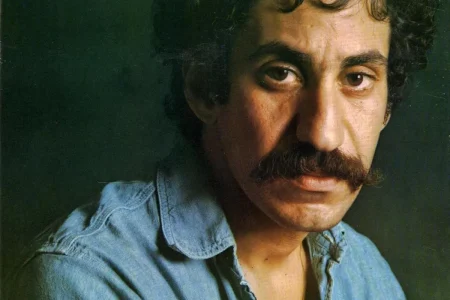
On September 10, 1988, Phil Collins sat at No.1 on the UK singles chart with “A Groovy Kind of Love,” a song that sounds like it was built for slow dancing in socks on a living-room carpet. But the track’s biggest twist is not the 80s chart-topper moment – it’s that the tune was already a classic, first a 1966 hit for The Mindbenders, and even earlier a lightning-in-a-bottle collaboration between two very young writers: Carole Bayer Sager and Toni Wine. In other words, the song is pop’s version of a hand-me-down that somehow looks better on every new owner.
“When I’m feeling blue, all I have to do is take a look at you…”
The Mindbenders, “A Groovy Kind of Love” (1966) sheet music
The 1966 original: British pop, American songcraft, and a ridiculously catchy hook
“A Groovy Kind of Love” is often remembered as a 60s British pop record, but its DNA is pure Brill Building-era American songwriting: direct language, a repeating title hook, and a chord progression that does most of the emotional heavy lifting. The Mindbenders’ version, produced in the mid-60s pop-singles ecosystem, landed as a major hit in the UK and abroad, and it still reads like a time capsule of romantic optimism.
The track’s chart history is one reason it keeps resurfacing in music trivia: The Mindbenders took it to No.2 on the UK singles chart in 1966. That “nearly No.1” status also helped it live on as a recognizable, evergreen oldie – close enough to be iconic, but not so overplayed that future generations avoid it on sight.
What makes it work musically (even if you do not know theory)
At heart, the song is a lesson in restraint. The melody moves in smooth, singable steps, and the lyric sells a feeling without trying to sound like poetry homework. You can hum it after one listen, which is basically the highest compliment you can pay a pop single.
One fun detail for musicians and non-musicians alike: the tune is built on a well-worn classical progression, the Pachelbel “Canon” sequence, which is why it feels instantly familiar even when you are hearing it for the first time via songwriter Toni Wine’s career overview. If that sounds like cheating, welcome to pop music – repetition is not laziness; it is strategy.
The writers: a 22-year-old teacher and a 17-year-old student (yes, really)
The origin story is the kind the music industry loves because it sounds slightly implausible: Carole Bayer Sager wrote the song when she was 22 and working as a schoolteacher, alongside Toni Wine, who was 17 and still in high school. Their ages are not just trivia bait; they explain the lyric’s tone. It is young love written by people close enough to teenage emotion to describe it without irony.
Industry databases back up the authorship: the song’s published credits consistently list Carole Bayer Sager and Toni Wine as the writers. That matters because cover versions and soundtrack revivals can blur credit over time, and this is a song that has been reintroduced to the public more than once.
If you know Bayer Sager primarily from her later, big-league pop successes, “Groovy” can feel almost too simple. But that is the point: it is not trying to impress you with cleverness. It is trying to get under your skin for the rest of your life.
And Toni Wine? She is not a footnote. Wine has a long career as a singer-songwriter and industry professional, and her official biography positions her as a behind-the-scenes force who helped shape pop and adult contemporary songwriting across decades. “A Groovy Kind of Love” is early evidence of that craft.

Phil Collins and Buster: when a soundtrack cut becomes the single everyone remembers
By the late 80s, Phil Collins was already a pop institution, capable of turning a moody drum pattern into a global event. So when he recorded “A Groovy Kind of Love” for the 1988 film Buster, it could have been a pleasant soundtrack deep cut. Instead, it became a full-scale hit, topping the UK chart and giving Collins a soft-focus moment amid an era of big hair and bigger snare drums.
The Official Charts Company records Collins’ “A Groovy Kind of Love” as a UK No.1 single, and its chart page functions like a formal receipt for that September 1988 peak. If you lived through the period, you remember it as unavoidable. If you did not, it is a reminder that ballads could still dominate a singles market driven by high-energy pop.
The film itself, a crime drama inspired by the Great Train Robbery era, remains part of the song’s cultural baggage. The film’s listing still anchors Buster as a distinct title in Collins’ on-screen timeline, tying the single to a specific piece of late-80s cinema history. The soundtrack association helped the cover feel like more than nostalgia – it had a narrative function and a marketing machine behind it.
The Collins arrangement: less 60s bounce, more late-night confession
The Mindbenders’ take has that bright 60s snap, like a band playing for a dance floor. Collins’ version slows the pulse and leans into tenderness, with a piano-led approach that makes the lyric feel private, almost like you are overhearing it. It is not a reinvention so much as a relighting: same sculpture, different shadows.
Even the lyric presentation shifts meaning. Read side-by-side, both versions are essentially the same words, but the delivery changes the emotional temperature. Comparing to the Mindbenders’ lyric, you can see how phrasing and pacing turn a pop single into an adult contemporary standard.
Chart afterlife and awards orbit: the song as a late-80s institution
Collins’ “Groovy” did not just top charts; it joined that select category of songs that become “wedding acceptable” across generations. That kind of cultural placement is hard to measure, but it often shows up indirectly: in awards listings, compilation albums, and the way the song remains licensed and performed.
At the 31st Annual Grammy Awards, Collins’ Buster soundtrack work appears in the awards ecosystem, reflecting how widely the project landed within the industry conversation at the time. Even when a specific song is not “the winner,” being in that orbit signals real mainstream impact.
Legacy: why this song keeps coming back (and why some people roll their eyes)
Here is the slightly edgy claim: “A Groovy Kind of Love” survives because it is almost aggressively non-complicated. In a pop landscape that often rewards drama, it offers comfort. That can make it feel corny to listeners who want lyrical bite – but corny is just sincerity without a disguise.
The song also benefits from being cover-friendly. It is harmonically familiar, melodically approachable, and lyrically universal. That is why it shows up in sheet music catalogs and beginner repertoires: it is the rare pop song that you can play on piano early in your learning curve and still feel like you are performing a real “song,” not an exercise.

A quick legacy checklist
- Two life cycles as hits: 1966 (Mindbenders) and 1988 (Collins), each aligned with its era’s production style.
- Songwriting myth power: a teacher and a teen write a standard – and the credits hold up in official repertories.
- Enduring chord comfort: the Pachelbel-based progression makes it feel like you have always known it.
- Soundtrack turbo-boost: Buster gave it a new narrative frame and a fresh audience.
For musicians: how to get the “groovy” feel without copying either version
If you want to perform it today, the trap is imitation. The Mindbenders’ version can sound like costume, and the Collins version can drift into syrup. The sweet spot is honoring the song’s simplicity while modernizing the texture.
Practical arrangement tips
- Keep the tempo relaxed, not sleepy: let the lyric breathe but avoid dragging.
- Use piano or clean guitar as the anchor: the song likes clear harmony more than clever tones.
- Underplay the drums: brushes, rim clicks, or soft electronic percussion work better than big backbeats.
- Let the hook be the chorus: do not over-adlib; the title line is the payoff.
Conclusion: a pop standard hiding in plain sight
“A Groovy Kind of Love” is not a song that wins by being the smartest person in the room. It wins by being the most dependable feeling in the room: affection, uncomplicated and repeatable. From The Mindbenders’ 1966 near-miss No.1 to Phil Collins’ 1988 chart-topper, its legacy is proof that pop music does not need to be revolutionary to be immortal.
Sometimes it just needs the right four chords, the right two writers, and one perfectly timed second life.