In August 1980, America’s biggest rock guitarist met America’s sweetheart backstage at a concert in Shreveport, Louisiana. Eight months later they were married in front of a church full of photographers and a country that couldn’t quite believe the pairing. Eddie Van Halen and Valerie Bertinelli’s wedding was the celebrity event of spring 1981 — and the beginning of a marriage that would hold together, in one form or another, far longer and far more painfully than the fairy tale suggested.
The unlikeliest couple in America
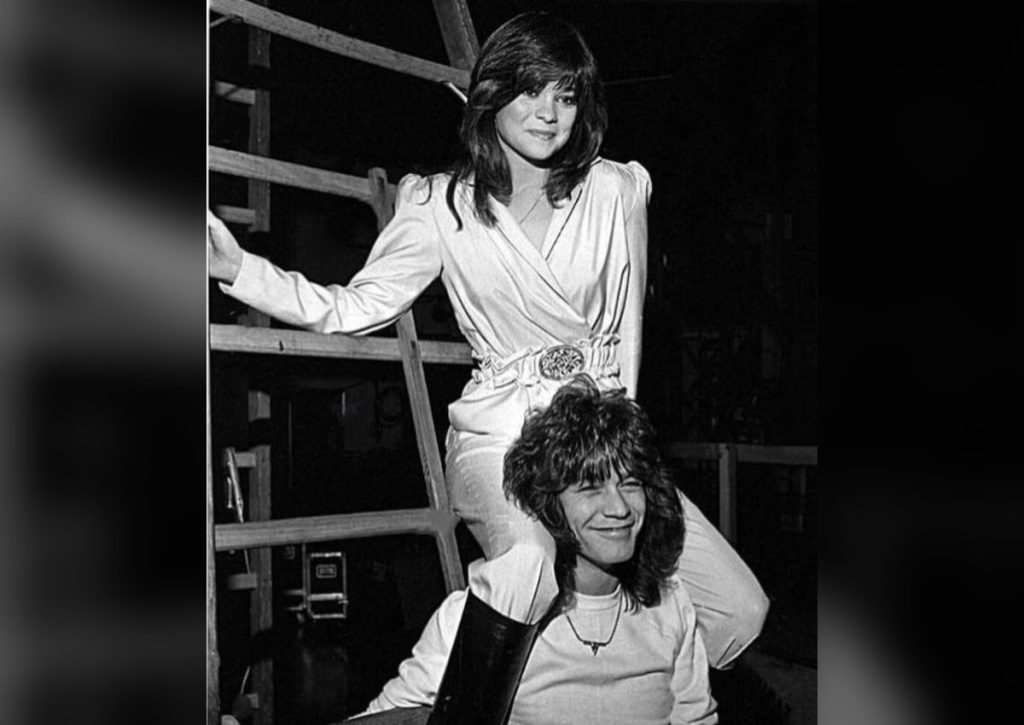
On paper the match made no sense, which is why the press adored it. Bertinelli was 20, the wholesome star of the sitcom One Day at a Time, network television’s idea of the girl next door. Van Halen was the grinning wild man whose band was in the process of conquering arena rock. They met on August 22, 1980, backstage at Van Halen’s show in Shreveport, where Valerie — a genuine fan — had angled for an introduction while visiting family in Louisiana.
By her own telling, the connection was instant and disorienting: beneath the rock-god exterior she found a shy, sweet, almost courtly man who phoned constantly and fell hard. The courtship ran at tour-bus speed, and on April 11, 1981, they married at St. Paul’s Catholic Church in Westwood, Los Angeles — eight months, almost to the week, after the backstage handshake.
The truth about the wedding day
For decades the wedding photos told the official story: rock royalty marries TV royalty, everybody smiles. Bertinelli eventually told the fuller one. The day itself was shadowed by the thing that would shadow the whole marriage — Eddie’s drinking, already heavy enough that he spent part of his own wedding sick from it, with his young bride comforting him. She has written about walking down the aisle knowing, at some level, what she was marrying alongside the man she loved.
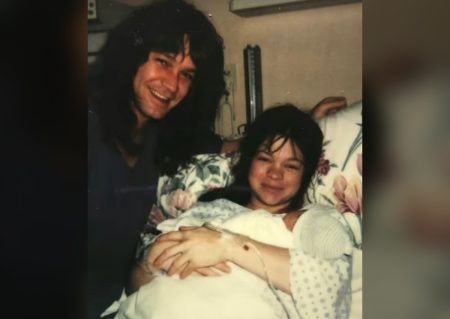
That honesty, arriving years later in her memoirs and interviews, reframed the couple without cheapening them. This wasn’t a naive starlet blindsided by rock excess; it was two very young people — she 20, he 26 — genuinely in love, wildly famous, and carrying addictions and pressures neither had the tools to manage. The marriage rode that reality for twenty years: separations and reconciliations, the 1991 arrival of their son Wolfgang — for whom Eddie named the instrumental “316” — Eddie’s stints at sobriety, relapses, her own confessed lapses, and through all of it a stubborn, documented devotion.
The eighties were the marriage’s high-wire act, performed in public. Bertinelli was carrying a hit sitcom while her husband’s band became the biggest American rock act alive; the tabloids ran on their contrasts, and both were barely out of their teens’ shadow. The homes tell the story of accommodation: Eddie built his 5150 studio on their property in 1983, meaning the empire’s biggest records were literally cut in the couple’s back yard — “Jump” and the 1984 era assembled a shout away from the kitchen. She lived over the shop; he never really left it. That geometry — devotion and workaholism under one roof — describes half of what went right and most of what went wrong.
The marriage that outlived the divorce
They separated in 2001 and the divorce was finalised in 2007. And then came the part that makes this a love story worth telling rather than a cautionary tale: nothing important actually ended. They co-parented closely. She defended him publicly. When cancer came for Eddie, Valerie was there through the treatments and, by her account, at his side near the end in 2020 — the two of them exchanging the plain declarations of love that the divorce paperwork had never revoked.
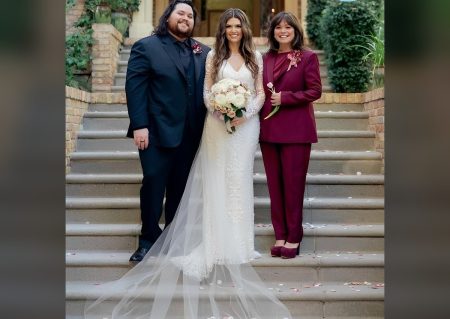
The final proof arrived at Wolfgang’s 2023 wedding, where the bride wore a necklace Eddie had once given Valerie, lent for the day, and Wolfgang walked down the aisle with his mother to his father’s song. Whatever the courts had dissolved, the family Eddie and Valerie built in 1981 was demonstrably intact — reshaped by grief, but never actually broken.
Bertinelli’s honesty about the later years deserves its own note. Her memoirs and interviews have detailed the guilt, the enabling, the failed ultimatums and the moments of grace with a specificity celebrity books rarely risk — not to indict Eddie, whom she defended fiercely to the end, but to describe addiction’s actual arithmetic inside a loving home. In doing so she gave a generation of readers married to their own version of the story something almost no rock memoir offers: company.
What 1981 started
It’s tempting to file the Shreveport meeting and the Westwood wedding under rock-star excess: too young, too fast, too famous. The record argues otherwise. That eight-month whirlwind produced a forty-year bond, one of rock’s most beloved father-son stories, and — in Bertinelli’s late-career writing about loving an addict — some of the most honest testimony any celebrity marriage has produced.
They married in a hurry and understood each other slowly, over decades, through everything. As the fairy tales go, it was backwards. As real marriages go, it might have been the truest thing either of them ever did.