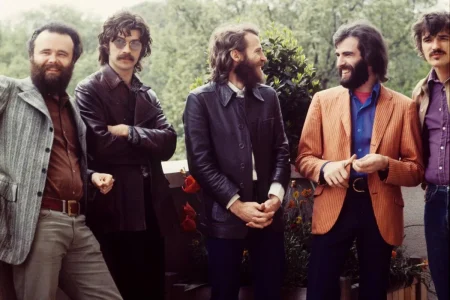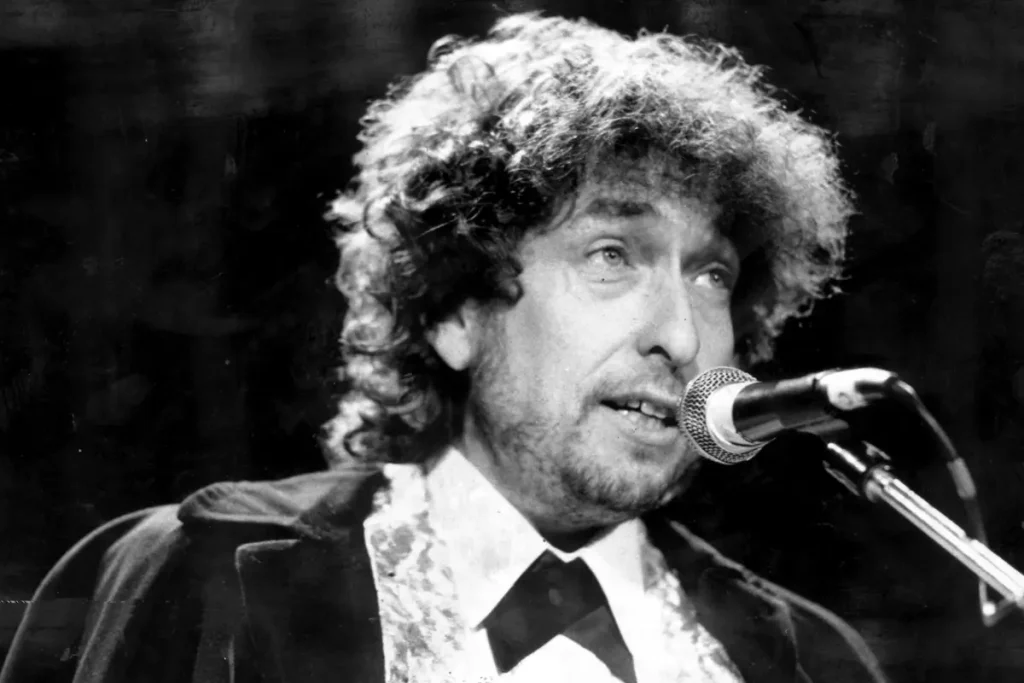
Bob Dylan didn’t just praise The Band in Kurt Loder’s 1987 interview. He did something more interesting: he re-ranked their entire legend.
In Dylan’s memory, the most famous version of The Band (the one canonized by albums like Music from Big Pink and songs like “The Weight”) was almost a different organism from the hard-working bar band that backed him as Levon and the Hawks. Dylan’s verdict was blunt: when they went from his backing group to The Band, it was “night and day.”
“When they were playin’ behind me, they weren’t the Band; they were called Levon and the Hawks… What came out on record as the Band – it was like night and day.” Bob Dylan, interview by Kurt Loder
The quote that flips the Band myth on its head
Dylan’s spiciest line isn’t about guitar tone or stage chemistry. It’s the part that hits Band fans right in the prestige albums:
“They used to do Motown songs, and that, to me, is when I think of them as being at their best… When I think of them, I think of them singin’ somethin’ like ‘Baby Don’t You Do It,’ covering Marvin Gaye…” Bob Dylan, interview by Kurt Loder
This is provocative because it attacks the default hierarchy of rock history: originals over covers, albums over club sets, “serious” Americana over dance-floor soul. Dylan is basically saying The Band’s peak wasn’t the moment they became icons. It was when they were still a killer working band.
Levon and the Hawks: the version of the Band built for impact
Before the sepia myth, there was a road band: Levon Helm, Robbie Robertson, Rick Danko, Richard Manuel, and Garth Hudson, first powering Ronnie Hawkins and then Dylan. Their job was not to be charming. It was to survive loud rooms, hostile crowds, and the brutal pacing of touring.
That early identity mattered. The Hawks learned how to make a song land instantly: strong backbeat, clear form, dramatic dynamics, and a singer-first mindset.
Robbie Robertson later framed those years as foundational to how the group learned arrangement and stagecraft, a theme that runs through his memoir Testimony.
“Night and day”: what changed when they became The Band?
Dylan’s “night and day” line is about more than songwriting. It’s about sonics and personality.
As Levon and the Hawks, they were a reactive machine: built to follow a frontman and keep the floor moving. As The Band, they became a self-contained world, with shared vocals, historical characters, and a signature blend of rural grit and sophistication that critics later branded “roots rock.”
A concise biographical overview of Dylan’s career arc helps frame why he’d even notice (and value) that kind of transformation in the musicians around him.

The “pinched, squeezed” guitar sound: Robertson’s aesthetic pivot
Dylan singles out Robertson: “that real pinched, squeezed guitar sound.” In plain language, he’s talking about a tighter, more compressed attack: clipped phrasing, controlled sustain, and a tone that sits inside the groove rather than splashing across it.
It’s a smart observation because the Band’s guitar rarely behaves like typical late-60s rock guitar. Robertson often plays like an arranger, not a hero: short stabs, melodic hooks, and lines that answer the vocal as if they were horn parts.
That arranging mentality is one reason the Band’s records feel “assembled” rather than “jammed,” a quality many players chase but few can actually execute.
Why Dylan valued their Motown phase more than “The Weight”
Let’s say the quiet part out loud: a Motown cover band that can actually play is rarer than a “legendary” rock band that can write a few classics. Motown material punishes sloppy musicianship. If your pocket is weak, the song exposes you immediately.
Dylan’s take hints at three truths older musicians know in their bones:
- Covers reveal the band’s real level. Great originals can hide weak time feel; Motown can’t.
- Soul music demands group discipline. Everyone has to agree where the beat sits.
- The best nights aren’t always the famous nights. A band’s “peak” can happen before the career narrative hardens.
The Detroit legacy of Hitsville U.S.A. is a reminder that this music was engineered for precision, not vibes.
“Baby Don’t You Do It”: a perfect stress test
Marvin Gaye’s “Baby Don’t You Do It” is not a casual pick. It’s built on tension: a pleading vocal against a relentlessly propulsive groove. If the drummer drags, it dies. If the band rushes, the vocal loses urgency.
The song’s recording background and long cover-life are easy to trace in the reference history for “Baby Don’t You Do It”.
Where to actually hear The Band doing this
If Dylan is right, you should be able to hear the “golden days” in recordings where The Band leans into R&B and soul repertoire, not just their best-known originals.
Start with live Band documents
Live albums are often where cover material survives, because that’s what bands played nightly. One of the most cited documents of The Band’s stage power is Rock of Ages, recorded during a multi-night stand and showcasing their expanded live approach.
For the film era, The Last Waltz remains the cinematic monument to The Band’s farewell. Even when it’s not a “Motown set,” it’s a masterclass in how a backing band thinks like a headliner.
A quick listening roadmap (for ears, not algorithms)
| What to listen for | Why it matters | How it connects to Dylan’s quote |
|---|---|---|
| Drums and bass “lock” | Motown-style groove needs unanimity | Dylan praises the era when they played soul covers |
| Short, vocal-like guitar lines | Arranged parts beat noodling | “Pinched, squeezed” Robertson tone |
| Group vocals with clear roles | Lead and response must be intentional | The Band’s identity became ensemble-based |
| Dynamics (soft verses, hard choruses) | Creates urgency without speeding up | What working bands learn on the road |
Edgy claim: The Band’s genius wasn’t “Americana,” it was musicianship under pressure
Here’s the heresy Dylan’s quote invites: The Band did not become great because they discovered old-timey American mythology. They became great because they could play in ways that made myth feel real.
Motown covers are the proof. If you can deliver that repertoire with authority, you can deliver almost anything: Dylan’s electric backlash tours, a horn-driven live show, or a record full of haunted small-town characters.
In other words: the “roots” narrative is the costume. The core is a rhythm section and an ensemble brain that had been sharpened in clubs, not think pieces.
What this means for guitarists and bands today
If you’re reading Know Your Instrument, you probably care about the how as much as the lore. Dylan’s comments point to a practical training plan that still works.
A Dylan-approved practice routine (no cape required)
- Learn one classic soul groove per week. Don’t change the tempo; make the feel deeper.
- Make the guitar part “small on purpose.” Write a two-bar hook and repeat it with perfect time.
- Rehearse vocals like instruments. Decide who is lead, who is response, who is texture.
- Record rehearsals and grade the pocket. If you can’t dance to it, it’s not done.
If you want a structured foundation for reading rhythms and tightening timing vocabulary, basic note and rhythm lessons can help keep rehearsals efficient.
Zooming out: Dylan’s taste has always favored reinvention
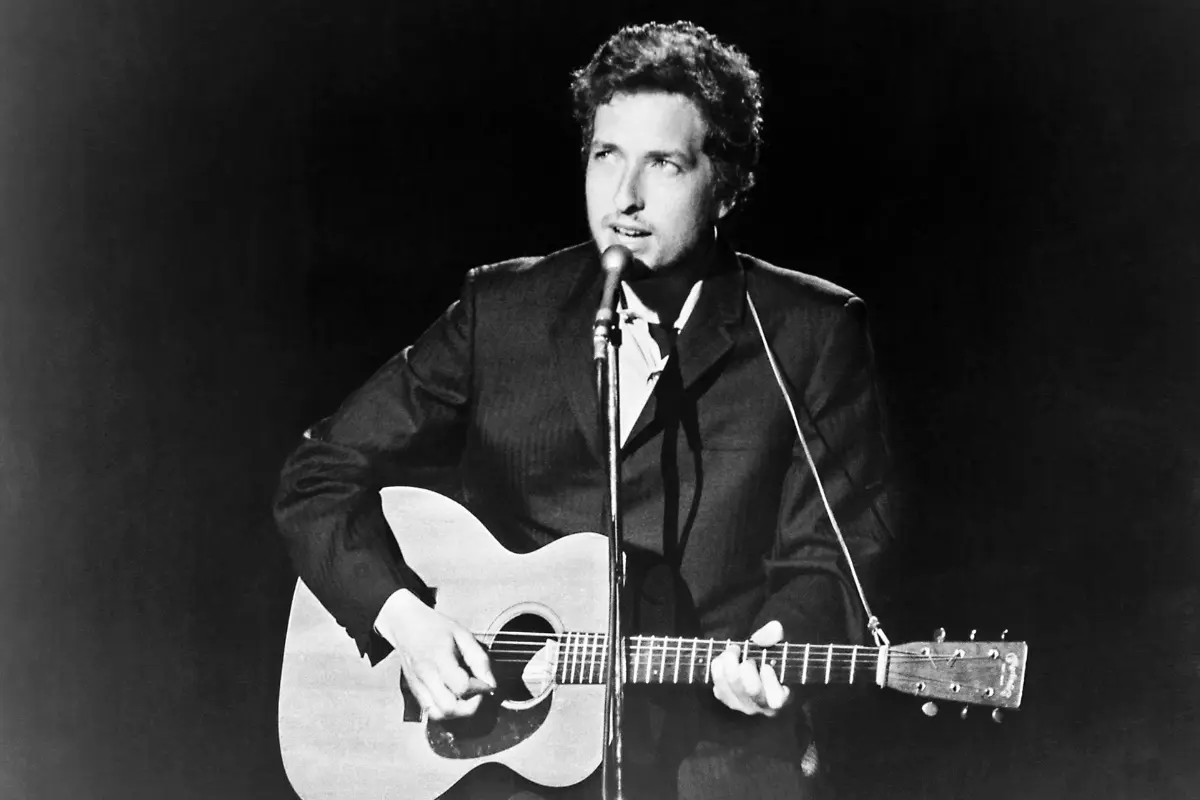
Dylan’s career is a chain of pivots: folk to electric, protest to surrealism, arena rock to rootsy reinvention.
So it tracks that he’d value the Band at the moment they were most fluid: when they could tear through a Motown tune, then turn around and back a poet getting booed for plugging in.
And if you want a reminder that Dylan is still managed like a living institution, his ongoing releases and archival news continue to document the activity.
Conclusion: Dylan’s “golden days” argument is a dare
Dylan’s quote dares fans to stop treating The Band like a museum piece. Put down the mythology for an hour and chase the thing he actually admired: a band with touch, restraint, and the nerve to make other people’s songs feel like their own.
If you do that, you might land where Dylan lands: respecting “The Weight,” sure, but loving the sweaty, groove-first Band that could walk into a room and make it move.