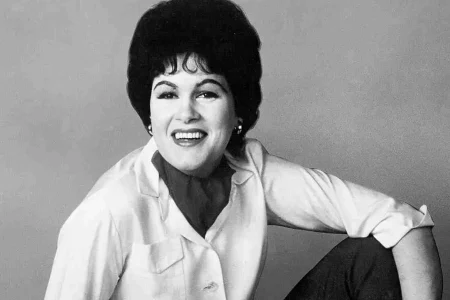
Dolly Parton built a career on being seen: big hair, bigger hooks, and a personality that can fill a stadium. Carl Dean built his life on not being seen at all. That contrast is exactly why their marriage has been catnip for fans and a minor mystery for Nashville for decades.
What’s often missed in the lore is that their love story wasn’t just “private.” It was, at the beginning, strategic. The couple married in Ringgold, Georgia, in a tiny ceremony designed to keep Nashville’s rumor mill from chewing up Dolly’s momentum before it even started.
“God knew I was going to need somebody like him if I was going to be doing all this crazy stuff.”
Dolly Parton
The quick facts (and why they matter)
| Detail | What’s known | Why it’s interesting |
|---|---|---|
| First met | Outside the Wishy Washy Laundromat in Nashville | A truly ordinary moment that sparked an extraordinary partnership outside the Wishy Washy Laundromat |
| Marriage date | May 30, 1966 | It happened early in Dolly’s rise, not after the fame May 30, 1966 |
| Where they married | Ringgold, Georgia | Close enough to elope, far enough to keep it quiet Ringgold, Georgia |
| Ceremony size | Preacher, preacher’s wife, Avie Lee Parton | Minimal witnesses, maximal discretion (classic elopement logic) |
| Carl’s public profile | Extremely private, rarely photographed | One of the most unusual “celebrity spouse” choices in modern pop culture extremely private, rarely photographed |
| Length of marriage | Nearly 59 years | Long marriages exist in entertainment, but this one was also low-drama by design, lasting nearly 59 years |
Why the elopement wasn’t just romantic – it was a career move
Dolly has been candid that early career advice in Nashville often came with strings attached. In that era, labels and managers could be oddly superstitious about how a woman’s marriage might “sell” in country music, where fan fantasies and radio politics were real currency.
So the couple did the most country-music thing imaginable: they hit the road and handled it quietly. Ringgold sits just over the Tennessee line in north Georgia, a small city with deep regional roots and a courthouse-town feel that makes slipping in and out plausible. It’s the kind of place where you can get married without turning it into a headline, especially in the 1960s.

“Just us”: the tiny ceremony that created a giant legend
The most revealing part of the story is the guest list. There wasn’t a circle of industry friends, no publicity plan, no photographer curated for a future documentary. It was basically a faith-and-family moment: preacher, preacher’s wife, and Dolly’s mother, Avie Lee.
That choice set the tone for everything that followed. Instead of building a “public couple” brand, Dolly and Carl built a firewall. Dolly would do the spotlight. Carl would do the life.
Carl Dean’s disappearing act (and why it worked)
Plenty of famous marriages break because fame becomes a third person in the relationship: it wants attention, it picks fights, it demands loyalty. Carl refused to let that third person move in. And Dolly, famously ambitious, didn’t take that as rejection. She treated it as support.
Over the years, Carl was described as someone who preferred a normal routine and normal privacy at home in Tennessee, while Dolly traveled, recorded, filmed, wrote, and essentially became an American institution. Accounts of his low profile and rare public appearances have been widely noted by mainstream outlets covering the couple in a feature interview about her life and work.
The provocative take: privacy is the most underrated “relationship hack” in celebrity culture
In a music industry that rewards oversharing, Carl’s approach looks almost rebellious. It’s easy to mistake his silence for distance, but it may have been the opposite: a deliberate refusal to let the public vote on their marriage.
The dirty secret of “power couples” is that they often end up performing love instead of living it. Dolly and Carl sidestepped that trap by never letting the relationship become content.
Home life, RV trips, and a famously unglamorous date night
Dolly has always been great at puncturing her own myth. One minute she’s a rhinestone legend, the next she’s telling you how much she loves simple pleasures. Over the years she has talked about enjoying quiet time at home with Carl, taking small road trips in an RV, and keeping things grounded.
Yes, the Taco Bell detail gets repeated because it’s funny, but it’s also revealing. It says their marriage wasn’t built on red carpets. It was built on routines that didn’t require an audience, the kind of routines that can keep a relationship intact when everything else is loud.
The Dolly Parton brand exploded – and the marriage didn’t
Dolly’s career didn’t just “flourish.” It multiplied into several overlapping empires: music, acting, business ventures, philanthropy, and a level of cultural goodwill that’s almost unheard of. Her official career overview highlights the scale of her work across entertainment and beyond.
And while Dollywood is often treated like a fun trivia point, it’s also a signal of how she turned popularity into place-based legacy in East Tennessee. That “namesake theme park” line isn’t fluff; it’s part of a bigger story of regional pride and economic impact. (If you’ve ever been, you know it’s not a vanity project, it’s a world.)
The music side: why Carl mattered even if he wasn’t “in the business”
Carl Dean was not a co-writer in the way Nashville uses the term, but spouses shape songs all the time. They’re the first audience, the emotional barometer, the person you come home to when the applause stops. That matters for an artist whose catalog depends on emotional credibility.
Dolly’s songwriting reputation is not a fan myth; it’s industry-recognized, including by organizations that celebrate craft and authorship. Her book Dolly Parton, Songteller reflects just how central writing is to her legacy.
Her standing in country history is also baked into institutions like the Grand Ole Opry, which situates her not just as a star but as a cornerstone figure in the genre’s living tradition.
Grief, legacy, and the line that stopped fans cold
After Carl Dean’s death was reported, the public response was massive because people felt like they were mourning a character they barely knew. That’s rare. Usually, public grief follows public access. Here, it followed respect.
Coverage of Carl’s passing and the couple’s decades-long relationship has been reported by major news organizations, including reporting on Carl Dean’s death at age 82.
“Carl and I spent many wonderful years together. Words can’t do justice to the love we shared for over 60 years.”
Dolly Parton
What long-lasting country marriages get right (and what fans get wrong)
When people talk about “country couples who made it,” the conversation often turns moralistic, like longevity is proof of virtue. Real life is messier. A long marriage is usually proof of two people choosing the same thing repeatedly: privacy, commitment, forgiveness, and a shared definition of success.
Fans sometimes assume the secret is romance. The more uncomfortable possibility is that the secret is boundaries. Dolly and Carl didn’t invite the public into decisions that needed to be made in private. That’s not as sexy as a fairy tale, but it might be why the fairy tale lasted.

Three takeaways worth stealing (even if you’re not famous)
- Protect a “no-comment” zone. Some parts of a relationship shouldn’t be crowdsourced.
- Be opposites on purpose. One person can love the spotlight while the other loves the porch, if they respect the tradeoff.
- Build rituals, not optics. RV trips, cheap dinners, quiet routines: the unglamorous stuff can be the glue.
Conclusion: the most radical thing Dolly and Carl did was keep it normal
The Ringgold elopement is a great story, but it’s also a thesis statement. Dolly and Carl chose a marriage that didn’t need witnesses, headlines, or validation from the industry. She became world-famous anyway. He stayed private anyway. And somehow, that mismatch became the match.
In a culture that treats relationships like entertainment, their nearly six-decade run reads like a dare: keep the love, skip the performance.