
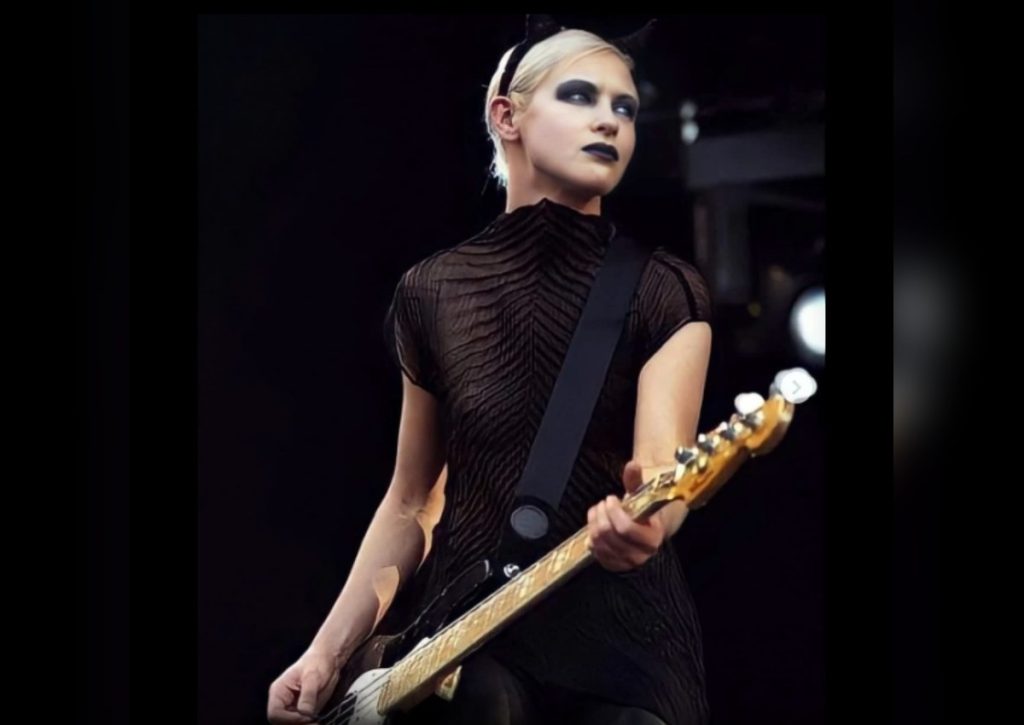
Ask a casual Smashing Pumpkins fan about D’arcy Wretzky and you’ll hear she played bass on Siamese Dream. Ask a message-board veteran and you’ll hear she barely played on it at all. Both camps are gesturing at one of alternative rock’s most uncomfortable open secrets — and the truth, which is messier and more interesting than either version, says as much about how bands work as it does about one album.
What actually happened at Triclops
The record is unambiguous, because the participants stopped being coy about it years ago. During the notoriously tortured 1993 sessions for Siamese Dream, Billy Corgan — perfectionist, insomniac, drowning in label pressure and depression — re-recorded many of Wretzky’s parts, playing most of the album’s guitar and bass himself. Engineer Jeff Tomei’s explanation was the purest distillation of the Corgan method: he knew exactly what he wanted, and no one can get inside someone else’s head and play what they envision.
So the layered bass on much of Siamese Dream — like most of James Iha’s nominal guitar parts — is Corgan. The band presented as a gang of four on the sleeve was, in the studio, substantially one man with a rhythm section’s worth of overdubs.
The cost of perfection
What elevates this from gossip to genuine rock history is that Corgan himself came to prosecute the case against it. The re-recording went down badly with Iha and Wretzky, planting resentments that never fully healed, and Corgan later delivered the verdict that should be taught in band-dynamics seminars: musicianship and technical vision are fine, he reflected, but past a certain line, no matter how good the album, “you’ve cut away the gut of your band”.
That admission reframes everything. Siamese Dream became a masterpiece and a wound simultaneously — the sound of a control obsession vindicated artistically and paid for relationally, in instalments, for the next decade.
What D’arcy actually was to the Pumpkins
None of which supports the internet’s lazier conclusion that Wretzky “couldn’t play” or didn’t matter. Her audition legend alone refutes it — she joined the band off the back of a sidewalk argument with Corgan about music, holding her ground against rock’s most opinionated man, which tells you what he actually valued in her. She played on Gish and on stage she played, full stop: hundreds upon hundreds of shows across the band’s imperial decade, delivering those basslines live — “Cherub Rock”, “Geek U.S.A.”, “Hummer” — night after night, which no overdub ever did.
Her presence was load-bearing in subtler ways too. She sang — the harmonies, and lead on Gish‘s “Daydream”. She was the band’s cool centre of gravity on stage and in every video, the counterweight to Corgan’s storm. And within the loud-soft blueprint the Pumpkins patented, the bass chair she occupied — however contested its studio documentation — was part of an image and chemistry that sold the whole improbable thing: goth glamour, arena ambition and Chicago grit in one lineup.
The saga also has a quieter epilogue that colours the whole question. Wretzky left the band in 1999, before the original lineup’s first farewell, and then did something almost unheard of in rock: she actually disappeared — retreating to rural Michigan, declining the reunion circuits, surfacing only rarely, most notably when the 2018 reunion happened without her amid a bitter public exchange of receipts with Corgan. Whatever one makes of that last chapter, it underlined the original wound: a founding member’s place in the band’s story had been negotiable in the studio in 1993, and it proved negotiable again when the legacy tours were booked.
The honest verdict
So: who played bass on Siamese Dream? Mostly Billy Corgan — by his own admission, at his own eventual regret. Who was the bassist of the Smashing Pumpkins? D’arcy Wretzky, in every way that a band exists outside a control room: on the road, on the stage, in the chemistry, in the identity.
The distinction matters because the myth-making around this album has been unfair in both directions — erasing her when the credits are discussed, and erasing the tension when the glory is. The truth honours nobody’s preferred story. It says a brilliant, damaged perfectionist made a classic album partly by overwriting his bandmates, understood too late what it cost, and spent years watching the band’s gut — his word — bleed out through the cut. And it says the woman whose parts he replaced still earned her place in the picture a thousand times over, four strings at a time, everywhere the tape wasn’t rolling.
Siamese Dream is the sound of one man’s vision. The Smashing Pumpkins were a band. Both things are true, and the distance between them — measured in overdubs, resentments, a walkout and twenty-five years of arguments about a credit line — is the whole story. Play the record tonight and you’ll hear why everyone involved decided it was worth it. Read the interviews after, and you’ll hear the price.


