
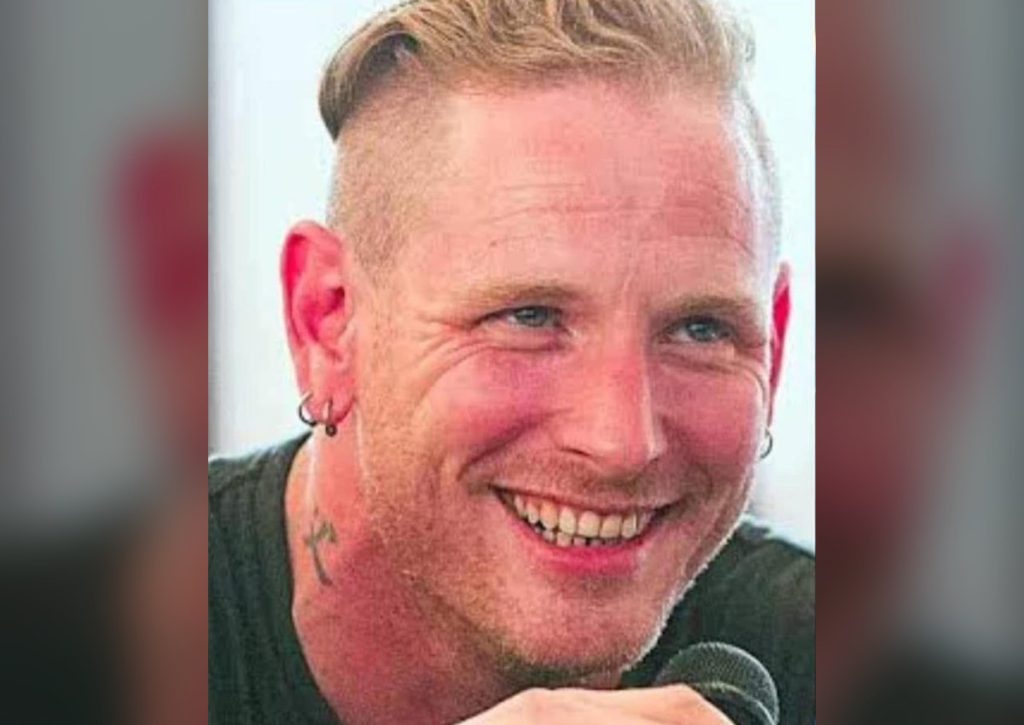
Play a stranger “Duality” and then “Through Glass” and ask them how many singers they just heard. Almost nobody guesses one. The bulldozer roar fronting Slipknot and the warm, radio-ready baritone fronting Stone Sour belong to the same man from Des Moines, Iowa — and the distance between those two sounds is one of the more remarkable technical feats in modern rock.
Two bands, two jobs
The split was never an accident. Stone Sour actually came first, formed in 1992 as a hard-rock band with melody at its centre; Slipknot arrived later in the decade as something altogether more violent, and Taylor was pulled in to give the chaos a voice. From then on he effectively ran two vocal careers in parallel, each with its own rulebook. Slipknot required crushing vocals that morph between singalong choruses, rapid-fire delivery and guttural screams; Stone Sour let him add hard-rock fire and straight-up sing in a way the masked band’s context would never allow.
The genius of the arrangement is that neither band ever felt like the compromise. Slipknot wasn’t the day job and Stone Sour the passion project, or vice versa; they were two complete musical identities, and Taylor gave each one a complete singer.
The machinery of the scream
What sounds like pure fury in Slipknot is actually engineering. Taylor’s heavy arsenal runs on false-cord growling for the low end and fry screaming for the high — techniques that generate the distortion around the vocal cords rather than by shredding them. That distinction is the whole ballgame. An untrained singer imitating “People = Shit” for a week would be hoarse for a month; Taylor has delivered material like it for a quarter of a century, night after night, and still walks off stage able to croon.
What the techniques bought him is durability, but what sells the songs is placement. Listen closely to even the most unhinged Slipknot tracks and there’s pitch inside the aggression — the screams sit on notes, the barked verses lock to the drums’ grid, and when the chorus needs to open up (“Wait and Bleed”, “Duality”), a genuinely melodic voice is already there, waiting, warmed up by the violence around it.
The ballad problem
Then there’s the other Taylor. “Bother” — a song so naked Stone Sour barely plays on it — introduced mainstream audiences to a singer with croon-level control, and “Through Glass” put that voice all over rock radio. Even inside Slipknot, the melodic weapon keeps surfacing where it hurts most: “Snuff” and “Vermilion Pt. 2” are, by any honest description, ballads — heartfelt showcases from the same man who spends the rest of the album roaring — and they land harder precisely because of who is singing them.
That’s the deeper trick of the two-band arrangement: each voice makes the other more powerful. The scream gives the ballads stakes; the ballads prove the scream is a choice, not a limitation. When Taylor drops from a roar to a whisper inside a single phrase, he’s spending credibility he earned in the other register.
The two-voice career even predates most listeners’ awareness of it. “Bother”, the song that announced his melodic side to the mainstream, first reached the public on the Spider-Man soundtrack in 2002 credited simply to “Corey Taylor” — a solo billing so unexpected that many fans assumed it was a different artist before Stone Sour’s debut arrived weeks later and claimed it. The confusion was the point proven: the voice alone didn’t identify him. The context did.
And in the years since, a third Taylor has emerged around the edges — the solo performer of acoustic sets and left-field covers, treating everything from pop standards to classic rock as fair game. It’s the same instrument again, in yet another register: relaxed, playful, unmasked in every sense.
Why so few can follow him
Plenty of metal singers scream well. Plenty of rock singers sing well. The list of people who have fronted two globally successful bands with two unrelated voices is very short indeed, and it’s short for reasons that go beyond talent. It takes technique deep enough to protect the instrument through decades of abuse, discipline enough to keep the two identities distinct, and the songwriting instincts to know which voice a lyric actually needs.
Taylor has been startlingly open about where the rawness comes from — a brutal childhood, addiction, years of feeling unheard — which may explain why neither register ever sounds like an act. The scream is real anger with a safety engineer’s craftsmanship underneath; the croon is real ache with a survivor’s steadiness underneath.
One throat, two bands, twenty-five years, and no sign the machinery is wearing out. Somewhere in Des Moines a teenager is currently destroying their voice trying to do both halves of it. The lesson from the master: it only sounds like recklessness.


