
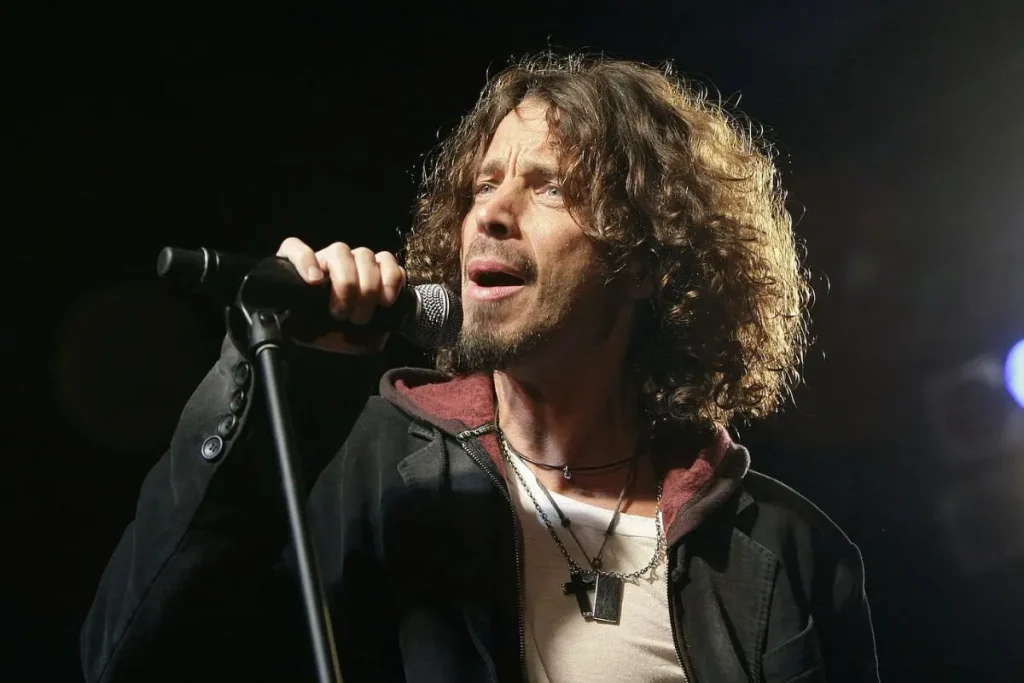
Chris Cornell is the kind of singer traditional vocal teachers are supposed to warn you about. No tidy music degree, no choir upbringing, just a self-directed obsession that turned a shy Seattle kid into one of the most terrifyingly expressive voices rock has ever produced.
What makes his story even wilder is that he did it largely outside the classroom. Cornell built his sound by ear, chasing chords on a battered guitar, experimenting with tunings and texture, and stretching a range that writers regularly peg at roughly four octaves, from dark baritone to sky-splitting screams.
From loner kid to reluctant frontman
Cornell grew up in Seattle, retreating into a stash of Beatles records he found in a neighbor’s basement and disappearing into music while wrestling with serious depression as a teenager. He took some basic piano and guitar lessons, then dropped out of high school and spent long stretches barely leaving the house, an unlikely launchpad for a future multi-platinum, multi Grammy-winning rock icon.
His way out was not therapy in the modern sense, but volume. First as a drummer, then as the singer for a scrappy band that would become Soundgarden, Cornell learned in real time how to weaponize that voice over drop-tuned riffs and odd time signatures. There was no corporate blueprint here, just a guy with a damaged interior life discovering that he could rip holes in a room with a single sustained note.
When his roommate and friend Andrew Wood of Mother Love Bone died of a heroin overdose, Cornell channeled his grief into songs that became the Temple of the Dog album, a one-off project with members of what would become Pearl Jam. It was a raw, unguarded tribute that proved he was not just a howler but a writer willing to stare straight at loss and sing about it without flinching.
A voice that should not have worked – but did
Vocal coaches love to talk about balance and restraint; Cornell often sounded like he was deliberately breaking those rules and somehow getting away with it. Articles on his greatest vocal performances point to songs like “Slaves & Bulldozers,” where he hurls himself up into sustained F5s and even G5s live, fusing blues grit with metallic hysteria that should shred a normal throat.
That explosive range did not go unnoticed. When Rolling Stone refreshed its list of the 200 Greatest Singers of All Time, Cornell landed among the top rock voices, shoulder to shoulder with names like Robert Plant and Kurt Cobain, a reminder that the industry eventually had to admit the weird Seattle kid had become canon.
Cornell was never just loud, though. He could flip from a crooned whisper on “Like a Stone” to a strangled, near-sobbing wail on “Jesus Christ Pose,” then back off into a clean, almost choirboy line in a single phrase. It felt unstable, even dangerous, which is precisely why so many singers who “do everything right” technically still sound small next to him.
Songs to hear his range in action
| Aspect | Track | What to listen for |
|---|---|---|
| Explosive high belts | “Slaves & Bulldozers” (Soundgarden) | Gradual build into piercing sustained high notes, almost inhuman intensity. |
| Melodic power with restraint | “Like a Stone” (Audioslave) | Soft, grainy verses exploding into open-throated choruses without losing pitch. |
| Full dynamic arc | “Fell on Black Days” (Soundgarden) | From conversational murmur to anguished, towering climax over odd-meter groove. |
| Acoustic vulnerability | “The Promise” (solo) | How little grit he actually needs to devastate when the song is mostly voice and melody. |
Black holes, bad days and brutal honesty
“Black Hole Sun” – the beautiful nightmare
If one song defines Cornell in the public imagination, it is “Black Hole Sun,” written largely in his head while driving, then whistled into a recorder when he got home. Music writers routinely call it Soundgarden’s signature song, the moment when psychedelic, Beatles-soaked melody collided with apocalyptic grunge and somehow conquered both MTV and rock radio.
Cornell later said he writes best when he is depressed and bristled at the idea that “Black Hole Sun” was in any way upbeat, insisting it was a sad song wrapped in a deceptively pretty melody. Paired with that grotesque, suburban-dystopia video, it turned one man’s private unease with American culture into the closest thing the 90s got to a prog-grunge standard.
“Fell on Black Days” – depression without the costume
Where a lot of rock musicians romanticize despair, Cornell wrote “Fell on Black Days” as a confession of something scarier: the moment you realize, without warning, that your life feels completely wrong. He described it as an “ongoing fear” where everything seems fine on paper until you suddenly recognize you are “unhappy in the extreme” and terrified, with no single event to blame.
Musically the song is in a lurching 6/4, but the drums stay stubbornly straight, so the average listener just feels unease without knowing why. That was Cornell’s genius as a writer: he could sneak genuinely disturbing psychology inside riffs that still worked on car stereos and classic rock playlists.
“Be Yourself” – aging without softening
Fast forward to Audioslave’s “Be Yourself” and you hear a different kind of darkness. Cornell admitted the lyric grew out of “tragedies and horrendously stupid mistakes” in his own life and the desire to live without shame for them, a level of plain-spoken honesty he said his younger self would have been embarrassed to write.
The song topped rock radio and was licensed to death, which ironically made some fans dismiss it as too accessible. But that chorus – “even when you’ve paid enough, been pulled apart or been held up” – is Cornell doing something most “mature” rock records utterly fail at: writing about adulthood, regret and survival without neutering his voice or his band.
Audioslave: plugging that voice into a political machine
When the instrumental core of Rage Against the Machine needed a new singer, producer Rick Rubin played them Soundgarden’s “Slaves & Bulldozers” to prove Cornell could out-scream God. The resulting band, Audioslave, was less overtly agit-prop than Rage, but it was not apolitical wallpaper either.
Tracks like “Set It Off,” inspired by the 1999 WTO “Battle of Seattle,” the anti-war “Sound of a Gun,” and “Wide Awake,” a furious indictment of the Bush administration’s failures after Hurricane Katrina, showed Cornell could aim his lyrical fire outward as well as inward. The band played anti-war shows with banners mocking the Iraq invasion and aligned itself with activist outfits like Axis of Justice, proving that melodic hooks and genuine outrage can coexist without turning into sloganeering.
Behind the roar: craft, coaches and survival
Cornell’s technique was not some mystical grunge accident. Late in his career he worked with legendary vocal coach Ron Anderson, a bel canto specialist whose roster included Axl Rose; Anderson described Cornell as a textbook example of “opening up the back” of the throat to create that massive, cobra-like resonance without simply forcing more air.
In other words, the most “untamed” voice of the 90s quietly did the unglamorous work of learning how not to destroy himself every night. That combination – raw emotional risk on the surface, serious technical control underneath – is exactly why you can crank a 1991 Cornell scream through modern monitors and it still sounds enormous rather than shredded.
The legacy: from grunge clubs to the Hall of Fame
By the time Soundgarden were finally inducted into the Rock & Roll Hall of Fame, they were being hailed as architects of the Seattle sound, with “Rusty Cage,” “Spoonman,” “Fell on Black Days” and “Black Hole Sun” held up as genre-defining benchmarks. Cornell was not there to accept, but his daughters performed and spoke, underlining how much his work has become part of rock’s permanent story rather than just 90s nostalgia.
The remaining members have since announced a final Soundgarden album built around Cornell’s unfinished vocal tracks, describing it explicitly as a “gift” to him as much as to the fans. That is not the kind of language bands use about just any former singer; it is how you talk about someone whose presence still looms so large that you are essentially collaborating with a ghost.
What Chris Cornell means for anyone picking up an instrument
Cornell’s career is a rebuke to the idea that you need perfect conditions to make lasting music. He battled mental health issues, came from a scene that was supposed to be too weird for the mainstream, and built much of his technique by trial and error rather than textbooks, yet his songs now sit next to Zeppelin and Queen on classic rock playlists.
For players and singers, the takeaway is uncomfortable but liberating. Ear training and obsession can trump pedigree, raw feeling still matters more than polish, and if you are willing to dig into your own fear and failure the way Cornell did, you might write something people are still arguing about and crying to thirty years from now. No one sings like him anymore, but the way he got there – messy, stubborn, self-taught and finally disciplined – is a blueprint any serious musician can steal.


