
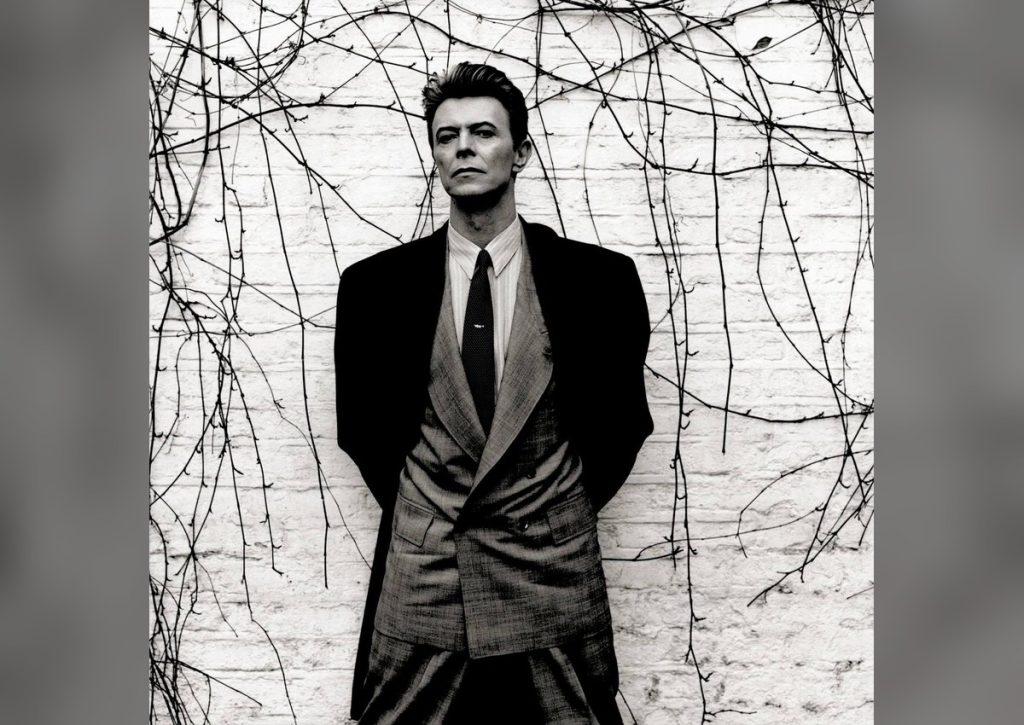
Ask a room of David Bowie fans to rank his albums and the usual suspects assemble: Ziggy, Low, Hunky Dory, Station to Station, Blackstar. Somewhere past the twentieth answer, if ever, someone might mention The Buddha of Suburbia. Yet the man himself, asked the same question, repeatedly reached past his monuments for exactly that record — a 1993 quasi-soundtrack that he named among his personal favourites, and that most of the world has still never played.
The accidental album
The project began as a conversation, not a commission. Promoting Black Tie White Noise in 1993, Bowie was interviewed by the novelist Hanif Kureishi, whose semi-autobiographical The Buddha of Suburbia — a sly, filthy, tender novel about growing up brown and restless in the South London suburbs — was being adapted by the BBC. Kureishi asked if Bowie might contribute music; Bowie agreed, then wildly exceeded the brief. After delivering the compact motifs the serial needed, he took the themes back into the studio and, working at speed with multi-instrumentalist Erdal Kızılçay, built an entire album from them.
The result, released in November 1993, wore the word “soundtrack” like a disguise. In truth only the title song appears in the programme; the rest is Bowie riffing on the novel’s terrain — which happened to be his terrain. Kureishi’s suburbs were Bromley and its orbit, the exact postcode purgatory a young David Jones had spent the fifties and sixties plotting to escape. Handed a story about a suburban dreamer reinventing himself upward, Bowie effectively scored his own adolescence.
What it sounds like
The album is a tour of every self Bowie had been and a preview of several he was about to become. The title track is the most direct: a gorgeous, aching pop song about suburban yearning that quotes his own past — a sly lift from “All the Madmen” — like a man flipping through a photo album. Around it sprawls everything else: ambient instrumentals that nod to the Berlin records, jazz excursions with piano skittering over drum loops, squelching synth-funk, and experiments in texture that mix ambient, jazz and pop into a deliberately unstable whole.
Heard in sequence with his catalogue, its significance snaps into focus. This is the hinge between the crowd-pleasing Bowie of the early nineties and the restless experimenter of 1. Outside and Earthling. The working method — fast, instinctive, treating the studio as a sketchbook — was itself the point. Bowie later spoke of the record with the affection artists reserve for work made with no expectations watching: for once, nobody was waiting for a Bowie Album, so he simply made music.
How it vanished
The commercial disappearance was almost comically overdetermined. The album was marketed as a TV soundtrack for a serial most of the world never saw; it arrived in a year Bowie had already released an album; the label gave it next to no push; and for years it remained genuinely difficult to buy, especially in America, mouldering as a curiosity until reissues finally rescued it. Even devoted fans often discovered it a decade late, usually via word of mouth that began, “You’ve never heard what?“
Bowie seemed to relish the obscurity slightly. Calling a record nobody bought his favourite was, among other things, wonderfully on-brand — the same instinct for the unexpected that ran through his whole life offstage in that era, when the tabloid Bowie receded and a calmer, more private man got on with the work.
The album also quietly launched one of the great late-Bowie collaborations in miniature. Erdal Kızılçay — the Turkish multi-instrumentalist who could play essentially anything — became Bowie’s whole band for the sessions, the two of them sketching and finishing tracks at a pace closer to jazz than to pop production. That intimacy is audible: Buddha sounds like two people in a room having ideas, not a corporation releasing product. Mike Garson’s piano, spidering across “South Horizon”, supplies the album’s other great cameo — the Aladdin Sane wildcard returning twenty years on, as if no time had passed.
Why it’s worth your evening
Every major artist has a “secret” album beloved of insiders, but Buddha is a special case because of why it works. Bowie spent a career building characters to escape the suburbs; here, in middle age, secure and unwatched, he finally turned around and looked at the suburbs themselves — with tenderness, irony and forty-six years of hindsight. It’s the sound of an escape artist making peace with the room he escaped from.
The monuments will always dominate the rankings, and fairly. But favourites are confessions. When the most restless reinventor in rock history pointed at this modest, half-hidden record and said that one, he was telling us something about where all the characters came from. The least-heard Bowie album is the one where he sounds most like David Jones. He knew it. Now you do.


